[Asia Economy Yeongnam Reporting Headquarters Reporter Kim Yong-woo] The Daegu Regional Environmental Office has decided to focus on summer flood and wind disaster prevention measures to prevent typhoon and heavy rain damage caused by climate change and to respond swiftly.
The Daegu Environmental Office operates a disaster situation room and promotes inspections of river facilities such as embankments and drainage gates, joint flood response drills with related organizations, on-site inspections of priority management areas for sewer facilities, urban flooding prevention projects, and national treasury support for river estuary waste disposal.
The disaster situation room is organized and operated with three teams (regional situation team, on-site investigation and recovery support team, publicity support team) centered on the head of the Daegu Environmental Office. Local governments such as Daegu City and Gyeongsangbuk-do, the Korea Environment Corporation, and the Korea Water Resources Corporation participate collaboratively.
When weather alerts are issued, emergency duty teams are organized and operated according to the caution, warning, and severe stages. Especially at the severe stage, which is a large-scale disaster state, the Environmental Office and cooperating agencies maintain an emergency posture and focus on rapid dispatch and damage recovery when situations occur.
This year marks the first year of integrated water management completion, and to ensure seamless management of national river affairs transferred from the Ministry of Land, Infrastructure and Transport to the Ministry of Environment, active promotion of facility inspections, field training, and technical education will be carried out.
From March, inspections of the safety maintenance of facilities such as embankments and revetments along the Nakdong River, operation status of drainage gates, comprehensive inspections of obstacles hindering water flow, and repairs in defect areas have begun.
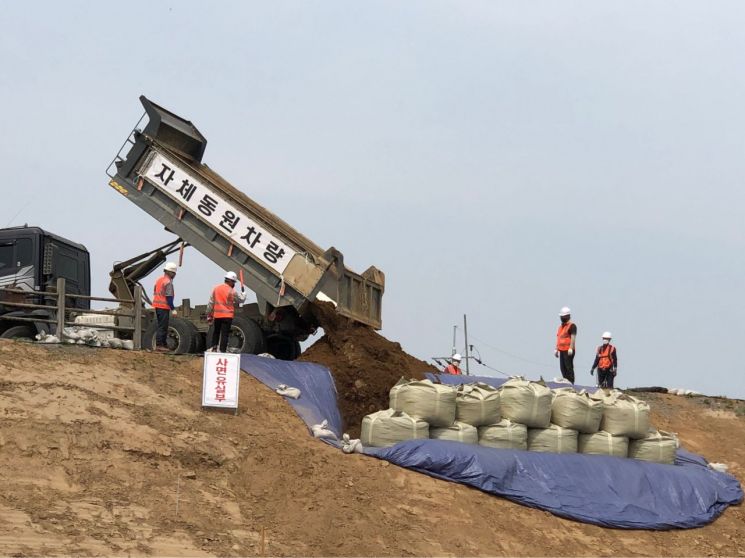
For rapid and proactive response in actual situations, in May, the Daegu Regional Environmental Office hosted a recovery drill assuming the collapse of the Nakdong River embankment in Goryeong, attended by seven related organizations.
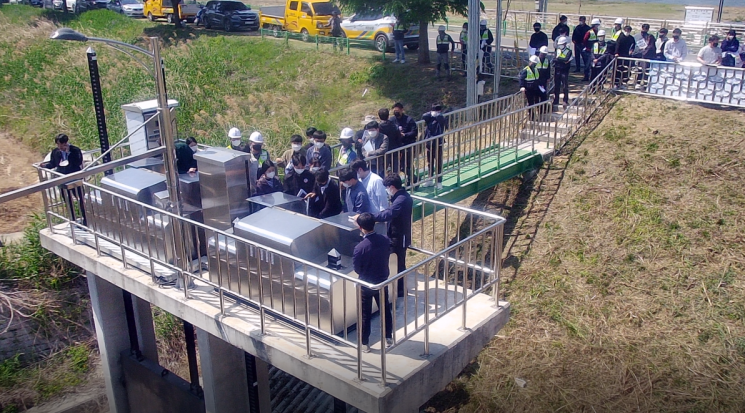
Also, on May 3, training on drainage gate operation methods was conducted for practical managers of river management from Sangju City, Chilgok County, and the Korea Rural Community Corporation.
To ensure the safety management of sewer facilities vulnerable to typhoons and heavy rain, a focused inspection will be conducted on “priority management areas for heavy rainfall,” including major facility inspections for accident-prone points (cracks, collapses) within sewer facilities, establishment of emergency contact systems, and preparation of emergency recovery systems in case of accidents such as power outages.
Additionally, to prevent urban flooding and promptly handle river and estuary waste, national treasury support of 11.3 billion KRW for urban flooding prevention expenses will be provided to six cities and counties including Pohang City, and 1.1 billion KRW for river and estuary waste removal projects will be provided to 12 cities and counties in Gyeongbuk.
As an urban flooding prevention project, simple pump facilities and submersible pumps will be installed in frequently flooded areas to minimize physical damage and inconvenience to residents. In areas with frequent flooding of farmland and houses, stormwater drainage pipes will be maintained, and plans for new or expanded rainwater pumping stations will be reviewed if necessary.
To prevent water pollution and maintain the drainage function of bridges, river waste is intensively collected before and after the monsoon season. Last year, 840 million KRW of national treasury support was provided to process 2,643 tons of river waste.
Choi Jong-won, head of the Daegu Regional Environmental Office, said, “We will protect the lives and property of the people from various disasters through proactive response to summer flood and wind disasters,” and added, “We will thoroughly carry out safety management such as inspection and maintenance of river facilities following the unification of water management, and further strengthen urban flooding prevention and national treasury support.”
© The Asia Business Daily(www.asiae.co.kr). All rights reserved.


















