Reduced Sugar and Natural Sweeteners Gain Popularity
Sugar Sales Decline... Consumers Seek Alternative Sweeteners
Confectionery Industry Launches Sugar-Free and Alternative Sweetener Products Continuously
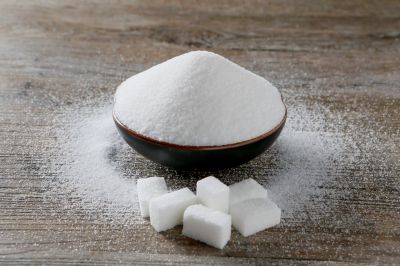
[Asia Economy Reporters Seungyoon Song and Jinyoung Jeon] Riding the wave of zero-calorie products centered around beverages, ‘good food’ that considers health by using natural sweeteners instead of sugar is gaining attention.
According to the Food Industry Statistical Information from the Korea Agro-Fisheries & Food Trade Corporation on the 15th, the domestic retail sales scale of sugar reached 291.8 billion KRW in 2013, ten years ago, but sharply declined by more than 100 billion KRW to 172.3 billion KRW in 2017, just four years later. Since then, it has continued to decline gradually with 162.2 billion KRW in 2018, 161.4 billion KRW in 2019, and 170.2 billion KRW in 2020. The first half of last year also recorded 95.9 billion KRW, falling short of 100 billion KRW.
As interest in health increases, many alternative sweeteners replacing sugar have emerged, and combined with government-level sugar reduction measures such as the 2016 announcement of the Comprehensive Sugar Reduction Plan by the Ministry of Food and Drug Safety, the industry sees the market as having been significantly contracted. This is a global trend. A report by the global market research firm Research And Markets also projected that the global artificial sweetener market size will grow at an average annual rate of 5.05%, reaching 9.74 billion USD by 2024.
In line with this trend, products using alternative sweeteners are being released one after another. These are snacks that reduce calories, fructose, and sugar content by using natural sweeteners such as allulose or erythritol instead of sugar.
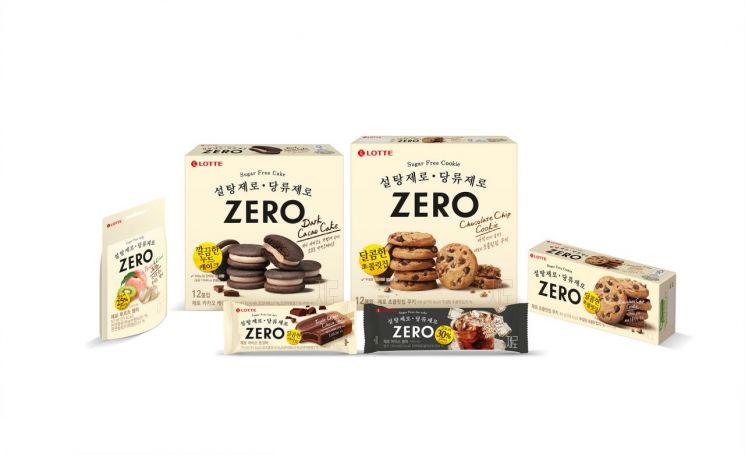
Last month, Lotte Confectionery launched five products under the sugar-free dessert brand ‘Zero.’ These include snack items such as Zero Chocolate Chip Cookies, Zero Fruit Jelly, Zero Cacao Cake, and frozen treats like Zero Ice Cola and Zero Ice Choco Bar. They use erythritol and maltitol instead of sugar to provide sweetness without sugar. The low-calorie ice cream Lala Sweet, which contains only 285 kcal per 474 ml container, is also very popular among dieters.
Orion uses alternative sweeteners in some biscuits, gum, and candy products such as The Xylitol and Market O Minty varieties, and Crown Confectionery also adds alternative sweeteners to chewing candy and gum products like ‘My Chew Xylitol.’ Shinsegae Food recently released a new sugar-free bread product called ‘Sugar-Free Olive Morning Roll.’
The trend of replacing sugar with alternative sweeteners continues among consumers as well. In fact, sales of alternative sweetener products at supermarkets have been steadily increasing. At Lotte Mart, total sales of alternative sweetener products in May doubled compared to the previous year. Lotte Mart offers products such as stevia and green sweeteners instead of sugar. Other supermarkets show similar trends. Emart’s sales of alternative sweeteners in May increased by 54% year-on-year. The range of products handled has also expanded to include allulose, stevia, palm sugar, unrefined cane sugar, and xylitol, increasing consumer choices. Homeplus also carries three items: palatinose, erythritol, and allulose. Among these, erythritol sales grew by about 40% compared to the previous year.
Professor Yonghui Kim of the Department of Food and Biotechnology at Sejong University said, "Sugar is used directly as an energy source in our body, so excessive intake can cause obesity. For this reason, there is high demand for alternative sweeteners not only for dieting but also for diabetic patients, so related research is becoming more active and products are expected to expand."
© The Asia Business Daily(www.asiae.co.kr). All rights reserved.
![A Woman Who Jumps Holding a Stolen Dior Bag... The Mind-Shaking, Bizarre Con of a "Human Knockoff" [Slate]](https://cwcontent.asiae.co.kr/asiaresize/183/2026021902243444107_1771435474.jpg)

















