First National Law to Impose Costs on Methane Emissions from Livestock Farms Upon Bill Confirmation
"No Doubt That Methane Emissions Must Be Reduced"
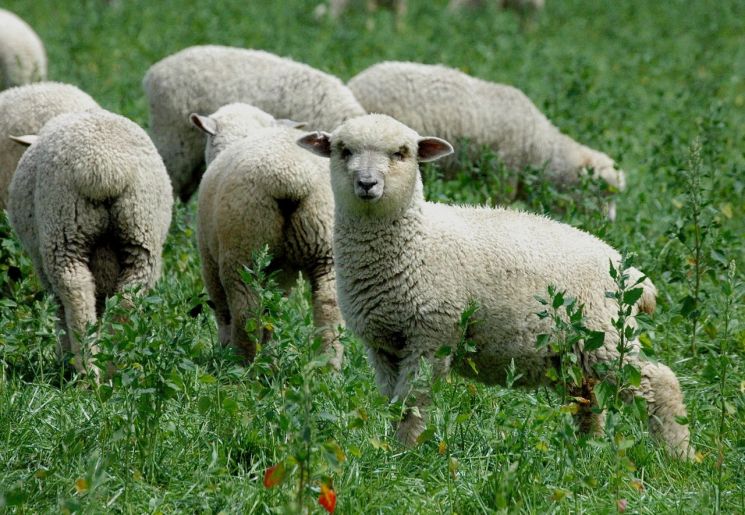 New Zealand is expected to finalize legislation that imposes costs on greenhouse gases emitted by livestock farms.
 [Image source=Pixabay]
[Asia Economy Reporter Hyunju Park] New Zealand is pushing a bill to impose costs on greenhouse gases emitted by cows and sheep through flatulence and burping. If the bill is finalized in December, New Zealand is expected to become the first country to tax greenhouse gases emitted from livestock farms.
According to foreign media including the BBC, from 2025, costs will be imposed on greenhouse gases such as carbon dioxide and methane emitted from livestock farms in New Zealand. This is included in the draft bill jointly prepared by the New Zealand government and representatives of livestock farmers. The revenue from the farm greenhouse gas emissions trading system will be used for agricultural research, development, and consulting services. The bill includes measures such as providing incentives to farms that reduce greenhouse gas emissions by using feed additives and allowing carbon emissions to be offset by creating forests on farms.
Greenhouse gases emitted from livestock farms have long been identified as a major cause of global warming. Greenhouse gases from New Zealand's agricultural sector account for nearly half of the country's total greenhouse gas emissions, but have been excluded from the emissions trading scheme until now. The number of sheep raised in New Zealand reaches 26 million, and cattle number 10 million.
The New Zealand Ministry for the Environment expects that with the passage of this bill, New Zealand will become the first country to impose costs on greenhouse gases generated by livestock farms. James Shaw, Minister for Climate Change, said, "There is no doubt that the amount of methane released into the atmosphere must be reduced," and added, "An effective emissions pricing system for agriculture will play an important role in achieving this."
Susan Kilsby, an agricultural economist at Australia and New Zealand (ANZ) Bank, described the bill as "the biggest regulatory change since the abolition of agricultural subsidies in the 1980s."
© The Asia Business Daily(www.asiae.co.kr). All rights reserved.
![Clutching a Stolen Dior Bag, Saying "I Hate Being Poor but Real"... The Grotesque Con of a "Human Knockoff" [Slate]](https://cwcontent.asiae.co.kr/asiaresize/183/2026021902243444107_1771435474.jpg)
















