[Asia Economy Reporter Kim Daehyun] The court ruled that a prosecutor who died in the official residence after repeated overtime and overwork cannot be considered a national merit recipient.
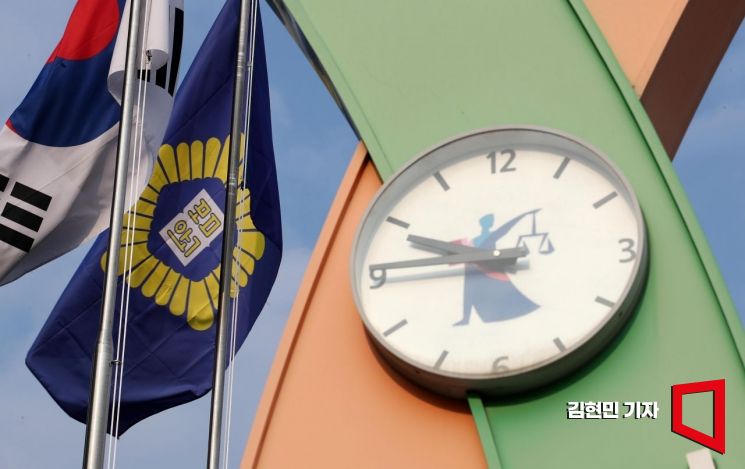
According to the legal community on the 13th, the Seoul Administrative Court Administrative Division 8 (Presiding Judge Lee Jeonghee) ruled against the plaintiff in the first trial of the lawsuit filed by the family of Prosecutor A against the head of the Seoul Southern Veterans Affairs Office, seeking cancellation of the decision that A did not meet the criteria for national merit.
In the early morning of September 7, 2018, Prosecutor A (then 35 years old), who belonged to the Cheonan branch of the Daejeon District Prosecutors' Office, lost consciousness and collapsed while riding the elevator in the official residence, resulting in death.
He began working as a prosecutor in 2015. After transferring to the Cheonan branch in 2018, he handled 718 cases over five months as a trial prosecutor, reviewing an average of 89,929 pages of evidence records per month, and conducted 33 to 83 witness examinations. After trial verdicts, he handled appeal-related case processing by drafting 66 to 133 pages of documents monthly. He also worked as a dedicated prosecutor for North Korean defectors and juvenile cases, handling 349 cases.
He was recognized for his contribution in identifying seven suspects for perjury and was selected in March 2018 by the Supreme Prosecutors' Office as an exemplary case in trial work.
Prosecutor A typically started work around 8 a.m. and, on days with overtime, worked until 10 to 11 p.m., according to investigations. He worked at least 135 hours of overtime in the five months before his death. In July and August, his overtime hours reached 36 to 38 hours.
The Veterans Affairs Office decided that while he qualified as a compensation recipient, he was not a national merit recipient. The family filed an administrative lawsuit in July 2020, claiming that Prosecutor A died from acute myocardial infarction caused by overwork and stress related to his duties and requested recognition as a national merit recipient.
However, the court dismissed the family's claim. The court stated, "According to the enforcement decree of the Act on the Honorable Treatment and Support of Persons, etc. of Distinguished Services to the State, general public officials who are not military personnel, police officers, or firefighters are limited to performing duties that involve a high risk to life and body," and judged that the materials provided by the family alone did not sufficiently prove that Prosecutor A’s duties fell within that scope.
The court added, "Even if there were cases requiring urgent handling among the duties performed, this was only part of a continuous line of ongoing work," and "(Prosecutor A’s duties) cannot be considered tasks requiring prompt handling of issues or bills at the national level."
Since the family did not appeal, this ruling became final as is.
© The Asia Business Daily(www.asiae.co.kr). All rights reserved.
![Clutching a Stolen Dior Bag, Saying "I Hate Being Poor but Real"... The Grotesque Con of a "Human Knockoff" [Slate]](https://cwcontent.asiae.co.kr/asiaresize/183/2026021902243444107_1771435474.jpg)
















