[Seoul District News] Seongdong-gu Opens 'Salgoti Water Playground' at 107 Sageun-dong from June 18 to August 21 with Slides and Water Play Facilities, Shade Tents, Lockers, Benches, Parking, and More for Free Family Use... Guro-gu Provides 300,000 KRW Postpartum Recovery Support to Mothers with Three or More Children... Seocho-gu Designates Maljukgeori as a 'Alley-type Shopping District' to Overcome Institutional Barriers... Gwanak-gu Expands Youth Meeting Spaces as a Youth Culture Zone... Gangbuk-gu Donates 1,000 Reusable Ice Packs to Sister City Boseong-gun
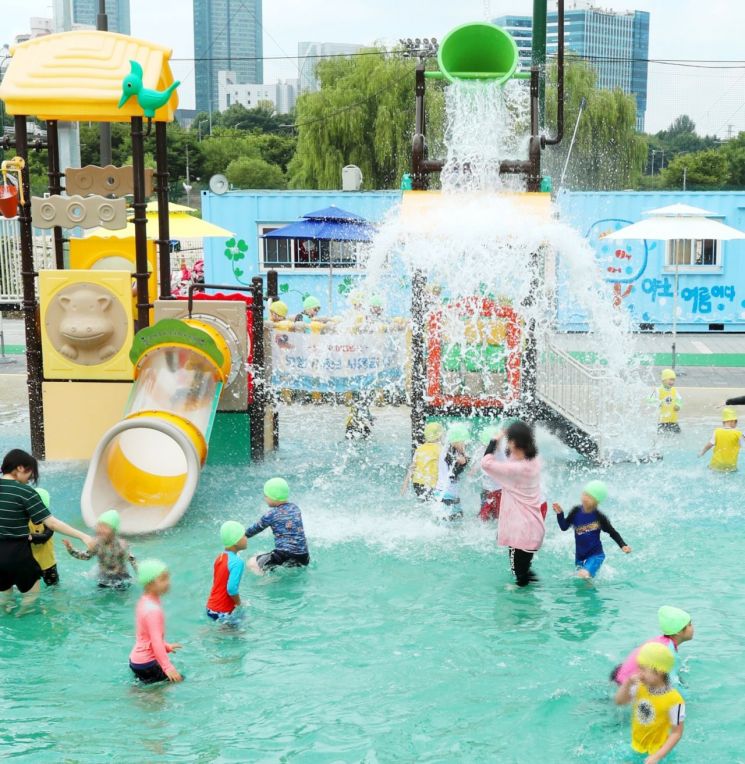
[Asia Economy Reporter Park Jong-il] Seongdong-gu (Mayor Jung Won-oh) will open the popular water play spot ‘Salgoti Water Playground’ on the 18th of this month. It is the first time in about three years since its opening in 2019.
Located at 107 Sageun-dong, Seongdong-gu, ‘Salgoti Water Playground’ is an urban water playground with a total floor area of 5,157㎡, equipped with facilities such as children’s and toddler water play areas and ground fountains, accommodating up to 800 people simultaneously.
It is fully equipped with water play facilities such as slides, shade tents, and parking lots, allowing families with children to use it without any additional cost, except for lockers and pavilions.
After about three years since its opening in 2019, ‘Salgoti Water Playground’ will also operate during nighttime hours from 6 PM to 9 PM starting July 16 for the convenience of local residents. There is a 10-minute break every hour, and there are no separate usage time restrictions.
The district plans to pay more meticulous attention this year to ensure enjoyable and safe water play. Last month, the district fully refurbished the water playground’s operational facilities including filters, pumps, flooring, and play equipment, and hired 12 safety personnel capable of emergency treatment, 4 quarantine staff, and 2 management staff, totaling 18 operational personnel to thoroughly manage safety and quarantine.
Hygiene is also strictly maintained. Freshwater is replaced once daily. Starting this year, filters have been installed to continuously remove impurities and maintain clean water quality. Water quality is tested twice daily, with bi-monthly external water quality inspections requested, and daily overall water cleaning is conducted to ensure thorough hygiene management. Safety and kindness training for management personnel is also provided to ensure a safe and enjoyable water play experience.
Jung Won-oh, Mayor of Seongdong-gu, said, “As three years have passed since the children have grown taller, I want to offer residents more joyful memories with their children at the reopened Salgoti Water Playground,” and added, “We will thoroughly ensure safe operation to prevent any inconvenience to users.”
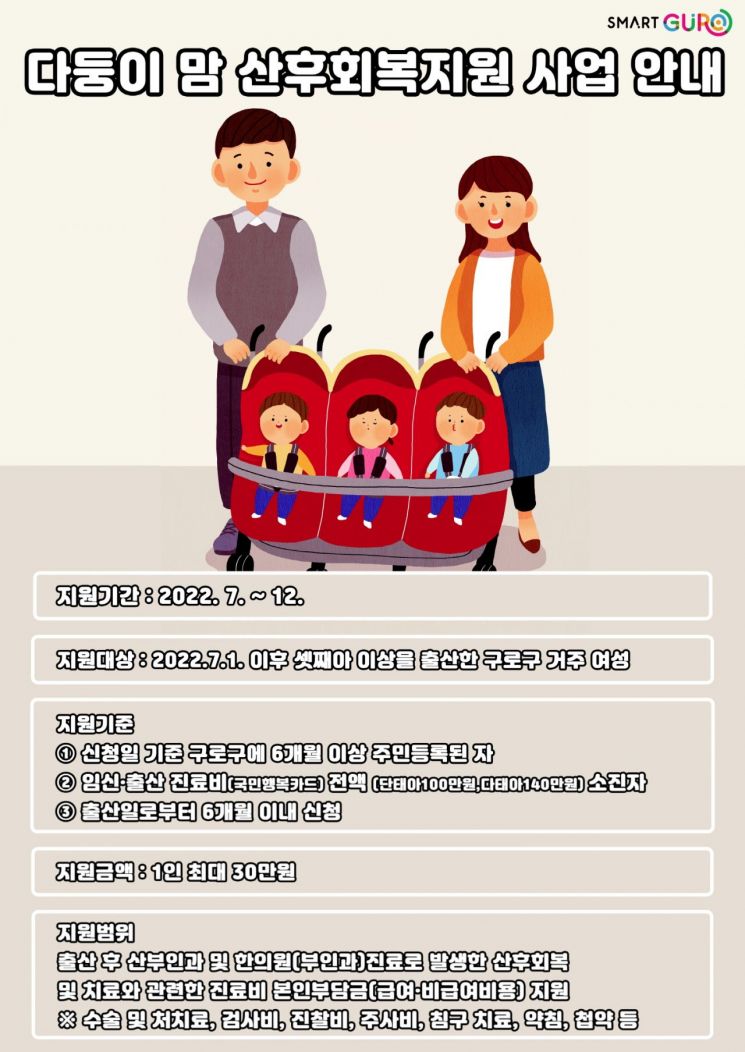
Guro-gu (Mayor Lee Sung) will provide postpartum recovery support funds to women who have given birth to their third child or more.
A Guro-gu official said on the 13th, “According to Statistics Korea, the birth rate in the first quarter of this year was 0.86, the lowest ever. We aim to lead childbirth encouragement by promoting postpartum recovery support projects that help mothers manage their health after childbirth.”
The postpartum recovery support project is a program that supports postpartum checkups in collaboration with Western and Korean medical institutions to aid the recovery and health promotion of women who have given birth to multiple children.
Guro-gu is conducting this project by investing 20 million KRW secured from the Seoul Metropolitan Government after being selected in last month’s Seoul Multi-child Mom Postpartum Recovery Support Project contest.
The support target is 60 women residing in Guro-gu who give birth to their third child or more after July 1, and up to 300,000 KRW per person will be paid for out-of-pocket expenses incurred at designated medical institutions in the region.
The eligibility criteria require women to have been registered residents of Guro-gu for at least six months as of the application date, to have fully used the pregnancy and childbirth medical expenses covered by the National Happiness Card, and to apply within six months from the date of childbirth.
Those wishing to participate should visit the Guro-gu Public Health Center (860-3274) to confirm eligibility and submit the support decision letter to the participating medical institution where they received checkups between July 1 and the end of December. The project may close early if the budget is exhausted.
Guro-gu plans to conduct an open recruitment targeting about 130 medical institutions including obstetrics and gynecology clinics and Korean medicine clinics in the region this month and finalize the participating medical institutions.
A Guro-gu official said, “We expect this postpartum recovery support project to help women who have given birth to multiple children recover healthily,” and added, “We will continue to do our best to make Guro a happy place for children and parents.”
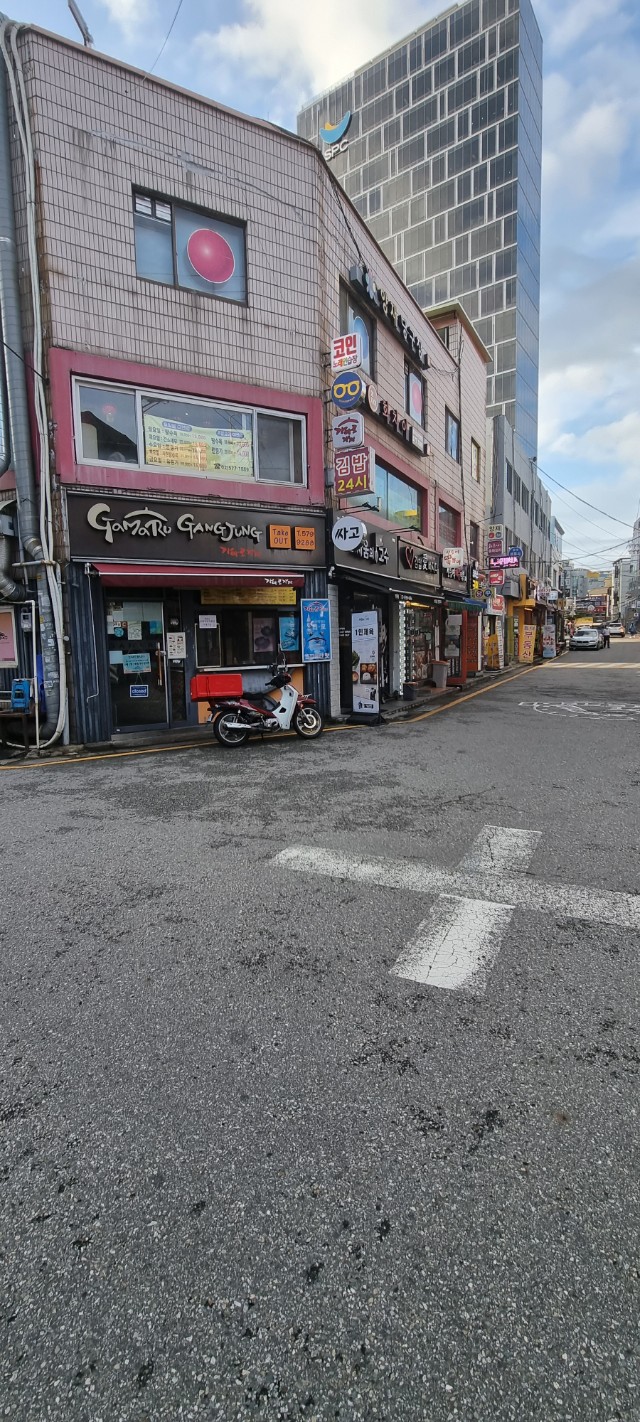
Seocho-gu announced that Yangjae Station Maljukgeori has been designated as the ‘First Alley-type Shopping District’ on the 8th, initiating efforts to revitalize alleyway commercial areas.
An alley-type shopping district is a commercial area where more than 30 small business stores are concentrated per 2,000㎡, granting qualifications similar to traditional markets, including acceptance of Onnuri gift certificates. Designation requires meeting all of the following: store density, merchant organization, and at least half agreement from merchants and landowners.
Yangjae Station Maljukgeori (around 356 Nambusunhwan-ro, Seocho-gu) is a representative alley commercial area in the district with a concentration of restaurants and pubs but has been excluded from various government support projects because it is not registered as a traditional market. Therefore, the district promoted designation as an alley-type shopping district to revitalize the alley commercial area, which has been depressed due to the prolonged COVID-19 pandemic, and to establish a foundation for receiving various support including national and city funds.
With this designation, Maljukgeori Shopping District can receive support similar to traditional markets. This includes distribution of Onnuri gift certificates, opportunities to apply for large-scale facility support projects such as merchant association offices or parking lot construction contests by the Ministry of SMEs and Startups or Seoul City, and management support projects like merchant capacity-building consulting.
Notably, this designation is significant because the district’s active efforts led to institutional improvements regarding the Ministry of SMEs and Startups’ stringent designation requirements.
The district identified that although Maljukgeori has a high concentration of small business stores, it was difficult to meet the requirements due to the interpretation of ‘area’ under the Enforcement Decree of the Traditional Market Act. Previously, ‘area’ was interpreted to include not only the land area but also the floor area of second and third floors.
To relax this condition, the district has continuously worked on this issue. Since October last year, it has persistently requested consultations with the Ministry of SMEs and Startups for ordinance amendments and actively urged institutional improvements by submitting opinion letters demanding relaxation of the interpretation standards of related laws.
Finally, in January this year, the Ministry of SMEs and Startups changed the interpretation to consider the ‘standard area for density calculation’ as only the ‘land area’ and revised the standard ordinance accordingly. As a result, the store density of Maljukgeori increased significantly from 23 small business stores per 2,000㎡ under the previous interpretation to 30 stores per 2,000㎡, enabling designation as an alley-type shopping district. This outcome reflects the Ministry’s sympathy for supporting small businesses struggling amid the unprecedented COVID-19 pandemic and the persistent efforts of Seocho-gu.
Kim Kyung-bae, president of the Maljukgeori Merchant Association, said, “To properly respond to the rapidly changing distribution environment of alley commercial areas, support from the government and local governments is desperately needed along with the efforts of small business owners. We are pleased with this alley-type shopping district designation and hope to improve the shopping district environment and increase sales through various support projects.”
Going forward, the district plans to encourage designation of alley-type shopping districts by discovering additional alley commercial areas and supporting merchant organization within the region.
Additionally, the district is carefully managing efforts to revitalize alley commercial areas, including ultra-fast loans for small business owners in distress, support for closed small businesses, and fostering a high-quality cultural and artistic commercial area by selecting Yangjaecheon-gil for a 3 billion KRW Seoul City local brand contest project in May.
Park Woo-man, Director of the Job and Economy Division, said, “We hope that the designation of the first alley-type shopping district will serve as a stepping stone to revitalize the local economy,” and added, “We will actively promote various support projects to strengthen the competitiveness of alley-type shopping districts.”
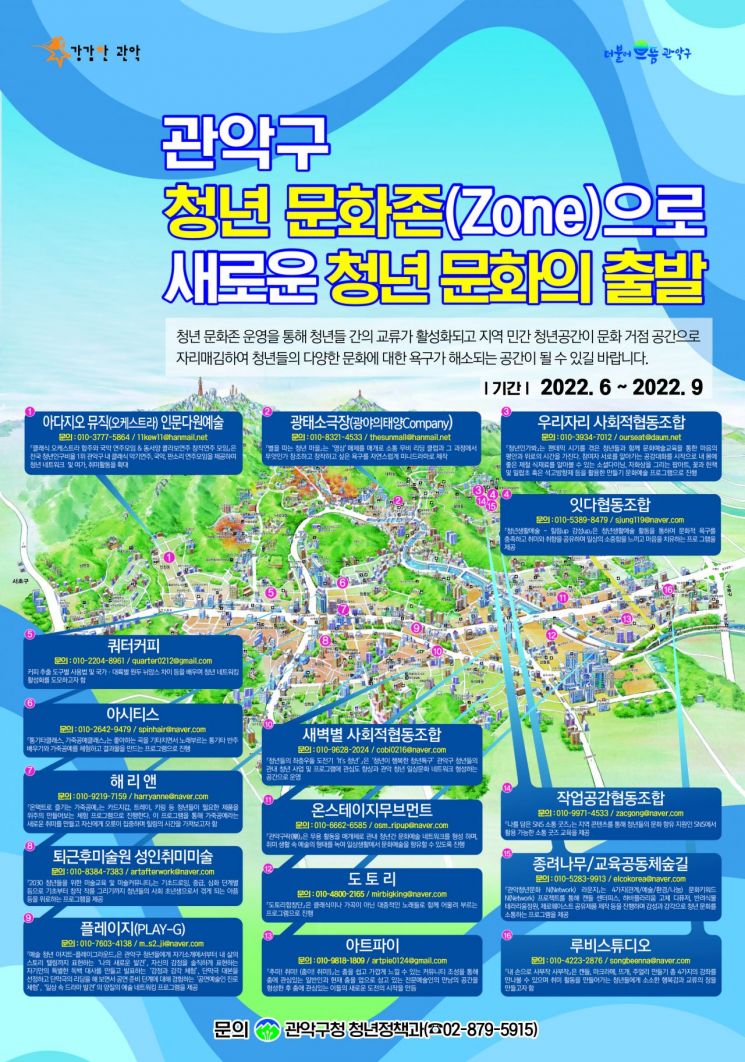
Gwanak-gu (Mayor Park Jun-hee) announced that its ‘Gwanak Youth Culture Zone,’ which provides youth networking spaces and programs to create a youth cultural hub, is receiving great responses.
As part of Seoul Metropolitan Government’s Youth Office’s ‘Support Project for Activating Autonomous District Youth Policy Governance,’ the ‘Gwanak Youth Culture Zone’ is a project that provides spaces freely accessible to youth and self-development programs through agreements with private operators until September.
The district held a project contest in March and selected 16 spaces within the region as youth culture zones, through which various programs open to youth participation are being conducted.
The programs range from hobby support activities such as dance, leather crafting, and musical instrument playing to cultural and artistic programs like art, theater, and classical music that can be enjoyed in daily life.
Additionally, healing and communication programs expand youth networks, creating small moments of happiness and opportunities for exchange among youth.
Programs at each space will operate from June to September, and detailed information about each program can be found on the Gwanak-gu Office website (News & Notices → Gwanak News). For more details, contact the Gwanak-gu Youth Policy Division or the respective program operation spaces.
Mayor Park Jun-hee said, “Through the operation of the Youth Culture Zone, exchanges among youth are being activated, and local private youth spaces are establishing themselves as cultural hubs, contributing to satisfying diverse cultural needs of youth.”
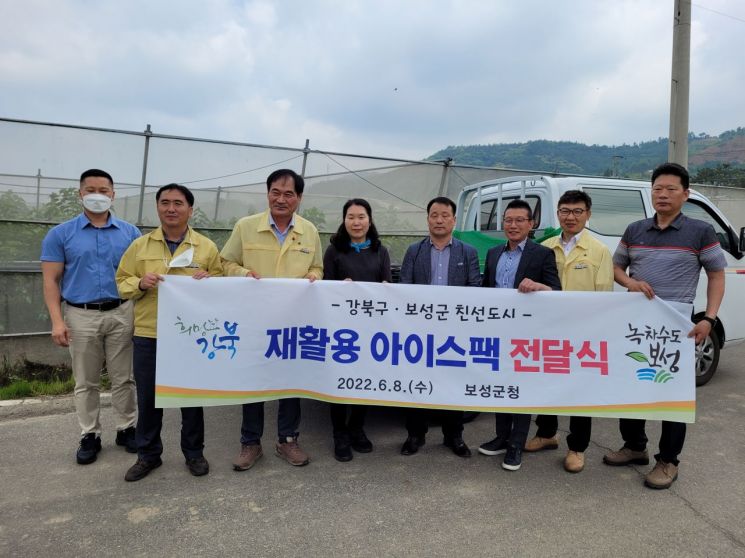
Gangbuk-gu (Mayor Park Kyum-soo) has reused gel-type ice packs that cause environmental pollution and delivered them to farms in Boseong-gun, Jeollanam-do.
Gel-type ice packs are often made of superabsorbent polymers, a type of plastic. When discarded ice packs are buried, they decompose into microplastics, destroying natural ecosystems.
Accordingly, the district has been promoting an eco-friendly policy to reuse gel-type ice packs since April last year. First, collection boxes were installed at 13 community service centers to gather discarded ice packs. The collected ice packs were cleaned, disinfected, and dried in cooperation with local social enterprises and then redistributed to traditional markets and general restaurants.
Additionally, Gangbuk-gu has delivered ice packs to its sister cities. In November last year, 3,897 recycled ice packs were delivered to Sapgyoho Tourist Complex in Dangjin-si, Chungcheongnam-do, and on the 8th of this month, 1,000 ice packs were delivered to a mulberry farm located in Beolgyo-eup, Boseong-gun, Jeollanam-do.
This delivery ceremony was held at the request of Boseong-gun to reduce the economic burden on mulberry producers who need to purchase ice packs. At the ceremony, a Boseong-gun official said, “This delivery ceremony of reused ice packs has strengthened the cooperative relationship between sister cities,” and added, “Although a small action, it has raised awareness of the importance of recycling and encouraged active participation in recycling practices.”
Gangbuk-gu Mayor Park Kyum-soo said, “It is meaningful to deliver reused ice packs to our sister city Boseong-gun,” and added, “I hope this delivery ceremony will widely spread the culture of resource circulation and help preserve the environment.”
© The Asia Business Daily(www.asiae.co.kr). All rights reserved.



















