[Asia Economy Reporter Buaeri] Household loans in the secondary financial sector have steadily increased, surpassing 771 trillion won.
According to data on 'Loan Amounts by Financial Sector' received on the 12th from the Financial Supervisory Service by Jin Sun-mi, a member of the National Assembly's Political Affairs Committee from the Democratic Party of Korea, as of the end of March, the total household loans in the secondary financial sector amounted to 771.6025 trillion won.
In particular, the total household loans in the secondary financial sector showed a sharp increasing trend. As of the end of December last year, the total household loans in the banking sector increased by 5.1% year-on-year to 1,098.8598 trillion won, while the total household loans in the secondary financial sector increased by 8.1% to 768.2658 trillion won. The growth rate of household loans in the secondary financial sector was higher than the overall growth rate of household loans across all sectors (1,867.1256 trillion won), which was 6.3%.
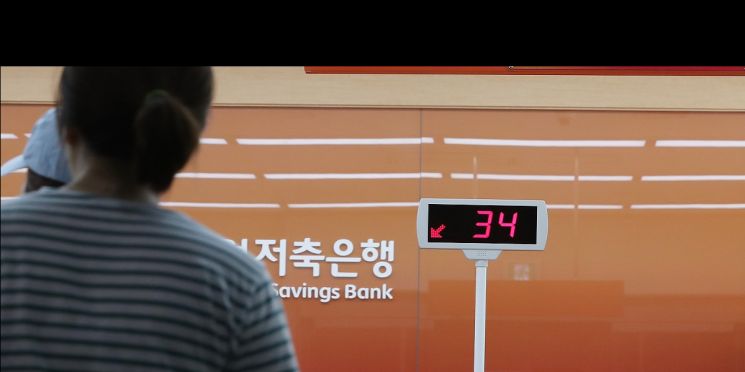
Among the secondary financial sectors, savings banks and loan businesses showed particularly high growth in total household loans. As of the end of December last year, the total household loans of savings banks increased by 16.4% year-on-year to 40.181 trillion won, and loan businesses increased by 12.2% to 10.3442 trillion won. Saemaeul Geumgo also saw a sharp increase in total household loans, reaching 103.0161 trillion won last year, up 11.5% from the previous year.
The growth rates of household loans in insurance, mutual finance, and credit card companies were below the overall growth rate of household loans across all sectors. Last year, the total household loans in insurance amounted to 65.5308 trillion won, up 5.5% year-on-year. Mutual finance increased by 4.9% to 309.0544 trillion won, and credit card companies increased by 3.2% to 116.2022 trillion won.
The number of multiple debtors holding loans from the secondary financial sector is also increasing. As of the end of December last year, the number of multiple debtors was 4.502 million, which is a 5.2% increase compared to the previous year. Among multiple debtors, those holding loans from the secondary financial sector increased by 4.3% year-on-year to 4.138 million.
However, with the slowdown in household loan growth this year, the total household loans in the secondary financial sector also showed a slower increase compared to last year. As of the end of March this year, the total household loans in the secondary financial sector (771.6025 trillion won) increased by 0.4% compared to the end of December last year (768.2658 trillion won). This is a slowdown compared to the 2% increase in the same period last year.
Representative Jin said, "It appears that household loans are concentrating in the secondary financial sector due to the balloon effect of interest rate hikes and loan regulation policies," adding, "Proactive measures are needed to prevent loan defaults."
© The Asia Business Daily(www.asiae.co.kr). All rights reserved.

















