[Asia Economy Reporter Jeong Hyunjin] The world's largest foundry (semiconductor contract manufacturing) company, Taiwan's TSMC, has caused concern after building a semiconductor factory in Kumamoto Prefecture, Kyushu, Japan. Although the Japanese government actively promised investment and extended a 'love call' to attract the facility in order to secure the semiconductor supply chain, nearby manufacturers in Kyushu are feeling a sense of crisis, saying they are losing personnel.
According to a special report titled "Silicon Island Battle for 1,200 People" published by Japan's Nihon Keizai Shimbun from the 7th to the 9th, TSMC's entry into Kumamoto is shaking up the Kyushu talent market. Kyushu was known as Silicon Island, a semiconductor hub accounting for 40% of Japan's semiconductor production in the 1980s. TSMC plans to produce semiconductor products using 22-28 nanometer (1 nm = one billionth of a meter) process technology at the Kumamoto plant, which will begin construction this year and start operations by the end of 2024.
Concerns Over Talent Drain Due to TSMC's High Salaries
According to reports, TSMC plans to hire 1,200 new employees to operate the factory. JASM, a subsidiary responsible for the Kumamoto plant jointly established by TSMC and Japan's Sony, posted engineer recruitment guidelines on its website this spring. The guidelines stated that the starting salary for university graduates entering next spring is 280,000 yen (about 2.65 million KRW), 320,000 yen for master's degree holders, and 360,000 yen for doctoral degree holders. A survey conducted by Kumamoto Prefecture in April last year targeting 197 businesses with more than 50 employees showed that the average starting salary for local university-educated technicians was 194,443 yen, and for large businesses with over 500 employees, it was 209,730 yen?nearly 90,000 yen less than TSMC's offer.
Nihon Keizai Shimbun explained, "Semiconductor-related companies in Kyushu sighed in unison after seeing the recruitment guidelines," adding, "Other companies handling manufacturing equipment are increasingly scouting talent from outside Kumamoto Prefecture, struggling to secure personnel." A factory manager producing semiconductor manufacturing equipment materials expressed concern, saying, "There is worry not only about securing talent but also about losing it."
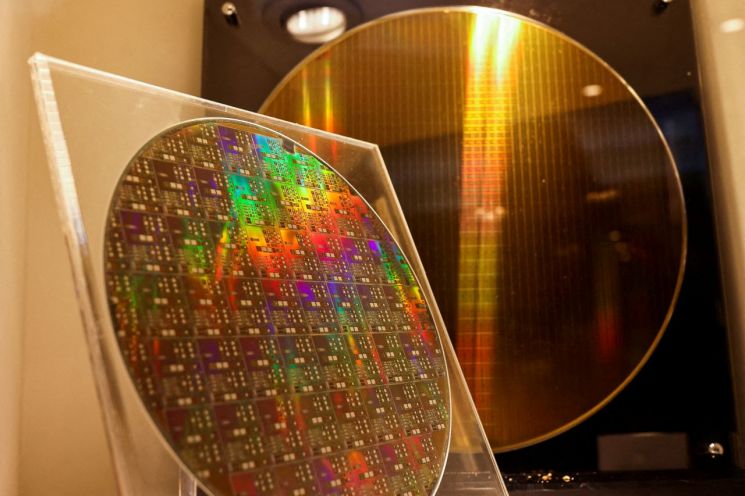
According to job category data compiled by Kumamoto authorities, the effective job-to-applicant ratio (the number of actual job openings per job seeker) in semiconductor manufacturing-related occupations in Kumamoto Prefecture was depressed at 0.56 in 2020 due to the spread of COVID-19 but expanded sharply to 3.33 last year when TSMC's entry was decided. A Kumamoto prefectural official said, "Companies looking to hire are experiencing a shortage of applicants and are expected to face recruitment difficulties for the time being," adding, "It is a situation of fierce competition over a small number of talents."
As it becomes difficult to find local personnel, options to secure foreign talent are also being considered. However, the semiconductor industry tends to avoid foreign workers due to concerns over technology leakage, and many companies require fluent Japanese for close communication because of the abundance of technical terms, causing difficulties, Nihon Keizai Shimbun reported.
If There Is No Talent, Let's Develop It... Strengthening University and High School Programs
As it becomes harder to find personnel in the semiconductor field, a war to recruit excellent students is underway within Kyushu, Japan. In February, TSMC gave a lecture at Kyushu Institute of Technology in Kitakyushu to recruit talent, expressing a desire to bring in outstanding individuals by highlighting the advantage of "less paperwork and more focus on practical work." A professor at this university also mentioned that semiconductor companies' enthusiasm for recruiting students in his laboratory is increasing.
Nihon Keizai Shimbun reported that the local semiconductor industry points out that "Kyushu's universities are weak compared to its production scale." Universities in Kyushu have a severely insufficient scale of research and development compared to institutions like Tohoku University and are not receiving government support for talent development. A Japanese professor emphasized, "Many doctoral students in Japan want to conduct only the research they desire, but universities need to cultivate more doctors who conduct research that helps business rather than just for publishing papers," adding, "That leads to strengthening semiconductor competitiveness."
In response to growing concerns about the shortage of semiconductor talent in the Kyushu region, the Japanese government decided in January to establish semiconductor manufacturing and development education programs at eight technical colleges in the area to train specialized personnel. The curriculum will focus on semiconductor-specific knowledge and skills and will be determined through consultations with educational authorities such as the Ministry of Education, Culture, Sports, Science and Technology and semiconductor development and manufacturing companies that will utilize the personnel in the future.
© The Asia Business Daily(www.asiae.co.kr). All rights reserved.


















