Cargo Solidarity Strike Enters Third Day
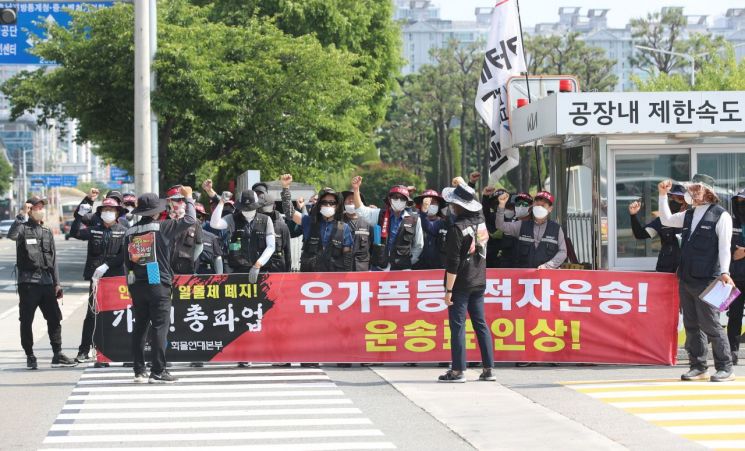 On the third day of the general strike by the Cargo Solidarity Headquarters of the Korean Public Service and Transport Workers' Union under the Korean Confederation of Trade Unions on the 9th, Cargo Solidarity union members are holding a promotional campaign in front of the Kia Motors Gwangju Plant, urging the expansion of the Safe Freight Rate System.
 [Asia Economy Reporters Kim Jong-hwa, Choi Dae-yeol] Shoe manufacturer Company A is facing a penalty of $500,000. The company sends raw materials from Korea to Vietnam to produce shoes locally and export them to the United States, but due to the Cargo Solidarity strike, they cannot send the raw materials. If they fail to meet the delivery deadline agreed upon with the U.S. buyer, they will have to pay a penalty.
Company B, which manufactures railway parts, is unable to remove cargo imported from China at Incheon Port, causing its production line to halt. They are worried that if the line operation stops, losses could increase to tens of billions of won.
As the Cargo Solidarity (Cargo Solidarity Headquarters of the Korean Confederation of Trade Unions Public Transport Workers' Union) strike enters its third day on the 9th, damages to companies and frontline sites are snowballing. Regardless of industry, major manufacturers have tightly intertwined domestic and international supply chains, but the refusal to transport by union members has disrupted the organic flow.
According to the Korea International Trade Association on this day, 112 cases of difficulties were reported as of the previous day after the strike began. Among export companies, many reported penalties or delivery delays. Importers faced difficulties such as raw material procurement disruptions, increased logistics costs, and production stoppages. Chemical product distributor Company C switched to air transport due to delayed deliveries, increasing costs. Additionally, logistics costs surged due to demurrage and storage fees caused by the logistics stoppage. Company D, which had been struggling to secure export vessels, finally secured a shipment to the U.S. after a long wait but cannot load goods due to the strike.
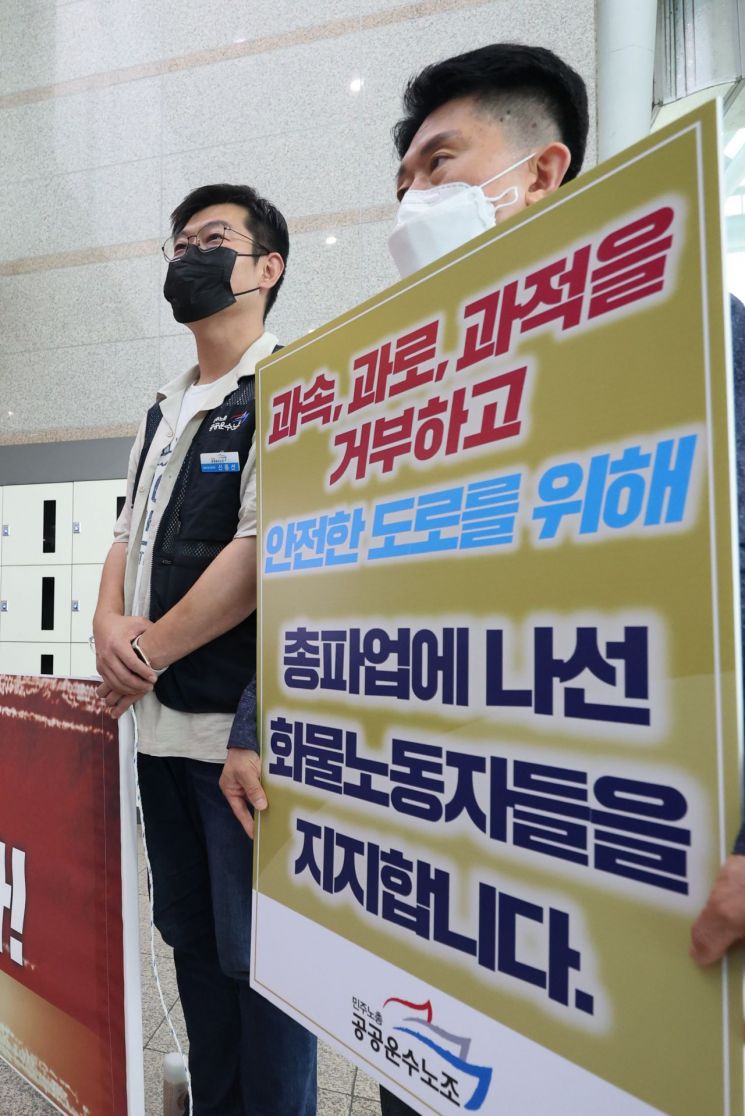 On the third day of the general strike by the Cargo Solidarity under the Public Transport Workers' Union of the Korean Confederation of Trade Unions, members of the Public Transport Workers' Union are appealing for public support for the full expansion of the safe freight rate system at Seoul Station on the 9th.
 Large corporations are also within the damage zone. Since the strike was anticipated, they have been securing inventory or using alternative methods to alleviate logistics congestion, but if the strike prolongs, there is no clear solution. Hankook Tire has been unable to ship slightly more than half of its usual volume. On the 7th, the Cargo Solidarity rally was held at the company's Daejeon plant, causing all container shipments for overseas export to be halted. Although some shipments left the Geumsan plant, overall shipments were less than half of the usual volume.
The steel and petrochemical industries cannot arbitrarily stop and start processes depending on raw material supply or logistics conditions. The automobile industry also relies on organically sourcing tens of thousands of parts for assembly, so if problems occur in even one or two places, the entire new car production line inevitably stops.
Damage in the cement and ready-mixed concrete industries is also spreading. As of this day, cement shipments have been completely halted in most regions including the metropolitan area, leading to an increase in ready-mixed concrete plants ceasing operations. The cement industry estimated losses from unshipped cement until the previous day to be about 30.8 billion won. A representative from the Cement Association lamented, "Due to the shipment stoppage caused by the strike, produced inventory continues to accumulate, reaching its limit, and we may have to adjust production volume."
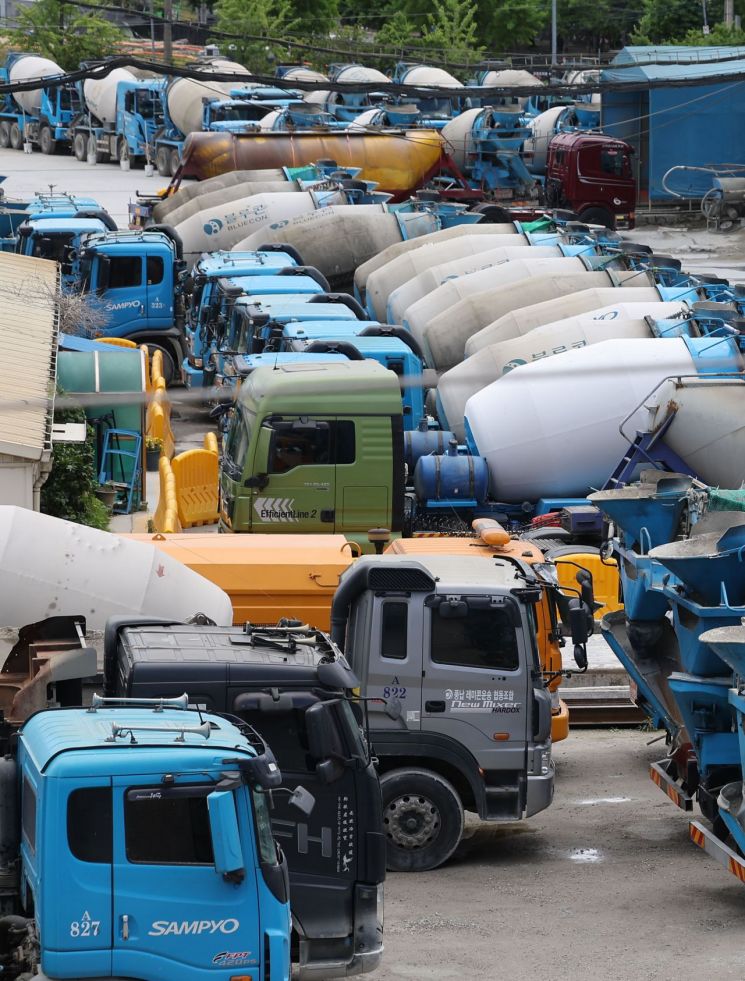
The ready-mixed concrete industry has completely stopped plant operations. A ready-mixed concrete industry official said, "This morning, half of the ready-mixed concrete plants in the metropolitan area stopped operations," and expressed concern, "By tomorrow, all ready-mixed concrete plants in the metropolitan area will cease operations."
Meanwhile, Cargo Solidarity union members have been repeatedly obstructing transportation. In Seosan, Chungnam Province, at around 6:35 p.m. the previous day, six Cargo Solidarity union members obstructed cargo truck access near the rear gate of Hanwha Total in the Daesan Petrochemical Complex and were arrested by police. In Gwangju, at around 8:45 a.m. on the same day, a union member blocked the entrance to the public parking lot of Jingok Industrial Complex in Gwangsan-gu with his own cargo truck, obstructing the entry and exit of non-union cargo truck drivers, and was arrested on the spot. This is the first time Cargo Solidarity union members participating in the general strike in Gwangju and Jeonnam have been taken into police custody.
© The Asia Business Daily(www.asiae.co.kr). All rights reserved.



















