KAIST Research Team Discovers 'NK-like T Cells' Functioning in Both Innate and Adaptive Immunity
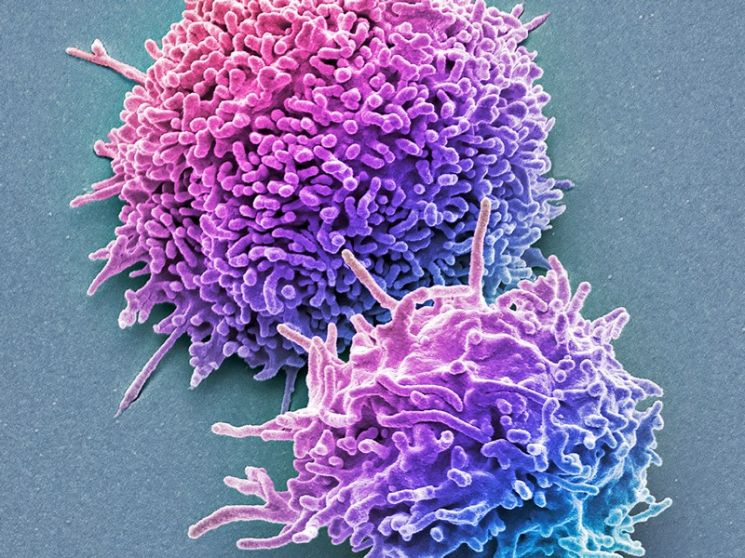
[Asia Economy Reporter Kim Bong-su] The conventional belief that the human immune cells are divided into NK cells responsible for innate immunity and T cells responsible for adaptive memory immunity has been broken. A domestic research team has discovered a new type of T cell that performs both innate and adaptive immune functions.
KAIST announced on the 8th that a research team led by Professor Shin Ui-cheol of the Graduate School of Medical Science and Engineering at KAIST, in collaboration with Professor Park Soo-hyung of the same school, and Professors Joo Dong-jin and Park Jun-yong of Yonsei University College of Medicine, discovered a new type of 'NK-like T cell' in the liver that possesses characteristics of both innate and adaptive immunity and clarified its functional properties.
When pathogenic microorganisms such as bacteria or viruses invade the human body, innate immunity acts first. Innate immunity has the advantage of acting quickly but cannot distinguish the types of pathogenic microorganisms and does not form memory immunity. On the other hand, adaptive immunity gradually activates about 4 to 5 days after infection. Although adaptive immunity activates slowly, it has the ability to distinguish each pathogenic microorganism and creates memory immune cells after recovery, enabling a rapid response upon re-invasion by the same microorganism.
Especially in viral infections, immune cells specialized in eliminating virus-infected cells play an important role. Among these, NK cells (natural killer cells) represent innate immunity, and T cells represent adaptive immunity. These two types of immune cells recognize virus-infected cells differently: T cells detect viral protein fragments as antigens, whereas NK cells detect virus-infected cells through increased expression of stress molecules.
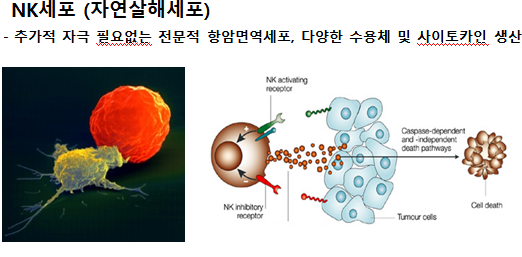
Until now, immunology has studied NK cells and T cells as clearly distinct immune cells, but through this research, the team newly discovered 'NK-like T cells' that possess characteristics of both NK cells and T cells. They also found that these NK-like T cells do not recognize viral protein antigens through T cell receptors but detect and eliminate abnormal cells via the NK cell receptor 'NKG2C.'
The research team mainly analyzed immune cells present in the liver, which is considered an immunologically unique organ. Blood entering from the small and large intestines passes through the liver before joining the systemic circulation. In this process, many external substances and pathogenic microorganisms entering from the intestines are filtered by the liver, making the liver the first immunological checkpoint. Meanwhile, the liver is also well known as an organ exhibiting immunological tolerance, regulating excessive immune responses to pathogenic microorganisms. To analyze the complex and finely regulated immunological characteristics of the liver in detail, the research team applied the latest research technique called single-cell transcriptome analysis. As a result, they discovered NK-like T cells in the liver that possess both innate and adaptive immune characteristics. They also found that the number of these NK-like T cells increases in the livers of patients suffering from chronic liver disease caused by hepatitis B virus.
It is still unclear what role the newly discovered NK-like T cells play in various diseases such as viral infections. Currently, the research team is actively conducting follow-up studies based on the hypothesis that NK-like T cells selectively eliminate abnormally transformed cells caused by infections or various other factors, thereby playing an important role in maintaining homeostasis in the body. Meanwhile, following a recent paper published in Science by Professor Mark Davis's team at Stanford University School of Medicine reporting that T cells expressing NK receptors suppress the functions of other immune cells, the research team is also analyzing whether the newly discovered NK-like T cells perform immunosuppressive functions depending on the body's conditions.
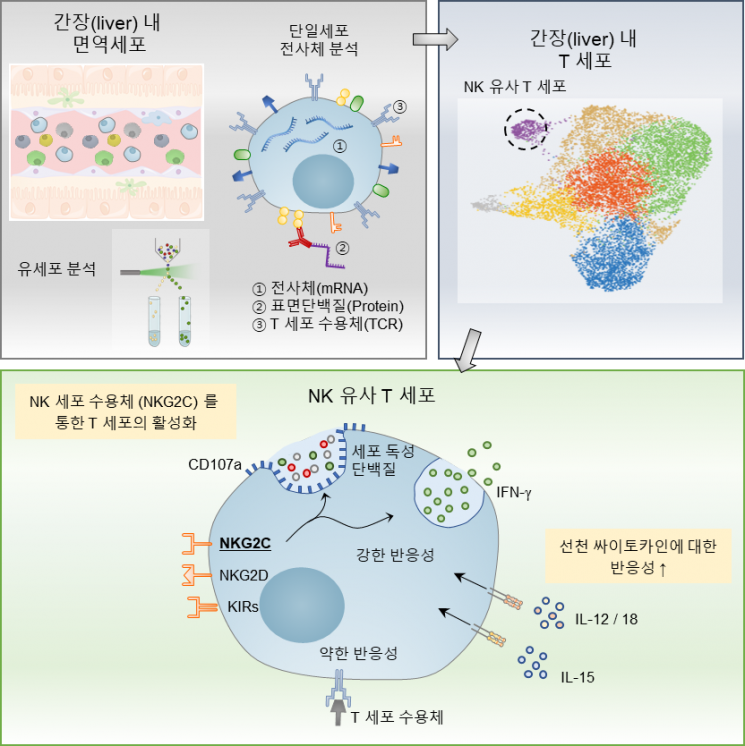
Professor Shin said, "Using the latest research method of single-cell transcriptome analysis, we were able to analyze the complex immune cells within the liver in detail, which led to the important discovery of a new type of immune cell called NK-like T cells," and added, "We will continue research to elucidate the physiological and pathological functions of NK-like T cells."
This study is significant in that it discovered a new immune cell operating at the boundary between innate and adaptive immunity, which had been dichotomously divided in the field of immunology, and by revealing its characteristics, it allows us to view the human immune response from a new perspective.
The research results were published online on the 26th of last month in the international academic journal in the field of hepatology, the Journal of Hepatology.
© The Asia Business Daily(www.asiae.co.kr). All rights reserved.
![Clutching a Stolen Dior Bag, Saying "I Hate Being Poor but Real"... The Grotesque Con of a "Human Knockoff" [Slate]](https://cwcontent.asiae.co.kr/asiaresize/183/2026021902243444107_1771435474.jpg)













