Enforcement of the Revised Notice on Types of Infectious Diseases Designated by the Director of the Korea Disease Control and Prevention Agency on the 8th
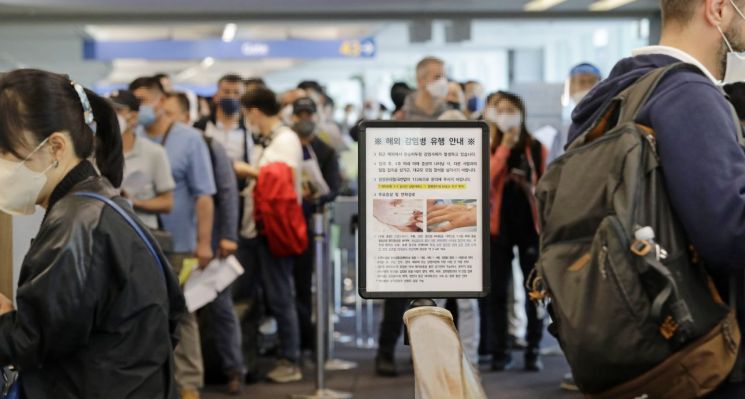
[Asia Economy Reporter Kim Young-won] Monkeypox, which is causing infections worldwide, has been designated as a second-class infectious disease.
The Korea Disease Control and Prevention Agency (KDCA) announced on the 8th at 10 a.m. that it will revise and enforce the "Types of Infectious Diseases Designated by the Director of the KDCA." Accordingly, monkeypox will have the legal status of a second-class infectious disease from that day, with mandatory hospitalization and isolation. The enforcement takes effect from 0:00 on the same day.
Previously, the quarantine authorities issued a "concern" level crisis alert for monkeypox on the 31st of last month and announced its designation as a second-class statutory infectious disease. Although the risk of monkeypox to the general public was assessed as "low," the KDCA explained that due to the disease's characteristics requiring isolation, it is pushing for its designation as a second-class infectious disease.
Second-class infectious diseases require reporting within 24 hours upon occurrence or outbreak, and some require isolation. Among the existing 22 second-class infectious diseases, 12 require hospitalization and treatment at infectious disease management institutions, including COVID-19, tuberculosis, cholera, and typhoid fever. Ko Jae-young, spokesperson for the KDCA, stated, "If confirmed cases of monkeypox occur domestically, they will be treated in isolation wards," adding, "The necessity of isolation for contacts is under review."
The quarantine authorities are also promoting the domestic introduction of the third-generation smallpox vaccine, which has shown effectiveness against monkeypox. Kwon Geun-yong, head of the Vaccination Management Team at the COVID-19 Vaccination Response Task Force, said, "We are currently negotiating with manufacturers for the domestic introduction of the third-generation smallpox vaccine," adding, "We will provide information on the quantity and schedule of introduction as soon as they are decided." The third-generation smallpox vaccine developed by Bavarian Nordic of Denmark has been approved in the United States for the prevention and symptom relief of monkeypox.
So far, no suspected or confirmed cases of monkeypox have been reported in Korea, but the spread continues worldwide. The World Health Organization (WHO) reported that as of the 2nd, 780 cases of infection have been reported in 27 non-endemic countries. This is about a threefold increase from 257 cases on the 26th of last month within a week. The WHO explained that the sudden appearance of monkeypox in some non-endemic countries suggests that transmission may have occurred undetected for an unknown period.
Experts say that due to the long incubation period of monkeypox, there is a possibility of undetected importation into Korea. Professor Kim Woo-joo of the Department of Infectious Diseases at Korea University Guro Hospital explained, "(Monkeypox) has a long incubation period, so there is no guarantee that symptoms will appear while passing through quarantine in just five minutes, and it is more likely to be discovered in the community through symptoms such as fever or rash rather than at quarantine." However, Professor Kim added, "Even if early detection is missed, it will not lead to a large-scale outbreak like COVID-19 because it is not transmitted through the air."
© The Asia Business Daily(www.asiae.co.kr). All rights reserved.
!["The Woman Who Threw Herself into the Water Clutching a Stolen Dior Bag"...A Grotesque Success Story That Shakes the Korean Psyche [Slate]](https://cwcontent.asiae.co.kr/asiaresize/183/2026021902243444107_1771435474.jpg)
















