Majority Votes in Daejeon, Sejong, and Chungnam
Ruling Party Washes Away 4-Year Defeat Shame
"Will Work with a Humble Attitude"
Yoon Government Secures Momentum for National Policy
Opposition Barely Wins in Honam and Jeju
Kim Dong-yeon Wins Sweatily by 0.15%P in Gyeonggi
"Great Responsibility for Failing to Show Real Innovation"
Emergency Committee to Be Dissolved and New Leadership Formed Again
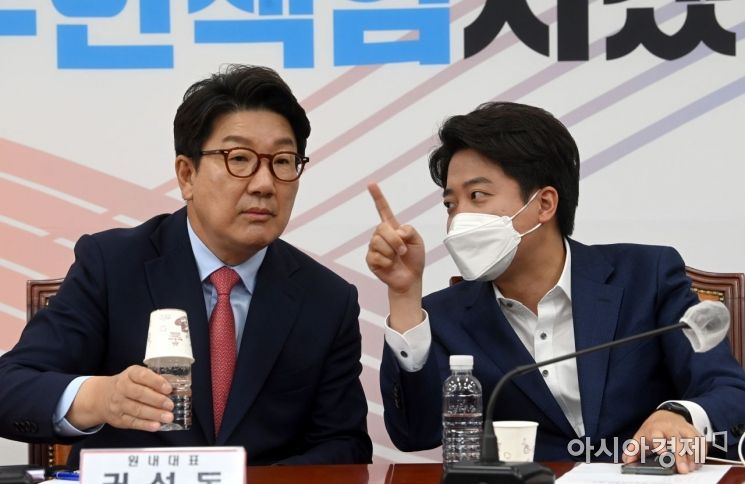 Lee Jun-seok, leader of the People Power Party, is talking with Kwon Seong-dong, floor leader, at the Supreme Council meeting held at the National Assembly on the 2nd. Photo by Yoon Dong-joo doso7@
[Asia Economy Reporter Lee Hyun-joo] Following their victory in the presidential election, the People Power Party (PPP) secured a landslide win in the June 1 nationwide local elections, effectively completing the regime change. Regarding the local election results, the PPP expressed gratitude, stating they would "work with a humble attitude," while President Yoon Suk-yeol calmly remarked, "I accept this as the people's will to revive the economy and better care for their livelihoods." The Democratic Party of Korea (DPK) managed to save face by securing wins in four areas including Honam and Jeju, and narrowly winning in Gyeonggi Province. However, the party faced a crisis as it had to dissolve the emergency committee formed shortly after the presidential election in less than two months and establish a new leadership system.
According to the vote count results from the Central Election Commission on the 2nd, the PPP won in 12 out of 17 metropolitan and provincial governor seats, excluding five areas: Gyeonggi, Jeonbuk, Jeonnam, Gwangju, and Jeju. In the fiercely contested regions of Daejeon, Sejong, and Chungnam, PPP candidates all secured over 50% of the votes, wiping away the bitterness of their heavy defeat in the local elections four years ago. Voter turnout was 50.9%, the second lowest among the eight local elections held so far.
In this election, voters chose regime "stability." While concerns were raised over the so-called "complete removal of prosecution's investigative authority" (Geomsu Wanbak) bill pushed after the presidential election, the Yoon Suk-yeol administration, which had been in office for less than a month, gained favorable responses by smoothly concluding events such as opening the Blue House and the Korea-US summit. The "Yoonpung" effect also played a role in this process. As a result, the PPP swept more than half of the 226 seats for heads of city, county, and district local governments nationwide, winning 145 seats. The Yoon administration secured momentum to push forward its national agenda.
The PPP also increased its number of seats by one in the parliamentary by-elections held alongside the local elections. Initially, the by-elections were held in four districts where incumbent PPP lawmakers ran for local office and three districts for the DPK, but the Wonju Gap district in Gangwon Province was won by the PPP.
The DPK faced public judgment once again after losing both the presidential and local elections. Following the presidential election, the party appeared to dominate as a major opposition by forcefully pushing through the "Geomsu Wanbak" bill and delaying personnel hearings. Additionally, scandals involving sexual misconduct by incumbent lawmakers surfaced, and the party disrupted even the agreement made last July between the two parties’ floor leaders to hand over the chairmanship of the Legislation and Judiciary Committee in the second half of the year. Particularly, the intensified attacks on Lee Jae-myung, the party’s general election committee chairman who was the sole survivor in the by-elections, pose a significant burden.
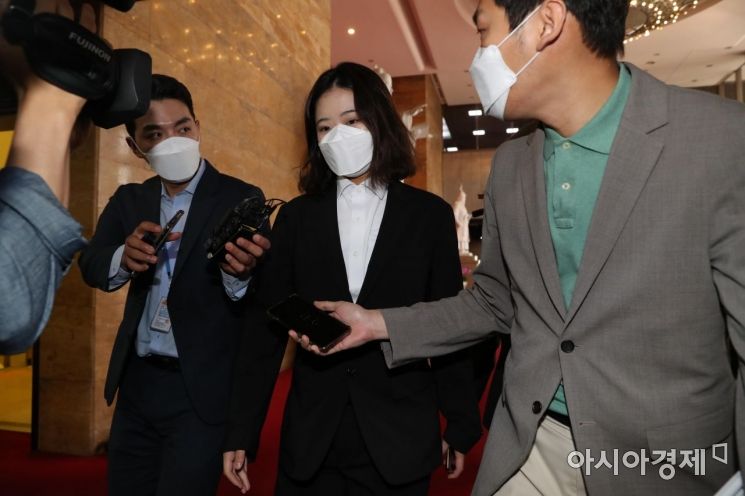 Park Ji-hyun, Co-Chair of the Emergency Response Committee of the Democratic Party of Korea, is entering the party leader's office at the National Assembly on the 2nd to attend a closed emergency response committee meeting. Photo by Yoon Dong-joo doso7@
However, the worst was avoided by a last-minute dramatic turnaround in the highly contested Gyeonggi Province governor race. Kim Dong-yeon, the DPK candidate for Gyeonggi governor, who had been trailing overnight, overtook Kim Eun-hye of the PPP around 5:30 a.m. on the day, winning by a final margin of 0.15 percentage points.
Both ruling and opposition parties bowed their heads to the election results. Lee Jun-seok, leader of the PPP, said at the Supreme Council meeting that day, "We are extremely grateful and humbled by these results," adding, "Just as the Democratic Party was intoxicated by their achievement of 180 seats in the general election two years ago and ran a one-sided dominance, only to face opposite results after about two years, we will work based on the lesson to humbly focus solely on the people."
The DPK held a closed emergency committee meeting that day. Before the meeting, Park Ji-hyun, co-chair of the DPK’s emergency committee, briefly stated, "The party bears great responsibility for not showing a proper image of reform."
© The Asia Business Daily(www.asiae.co.kr). All rights reserved.
![Clutching a Stolen Dior Bag, Saying "I Hate Being Poor but Real"... The Grotesque Con of a "Human Knockoff" [Slate]](https://cwcontent.asiae.co.kr/asiaresize/183/2026021902243444107_1771435474.jpg)

















