Expansion of Global Companies' 5G Private Network Solutions
Increasing Cases of I-eum 5G Adoption in Korea
Ericsson LG Expands Portfolio for Domestic Telecoms and Enterprises
Promotes New Products
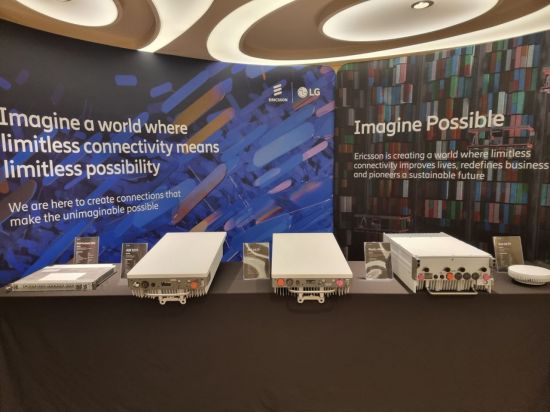 Ericsson LG held a press conference on the 30th for 'Imagine Live Korea 2022' to introduce its new product portfolio and the 'Ericsson LG (EP) 5G' solution. The photo shows the exhibited 5G Massive MIMO products.
[Asia Economy Reporter Cha Min-young] #. The mobile workstations connected to the production lines at Factory A in Spain change every time to keep up with thousands of types of processes. In the era of mass production of various products, this system frequently changes the work lines, which would have been unthinkable with fixed workstations due to enormous costs and time.
#. In the 20,000-pyeong logistics warehouse of Company B in the United States, drones handle simple and repetitive logistics tasks instead of human workers. The drones move freely while transporting goods. By utilizing drones to recognize barcodes in real time, it is possible to instantly check how much inventory remains, improving inventory management efficiency.
Cases of global companies adopting 5G private network solutions are increasing, mainly in North America and Europe. Demand for 5G private networks has grown from raw material companies such as coal and oil to manufacturing industries including smartphones, semiconductors, and automobiles. In South Korea, as the introduction of 'Eum 5G (5G private network)' begins to sprout, Ericsson LG is also starting to expand its portfolio in earnest.
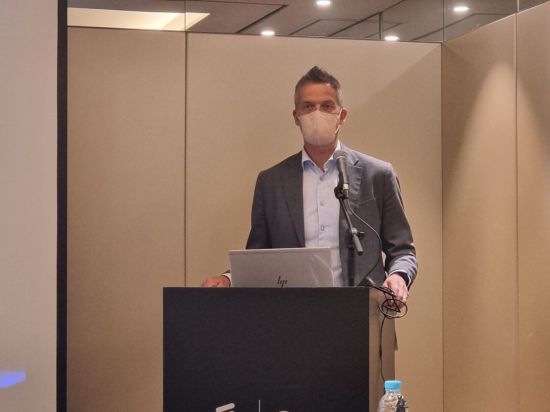
H?kan Sellberg, CEO of Ericsson LG, held a press conference for 'Imagine Live Korea 2022' on the morning of the 30th at The Plaza Hotel in Seoul, stating, "Our vision is to improve life through infinite connectivity, redefine business, and pioneer a sustainable future." The number of global 5G subscribers, currently increasing by about one million per day, is expected to reach a total of 4.4 billion by 2027. In Korea, leading the 5G trend, the average monthly 5G traffic usage is projected to increase nearly fourfold from 11GB in 2021 to around 41GB by 2027.
Ericsson LG focused this year on securing domestic references for its enterprise (B2B) EP 5G business. The briefing session scheduled for the 31st for telecom companies and enterprises aligns with this focus. The main target is companies demanding Eum 5G. Interest from companies wanting separate isolated networks for various purposes, including their own security, has significantly increased since the end of last year. The market also holds expectations that the 5G 28GHz band, which had become a burden due to lack of proper use, could find new opportunities through Eum 5G. Previously, overseas, Ericsson secured over 50 references including its own 5G smart factories, Vodafone, Audi, MediaTek, and China Mobile. Executive Director Shim Gyo-eon said, "The related market worldwide is expected to grow by more than 20% by 2027. Last year, many companies were unaware of private networks themselves, but this year, more are showing interest."
The biggest advantage of Ericsson LG's EP 5G product is that the software (SW) installation and initial setup time take less than an hour, making it easy and fast. The frequency is combined and provided from the factory during production, so the installation at the demand site can be done with just a few clicks through partners. Executive Director Shim emphasized, "Demand companies usually perform installation work during nighttime when factory operations decrease, and if it takes more than 4-5 hours, it incurs significant costs and time besides quality issues. Another strength is the indoor planner tool, which allows optimized design proposals and estimates based on blueprints without visiting the customer site."
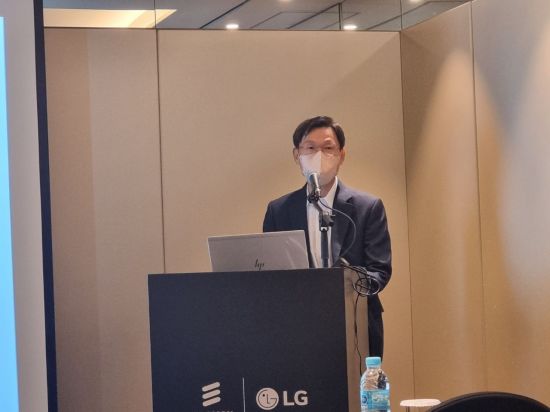
Ericsson LG also introduced new Massive MIMO products specialized in energy-saving effects to be launched within this year or next year. These include the top-performing AIR 6419, AIR 6428, and AIR 3219. Although AIR 3258 and AIR 3268 have been developed, there are currently no plans to release them in Korea. The LAN processor 6651 will also be introduced within the year. Chief Technology Officer Kwon Kyung-in said, "We are also developing Massive MIMO interference detection technology. It is a technology specialized for urban areas that can increase network capacity by up to 40%, which will solidify our technological leadership."
The strengths of automation technology and network slicing technology were also mentioned. Executive Director Jo In-sook emphasized, "The core of 5G technology lies in automation. Through artificial intelligence (AI) technology and automation, digital transformation is achieved to increase network cost-effectiveness and efficiency." Additionally, network slicing technology, which allows cutting multiple networks to use as desired, is a differentiating factor. For example, in November last year, network slicing selection was demonstrated with a Taiwanese operator, and commercialization will proceed this year.
Meanwhile, Ericsson's global headquarters plans to reduce carbon dioxide emissions across the entire value chain for a sustainable future. They have set a long-term goal of 'net zero' by 2040 and plan to reduce emissions from portfolios and supply chains by 50% by 2030.
© The Asia Business Daily(www.asiae.co.kr). All rights reserved.
![Clutching a Stolen Dior Bag, Saying "I Hate Being Poor but Real"... The Grotesque Con of a "Human Knockoff" [Slate]](https://cwcontent.asiae.co.kr/asiaresize/183/2026021902243444107_1771435474.jpg)













