EU-Russia Oil Embargo Agreement Fails Again
Inflation Worsens Amid Peace vs. Hardline Debate
Zelensky: "We Will Fight and Surely Win"
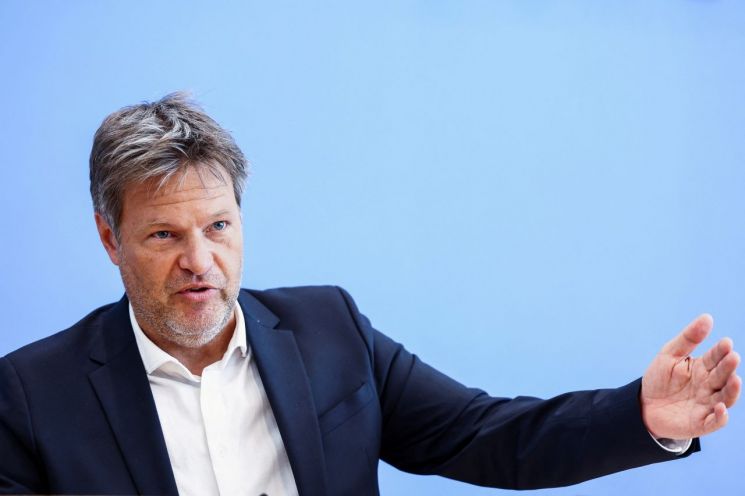
[Asia Economy Reporter Hyunwoo Lee] Robert Habeck, Germany's Vice Chancellor and Minister for Economic Affairs and Climate Action, warned that the European Union's (EU) unity on sanctions against Russia is breaking down. As the EU continues to fail in reaching an agreement on the ban of Russian oil imports, divisions among member states are deepening, raising concerns about potential cracks in the existing sanctions against Russia.
With the prolonged Ukraine war exacerbating inflation damages, Western countries centered around the EU are divided between those advocating for a swift peace negotiation and those pushing for a hardline stance.
According to CNN on the 29th (local time), Minister Habeck said at a press conference, "Since Russia's invasion of Ukraine, we have seen what Europe can achieve when united. But that unity is already breaking and beginning to break further. I hope that unity continues at the EU summit starting on the 30th."
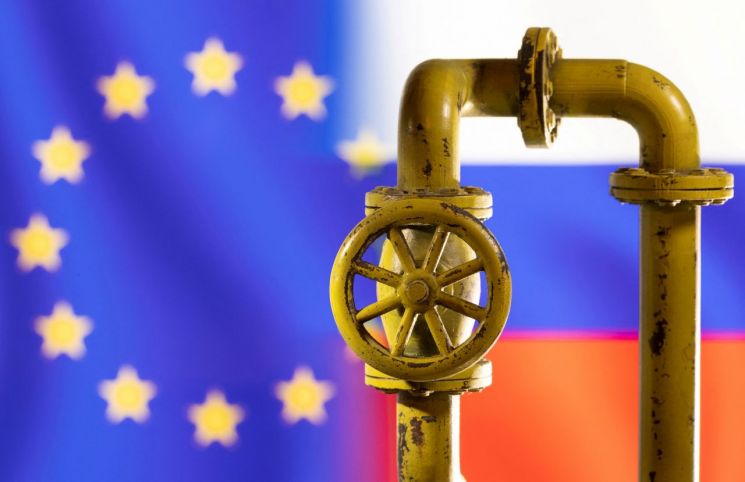
The remarks are interpreted as pointing to the failure of EU delegations from various countries to reach another agreement on the Russian oil ban ahead of the two-day EU summit held in Brussels, Belgium, from the 30th to the 31st.
According to the Associated Press, the EU proposed a compromise plan to exclude the Druzhba pipeline, a major route for Russian oil imports to Hungary, from the sanctions and to grant Hungary a significant grace period for the ban. However, Hungary rejected the proposal and expressed opposition. Along with Hungary, the Czech Republic, Slovakia, and Bulgaria are also reportedly maintaining their opposition.
The Hungarian government is demanding substantial financial support as a condition for agreeing to the Russian oil ban. Previously, Hungary's government stated that its dependence on Russian oil is about 64%, and that it would require 15 to 18 billion euros (approximately 20 to 24 trillion won) in the medium to long term for Hungary's economy to become independent from Russian oil, thus requesting support from the EU.
The EU's strong efforts to reach an agreement on the Russian oil ban stem from growing concerns over weakening unity as disagreements among Western countries intensify regarding solutions to the Ukraine crisis. According to The Wall Street Journal (WSJ), voices are rising in Europe, centered on Italy and including Germany and France, advocating that Ukraine should pursue a swift peace agreement with Russia even if it means ceding some territory.
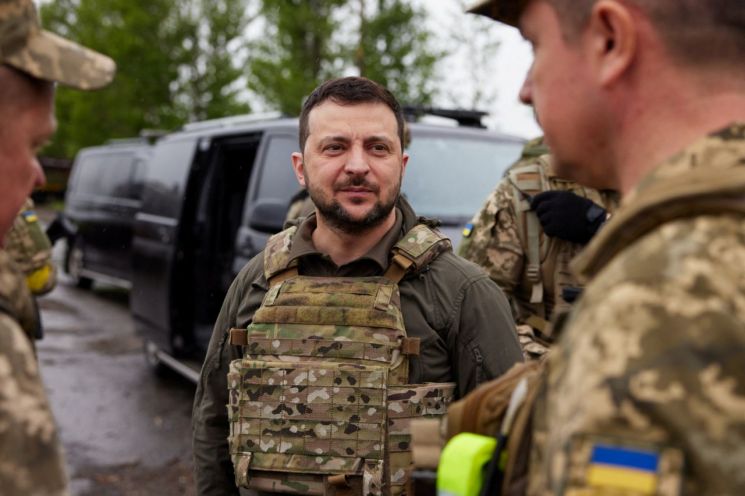
Ukraine is strongly opposing this movement. Ukrainian President Volodymyr Zelensky visited Kharkiv, the second-largest city located on the northeastern front, for the first time since Russia's invasion, reaffirming his determination to defend the territory. President Zelensky stated, "Russia must know that we will defend our territory until the very end," adding, "We will fight and we will definitely win."
© The Asia Business Daily(www.asiae.co.kr). All rights reserved.



















