[Seoul District News] Gwangjin-gu Provides Cooling and Heating Functions from June to September and November to March for Residents' Convenience; Unique Gwang-i and Jin-i Character Designs Enhance Familiarity... Dongdaemun-gu Launches 2022 National Policy Design Team... Mapo-gu Partners with Gosiwon to Identify At-Risk Households... Gangbuk-gu Supports 90% of Seismic Performance Evaluation and Certification Fees for Private Buildings
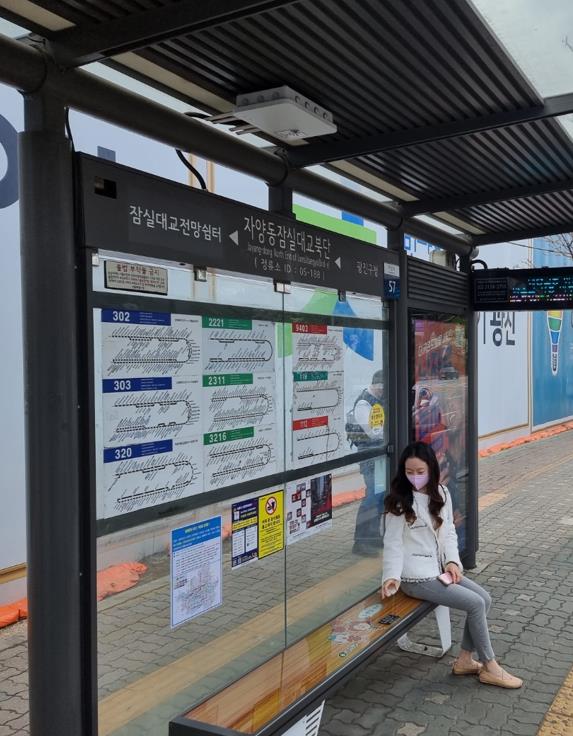
[Asia Economy Reporter Park Jong-il] Gwangjin-gu is activating the cooling function of cooling/heating chairs installed at bus stops to provide residents with a place to rest and escape the heat.
The cooling/heating chairs are installed at 33 bus stops with high usage rates within Gwangjin-gu, including Gangbyeon Station, Gunja Bridge, Yongamsa Entrance, and Jayang Intersection.
They are expected to offer coolness in summer and warmth in winter not only to passengers waiting for buses but also to residents walking along the streets.
The chairs operate with an automatic temperature controller, consuming little electricity. In summer, the surface temperature can be lowered to 28℃, and in winter, they can generate heat up to 42℃.
With this summer predicted to be exceptionally hot, the cooling chairs will operate from June to September. The cooling function activates between 6 a.m. and 10 p.m. when the outside temperature rises above 26℃.
From November to March of the following year, when the cold begins, the chairs transform into warm heating chairs. The heating activates between 6 a.m. and 10 p.m. when the outside temperature falls below 26℃.
Additionally, the district added the characters Gwang-i and Jin-i to the cooling/heating chairs installed at bus stops to enhance the city’s aesthetics.
Gwangjin-gu expects that by providing cooling/heating chairs at bus stops, residents will be able to spend summer and winter comfortably and pleasantly, even if only for a short time, by escaping the heat and cold.
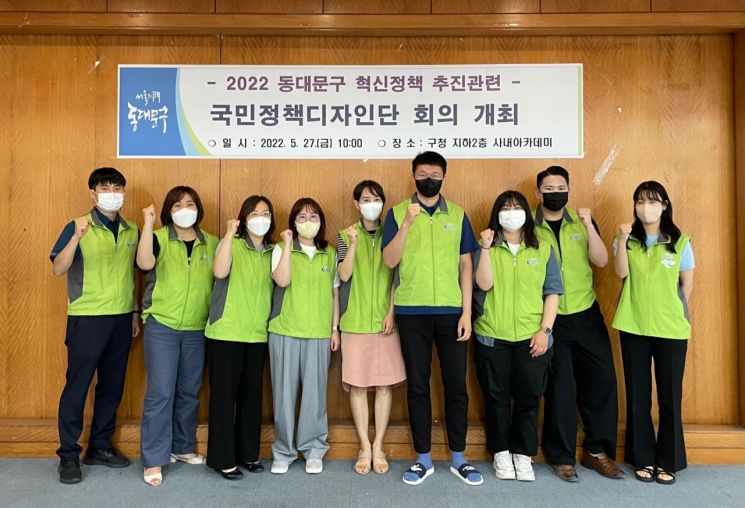
Dongdaemun-gu (Mayor Yoo Deok-yeol) held the first meeting of the ‘National Policy Design Group’ on the 27th at the underground 2nd floor in-house academy of the district office to smoothly promote the ‘Safety Village Environment Improvement Project for Single-Person Households in University Areas.’
The ‘National Policy Design Group’ is a ‘citizen-participatory’ policy model where policy demanders (‘citizens’), policy officers (‘public officials’), and experts and service designers in the relevant fields participate together in the entire policy decision-making process to develop and implement public services that citizens truly need.
The ‘Dongdaemun-gu National Policy Design Group,’ composed of residents, experts, and public officials, collaborates with Dongdaemun Police Station and local universities (Kyung Hee University, Hankuk University of Foreign Studies) to promote the ‘Village Safety Environment Improvement Project’ to solve disaster, crime, and daily safety issues.
The main target of the project is female single-person households and foreign international students living in one-room neighborhoods around university areas. Through public-private-academic collaboration, the project applies Crime Prevention Through Environmental Design (CPTED) to prevent crime and seeks solutions by identifying problems from the actual target groups’ perspectives.
Notably, many local youths enrolled in universities within the district (University of Seoul, Kyung Hee University, Hankuk University of Foreign Studies) have joined the design group, expected to provide various opinions and ideas related to realistic safety issues near university areas. The proposed opinions and ideas will be reflected in actual policies.
A district official stated, “This National Policy Design Group aims to enhance effectiveness by involving policy beneficiaries directly throughout the entire process from task selection to policy implementation. We will do our best to create a safe village by implementing policies with high resident satisfaction through cooperation among residents, experts, public officials, and service designers.”
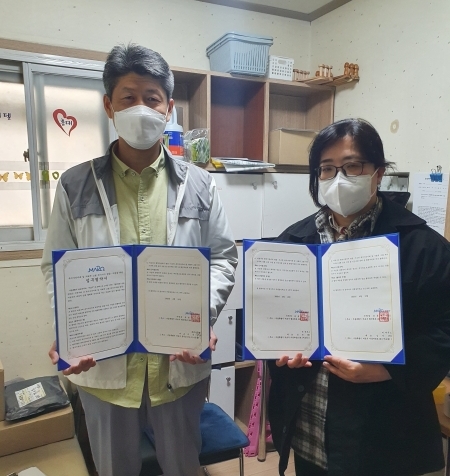
Mapo-gu has signed a business agreement with gosiwons (small lodging facilities) in Mapo-gu to minimize welfare blind spots and identify households that are socially isolated.
To this end, Mapo-gu conducted a full survey of the operational status of 153 gosiwons within the district to identify economically vulnerable and socially isolated residents and provided guidance on the business agreement for discovering welfare blind spots.
As a result, 49 gosiwons expressed their willingness to participate and signed the ‘Business Agreement for Discovering and Supporting Welfare Blind Spots and Socially Isolated At-Risk Households.’
Through this agreement, the district and gosiwons plan to identify vulnerable groups facing difficulties in economic and health aspects, share information mutually, and minimize welfare blind spots.
Gosiwon officials said that if they discover vulnerable residents among gosiwon occupants, such as those with unpaid rent, illness, or livelihood difficulties, they can report via Mapo-gu Office’s KakaoTalk channel ‘Mapo Welfare Connection’ or directly to the Mapo-gu Welfare Policy Division.
Upon receiving a report, the relevant community service center visits the target household to conduct counseling, assessing ▲living conditions ▲health status ▲risk factors ▲needed services.
Based on this, support is provided to at-risk households using public benefits such as ▲basic living security ▲lower-income support ▲emergency resources ▲Care SOS, as well as private resources. If the household is at risk of social isolation, it is selected as a case management target for continuous monitoring.
The district plans to produce welfare service guidebooks to be placed in partner gosiwons and will continuously provide welfare information to gosiwons through mail and visits for new welfare projects.
Additionally, the district will actively reflect requests from partner gosiwons to improve systems for effective identification and support of at-risk households and will continue to discover new partner gosiwons.
A district official said, “We hope this agreement will serve as an opportunity to minimize welfare blind spots caused by COVID-19. We will expand various projects to identify at-risk households that are socially isolated.”
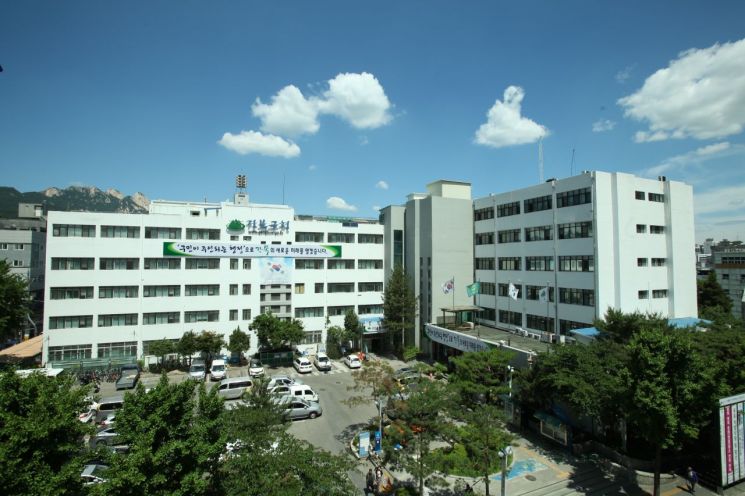
Gangbuk-gu (Mayor Park Gyeom-su) will support the costs required for earthquake safety facility certification for private buildings.
The ‘Earthquake Safety Facility Certification System’ is a system that attaches a certification plate to facilities so that it is immediately clear whether the facility is safe from earthquakes. Certification is conducted by specialized institutions in facility safety, such as the Korea Facility Safety Corporation and the National Land Safety Management Institute.
The support target is private buildings within Gangbuk-gu. However, buildings that violate laws, such as unauthorized or illegal extensions or reconstructions, are excluded from support.
The support ratio is 90%, with costs required for certification, including seismic performance evaluation fees and certification fees, supported up to a maximum of 36 million KRW.
Applicants should prepare required documents such as the local subsidy application form and the earthquake safety facility certification promotion plan and visit the Gangbuk-gu Architecture Division. The building owner or a person delegated to manage the building under relevant laws can apply.
The district will select support recipients through a local subsidy review. The subsidy will be paid after the earthquake safety facility certification process is completed.
For more details, please contact the Gangbuk-gu Architecture Division.
Mayor Park Gyeom-su of Gangbuk-gu said, “We hope many residents participate in this support project so that they can use buildings safely. We will strive to make Gangbuk-gu a safer place.”
© The Asia Business Daily(www.asiae.co.kr). All rights reserved.
![Clutching a Stolen Dior Bag, Saying "I Hate Being Poor but Real"... The Grotesque Con of a "Human Knockoff" [Slate]](https://cwcontent.asiae.co.kr/asiaresize/183/2026021902243444107_1771435474.jpg)













