Starting June Next Year, It Will Change to Gangwon Special Self-Governing Province
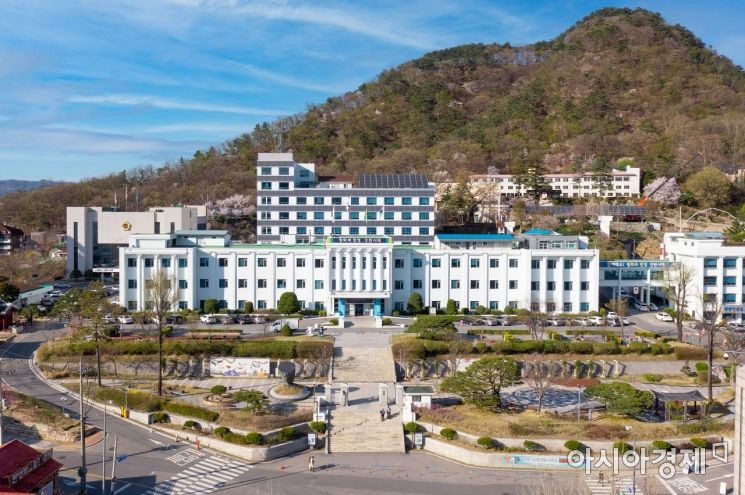
[Asia Economy Reporter Minji Lee] As the bill granting Gangwon Province special autonomous province status passed the National Assembly plenary session on the 29th, attention is focused on whether the underdeveloped Gangwon Province, bound by various regulations, can achieve groundbreaking development.
The bill is to be promulgated within 15 days, so if promulgated next month, the name "Gangwon-do" will be abolished for the first time in 628 years starting from June 2023, and it will be changed to "Gangwon Special Autonomous Province." Recognizing the administrative system's uniqueness and granting local governments special autonomy is the second case nationwide after Jeju.
Unlike Jeju, which does not have city and county autonomy, Gangwon's 18 cities and counties will maintain their current autonomy while receiving regionally specialized exceptions due to the province's characteristics. Gangwon Special Autonomous Province is the result of a decade-long effort to promote development in an underdeveloped region burdened by overlapping regulations for national security due to the North-South division and a lack of social overhead capital (SOC).
Gangwon Province accounts for 16.8% of the Korean Peninsula's area but only 3% of the national population and 2.5% of economic power, with no metropolitan city of over 400,000 people. The bill was proposed by Governor Choi Moon-soon during the 18th presidential election in 2012 and included in the pledges of candidates Park Geun-hye and Moon Jae-in but was not adopted as a government task by the elected president. The situation was similar in the 19th presidential election. In the 20th presidential election, all candidates from both parties pledged it, and momentum accelerated with a legislative public hearing held in February. Gangwon Special Autonomous Province will be established under the Prime Minister's office.
The bill allows central administrative agencies to provide special administrative and financial support and permits prioritizing support for Gangwon Special Autonomous Province when implementing various policy projects. The national balanced development special account totals 10 trillion won, but Gangwon Province, like other local governments, had to compete for this through public contests. In contrast, Jeju and Sejong, which have special autonomy, receive a fixed share.
Gangwon Province expects to receive about 450 billion won annually through the balanced development special account's autonomous budget. The governor of Gangwon Special Autonomous Province can autonomously utilize the budget within this range and has room to increase the share in the future.
In particular, the governor of Gangwon Autonomous Province will receive some authority delegated from central administrative agencies and can entrust some delegated tasks to the heads of the 18 local governments within the province. Until now, central authority has been broadly delegated equally to local governments nationwide, but as a special autonomous province, the necessary authority will be granted by the central government.
© The Asia Business Daily(www.asiae.co.kr). All rights reserved.
![Clutching a Stolen Dior Bag, Saying "I Hate Being Poor but Real"... The Grotesque Con of a "Human Knockoff" [Slate]](https://cwcontent.asiae.co.kr/asiaresize/183/2026021902243444107_1771435474.jpg)
















