Court Rules for the First Time That Drivers' Refresher Training Hours Are Included in 'Working Hours'
Judges State "Refresher Training Is a Legal Obligation Imposed on Both Drivers and Companies"
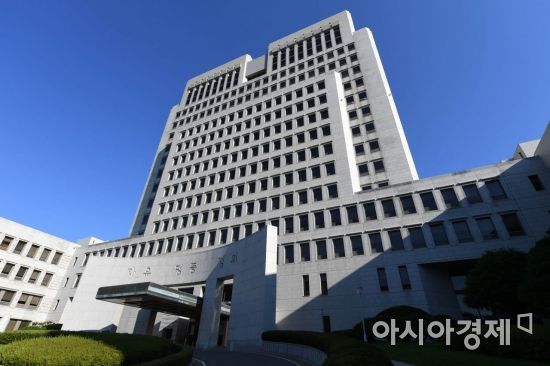
[Asia Economy Reporter Heo Kyung-jun] The Supreme Court has ruled that the "compensatory training hours" received by bus drivers under the Passenger Transport Vehicle Act are considered working hours, and therefore bus companies must pay wages for that time.
This ruling is the first to declare that compensatory training hours for transportation workers based on relevant laws are included in working hours, even if the training is not conducted by the employer.
The Supreme Court's Second Division (Presiding Justice Cheon Dae-yeop) announced on the 29th that it upheld the lower court's ruling partially in favor of the plaintiffs in the wage claim appeal filed by 17 city bus drivers, including Mr. A, against their company.
Mr. A and others have been receiving periodic compensatory training for transportation workers, conducted by the Jeollanam-do Transportation Training Institute, once a year for four hours each time. However, the bus company treated the drivers' compensatory training hours as unpaid, arguing that these hours did not constitute working hours under their supervision and control. Consequently, the bus drivers filed a lawsuit claiming the wage difference on the premise that compensatory training hours should be considered working hours.
The first and second trial courts ruled in favor of the bus drivers, determining that the drivers' compensatory training was conducted under the company's supervision and control and thus qualified as working hours.
The trial courts stated, "According to the enforcement regulations of the Passenger Transport Vehicle Act and other related laws, transportation workers such as bus drivers must complete training mandated by relevant authorities, and companies have an obligation to ensure that employed transportation workers participate in such training." They added, "The company cannot assign transportation workers who have not completed the compensatory training to driving duties, and the training is necessary for the company to operate its business."
The Supreme Court agreed with the lower courts' judgment. It recognized that compensatory training is a legal obligation imposed on both the employee drivers and the employer transportation companies, and that there is a close connection between the provision of labor by the drivers and the training as an essential prerequisite for the employer's hiring and assignment of workers to driving duties.
Furthermore, the Supreme Court presented, for the first time, criteria to determine whether training received outside of working hours?mandated by laws, collective agreements, employment rules, or employer instructions related to the employee's duties?should be considered working hours.
The court ruled that the determination must comprehensively consider ▲ the content and purpose of relevant laws, collective agreements, or employment rules ▲ the purpose of the training and its relation to labor provision ▲ the entity conducting the training ▲ whether the employer has a legal obligation to permit the training ▲ whether the training was undertaken due to the worker's fault ▲ and the disadvantages and their extent if the worker fails to complete the training.
© The Asia Business Daily(www.asiae.co.kr). All rights reserved.
![From Hostess to Organ Seller to High Society... The Grotesque Scam of a "Human Counterfeit" Shaking the Korean Psyche [Slate]](https://cwcontent.asiae.co.kr/asiaresize/183/2026021902243444107_1771435474.jpg)
















