Sri Lanka Faces Severe Fuel Shortage...Urgent Crisis Addressed Beyond International Political Logic
Official Default Status Since Failing to Pay Sovereign Bond Interest on Time from the 18th
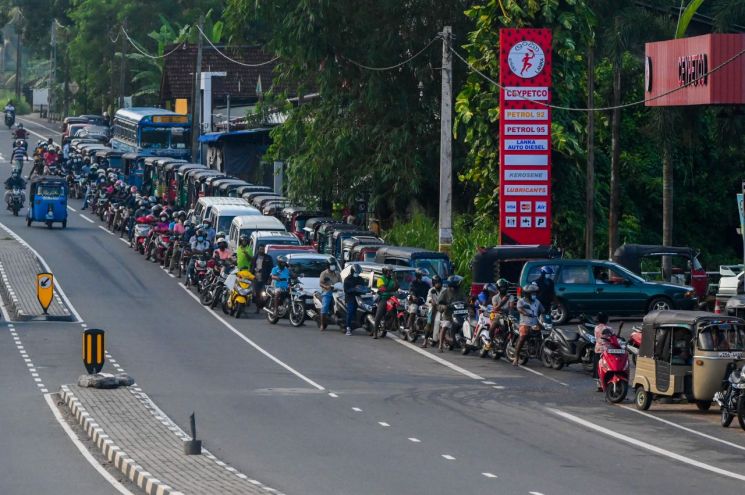 "Please give me fuel"... Sri Lankans lined up in front of the gas station [Image source=Yonhap News]
[Asia Economy Intern Reporter Kim Nayeon] Sri Lanka, suffering from a severe fuel shortage amid its worst economic crisis, has resumed operations at its refinery after two months by utilizing Russian crude oil.
According to Bloomberg and local Sri Lankan media on the 28th (local time), the Sapugaskanda refinery, Sri Lanka's only refinery, restarted operations from the previous day.
This comes two months after the refinery halted operations on March 20 due to the government's foreign currency shortage preventing crude oil imports. The Sapugaskanda refinery will unload 89,000 tons of Russian Siberian crude oil from the Nisos Delos vessel docked near Colombo Port and use it for refining. This crude oil is expected to be processed into kerosene through refining.
It is analyzed that Sri Lanka urgently imported Russian crude oil, setting aside international political considerations, due to the severe 'fuel crisis.'
Since Russia's invasion of Ukraine, it has faced difficulties exporting crude oil due to sanctions from the U.S. and others. While many refineries in the U.S. and Europe have stopped importing Russian crude oil, only some countries such as India and China continue to actively import it.
Sri Lanka has faced its worst economic crisis amid the collapse of its main industry, tourism, a sharp increase in external debt due to the Belt and Road Initiative with China, and compounded fiscal policy failures such as excessive tax cuts.
Accordingly, on the 12th of last month, the Sri Lankan government declared a 'temporary default,' stating that it would defer external debt repayments until the conclusion of bailout negotiations with the International Monetary Fund (IMF).
Since the 18th, Sri Lanka has officially entered default status as it failed to pay interest on government bonds by the due date.
© The Asia Business Daily(www.asiae.co.kr). All rights reserved.

















