FOMC Raises Base Interest Rate from 1.5% to 1.75%
Second Consecutive 0.25% Increase in Two Months...First Time in 15 Years
Measure Taken Considering Recent Record Inflation...Citizens Say "Unavoidable but Worrisome"
Lee Chang-yong: "Additional Rate Hikes Possible"
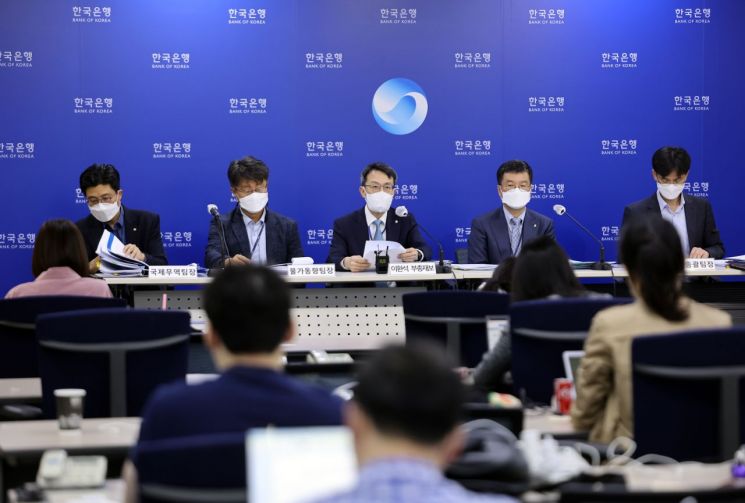 The Bank of Korea (BOK) raised the base interest rate again just one month after the increase in April.
 [Image source=Yonhap News]
[Asia Economy Reporter Kang Wooseok] The Bank of Korea (BOK) raised the base interest rate again just one month after the increase in April, raising concerns about price adjustments in risky assets such as stocks and real estate, as well as increased loan burdens.
The Monetary Policy Committee (MPC) of the BOK raised the base interest rate by 0.25% from the current annual rate of 1.5% to 1.75% at the monetary policy meeting on the 26th. The MPC also raised the base rate by 0.25% in April. This marks the first time in about 15 years since July and August 2007 that the base interest rate has been raised for two consecutive months.
Previously, in March 2020, the MPC significantly lowered the base interest rate by 0.5% (from 1.25% to 0.75%) due to concerns over the economic downturn caused by the COVID-19 pandemic. In May of the same year, it further cut the rate by 0.25%. After maintaining the rate, it decided to raise it by 0.25% in August last year after 15 months, and then raised it by 0.25% five times in November of the same year, January and April of this year, and this month, resulting in a total increase of 1.25% (from 0.5% to 1.75%).
This recent base interest rate hike is interpreted as a measure to curb the recent record-high inflation. In April this year, the consumer price index rose by 4.8% compared to the same month last year due to supply chain disruptions caused by Russia's invasion of Ukraine. This is the highest since October 2008 (4.8%) during the global financial crisis.
The BOK also presented a revised economic outlook on the 26th, projecting this year's consumer price inflation rate at 4.5%. This figure is 1.4% higher than the forecast announced in February (3.1%). It is the first time in about 11 years since July 2011 (4.0%) that the BOK has projected a consumer price inflation rate in the 4% range for the current year.
Furthermore, if the 4.5% projection materializes, it will mark the highest inflation rate in 14 years since 2008 (4.7%) during the financial crisis.
The expected inflation rate, which shows the anticipated consumer price inflation rate over the next year by economic agents such as households and companies, was also recorded high at 3.3%. This is the highest since October 2012 (3.3%).
Citizens acknowledged the necessity of the measure as inflation has become seriously felt in daily life but also expressed concerns about direct impacts on households such as stocks and loans.
A public servant, Mr. A, said, "I recently took out a loan for jeonse funds, and the interest rates keep rising," adding, "I don't strongly oppose the rate hike because I feel the inflation is severe these days, but honestly, it is a burden. It seems my loan interest rate has nearly doubled."
Kim, a 26-year-old office worker who usually invests in stocks, said, "There is nothing good about interest rate hikes for the stock market," and added, "(Although the rate hike issue) has already been priced in by the market, the market situation is already bad, and the interest rate hike as a negative factor makes me feel somewhat complicated and anxious."
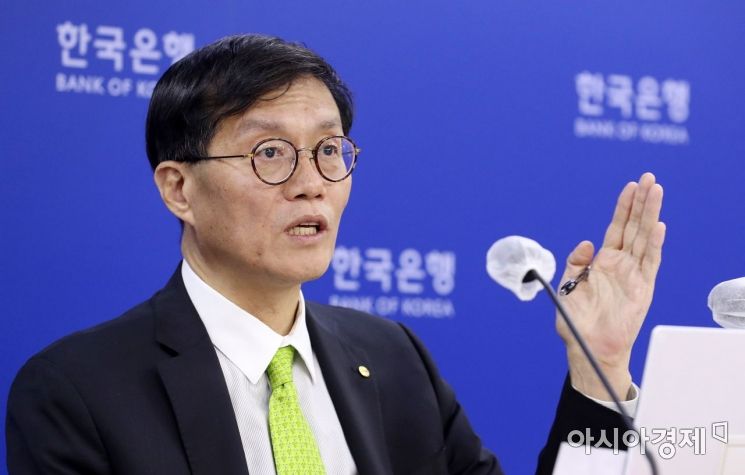 Lee Chang-yong, Governor of the Bank of Korea, is speaking at the monetary policy direction press conference held at the Bank of Korea in Jung-gu, Seoul on the 26th. On the same day, the Monetary Policy Committee of the Bank of Korea raised the base interest rate by 0.25 percentage points from 1.50% to 1.75% per annum.
Lee Chang-yong, Governor of the BOK, expressed concerns about the side effects of the rate hike on low-income households but said, "If the central bank misses the timing in the current situation and inflation expectations spread widely, causing real wages to fall and financial instability to increase, vulnerable groups could suffer greater damage. It is desirable to respond to the side effects on vulnerable groups through policy coordination with the government."
Meanwhile, Governor Lee hinted at additional base rate hikes within this year. He said on the day, "Considering the real interest rate adjusted for inflation, the current base rate is clearly lower than the neutral rate. MPC members believe that raising the base rate to the neutral rate is a priority," adding, "What is certain is that the inflation rate is high enough to focus monetary policy on inflation."
He continued, "Since inflation has risen by more than 1% compared to the beginning of the year, I think it is a reasonable expectation that the year-end base rate will rise to 2.25-2.5% annually as the market expects."
© The Asia Business Daily(www.asiae.co.kr). All rights reserved.


















