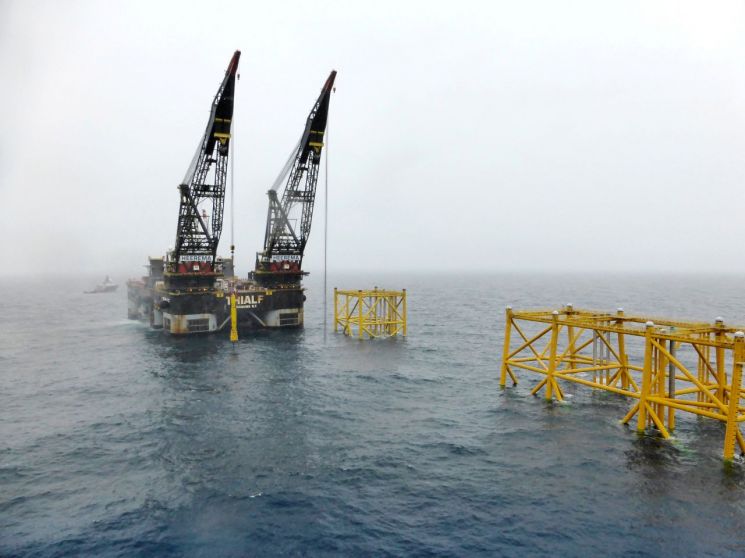
[Asia Economy Reporter Park Byung-hee] When the UK government officially announced that it would impose a new tax on energy companies that have made huge profits due to rising oil and gas prices, the UK's largest oil company BP stated that it would reconsider its investment plans.
According to Bloomberg on the 26th (local time), BP expressed doubts about whether the government has guaranteed sufficient benefits for oil and gas companies to continue maintaining investments in relation to the UK government's announcement of imposing a so-called 'windfall tax' on oil and gas companies.
Energy companies such as BP and Shell posted record profits this year as oil and gas prices surged. On the other hand, as oil and gas prices soared, household cost burdens increased, and the government decided to support households by taxing the huge profits of energy companies.
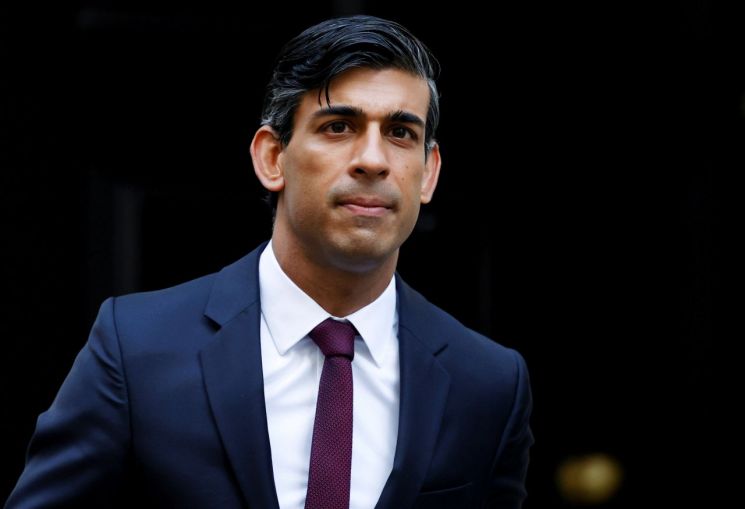
Accordingly, the UK government announced on the same day that it would impose a 25% excess profit tax on oil and gas companies. Chancellor of the Exchequer Rishi Sunak stated that this would raise ?5 billion over one year, and the tax would be phased out once oil and gas prices return to normal. Sunak said that the increased tax revenue from the windfall tax would be used to support households whose quality of life has deteriorated due to rising energy costs. The government also announced a ?15 billion household support plan on the same day.
In an email statement, BP said, "The measures announced by the government today are not a one-time tax but are intended to be imposed over several years," adding, "It will be necessary to examine how the new tax and tax relief benefits will affect North Sea investment plans."
BP had previously pledged ?18 billion in investments by 2030. Until now, BP stated that the ?18 billion (28.6551 trillion KRW) investment plan would be unrelated to the windfall tax under government review. However, after the government announced its plan to impose the windfall tax, BP changed its stance.
The energy industry group Offshore Energy UK also issued a statement expressing dissatisfaction with the government’s policy. Offshore Energy UK claimed, "The new tax imposed on energy companies is a step back from the government's promise just a few weeks ago to build an environmentally friendly and energy-independent country," and added, "It is exactly the opposite of the energy security strategy announced by the government last month."
Even within the ruling Conservative Party, there were many voices opposing the windfall tax, arguing that it could hinder investment. Above all, Prime Minister Boris Johnson opposed the windfall tax, causing conflict with Chancellor Sunak.
Chancellor Sunak, seemingly trying to quell criticism that the measure is anti-business, announced that an 80% tax relief would be provided for new capital expenditures by energy companies.
The opposition Labour Party supported the windfall tax. Public opinion also favored the windfall tax. According to a YouGov survey, since December last year, the Labour Party has consistently led the Conservative Party in party support ratings.
The UK government will impose the windfall tax only on profits generated within the UK. Since large energy companies such as BP and Shell earn significant profits overseas, small and medium-sized energy companies that are relatively more dependent on domestic UK operations are expected to suffer greater damage.
© The Asia Business Daily(www.asiae.co.kr). All rights reserved.


















