China, Saudi Arabia, Slovenia, etc. Fully Suspend Public Transportation
Timely Policies Implemented Such as Reducing Late-Night Services Following Social Distancing
Intensive Public Transportation Disinfection for Subways, Buses, and Taxis... 'Ddareungi' Facilities Expanded Following Preference for Personal Mobility Options
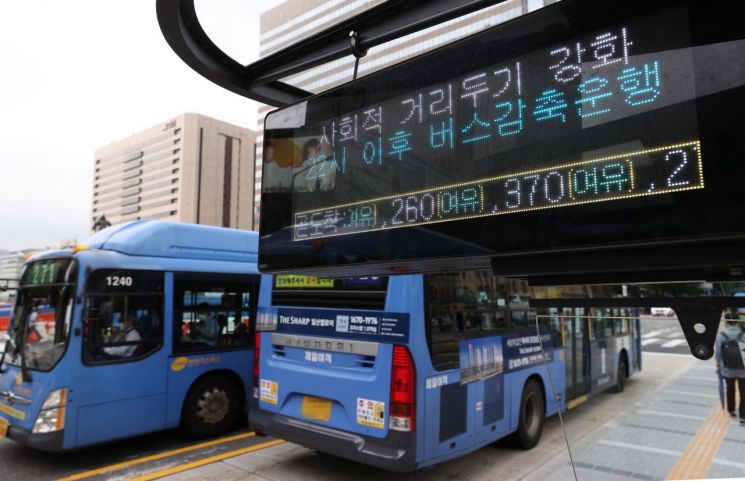
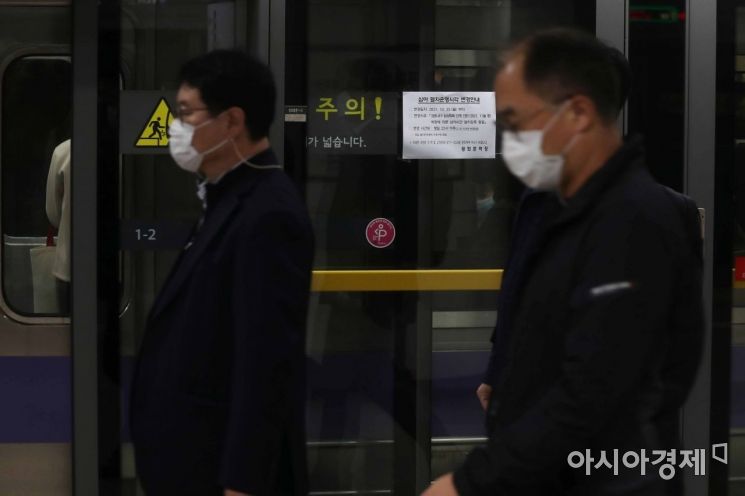 On the 25th, a notice about the end of late-night train reductions due to the transition to the phased daily recovery (With Corona) stage was posted at Gwanghwamun Station on Seoul Subway Line 5. The Seoul Metropolitan Government announced on the 24th that "Seoul Subway Lines 2 and 5 to 9, the Ui-Sinseol Line, city buses, and village buses will operate normally from the 25th, returning to the pre-reduction stage." Subway Lines 3 and 4, which operate in connection with Korail, are planned to be normalized sequentially starting December 1. / Photo by Moon Honam munonam@
[Asia Economy Reporter Lim Cheol-young] Despite the ongoing COVID-19 pandemic over the past two years, the Seoul Metropolitan Government, which has been fiercely working to operate public transportation without interruption as the lifeline for citizens' mobility, announced that it will continue to strive to enhance convenience for citizens' movement based on the operational know-how accumulated until the complete eradication of COVID-19.
According to Seoul City on the 27th, during key periods of COVID-19, the city has supported smooth transportation use for citizens in various ways, including ▲timely policy implementation related to public transportation operation ▲intensive disinfection of public transportation ▲expansion of infrastructure such as public bicycles ▲special transportation for overseas arrivals ▲and provision of transportation information.
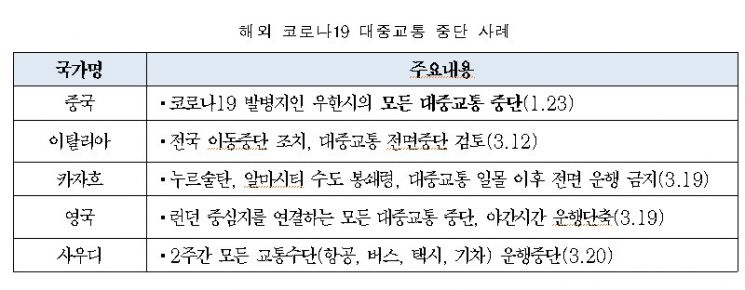
First, looking at overseas public transportation operation cases in response to infectious diseases, Seoul implemented systematic policies and disinfection measures, unlike several countries that enforced ultra-strong measures such as suspending public transportation and blocking transportation networks. Countries like China, Kazakhstan, and Saudi Arabia temporarily suspended operations of urban public transportation and road transport networks, while the UK and Italy also suspended urban connecting public transportation and restricted movement, fundamentally blocking citizens' mobility to respond to the pandemic.
As the government implemented social distancing measures according to the trend of confirmed cases, Seoul City also implemented various policies to proactively prevent regional spread through public transportation and movement. Since November 2020, Seoul reduced late-night operations of city buses and subways. As a result, in the fourth week of December after implementation, late-night ridership decreased by 77.1% compared to the same period in 2019, demonstrating a high effect of social distancing participation. Subsequently, operations were flexibly adjusted during periods of eased social distancing and extended business hours, contributing to preventing regional spread of the infectious disease.
Additionally, Seoul focused on operational management by strengthening mask-wearing on public transportation and deploying additional vehicles during congestion. Particularly, enforcing mask-wearing when boarding public transportation played a role in leading the boarding culture. On May 13, 2020, with the transition to 'distancing in daily life,' mask-wearing was recommended and management measures such as deploying additional vehicles during congestion were established. From November 13, 2020, management measures were strengthened by imposing fines for not wearing masks.
Intensive disinfection of public transportation including subways, buses, and taxis... thorough sanitization everywhere
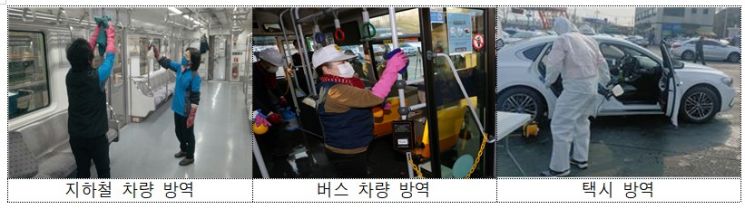
Seoul City has been conducting intensive management by regularly disinfecting public transportation vehicles such as subways, buses, and taxis used by citizens, as well as transportation-related facilities like bus stops and taxi stands that citizens frequently touch.
For subways, disinfection was carried out at all 382 stations. Intensive disinfection work was performed not only on station facilities such as platforms and concourses but also on high-contact areas like restrooms, handrails, and elevator buttons, as well as immediate disinfection upon train turnaround. To strengthen management of subway cars, disinfection previously conducted only upon depot entry was extended to every train turnaround, and spraying disinfection was also performed inside passenger compartments including safety poles.
Buses were disinfected inside the vehicles and at bus stop boarding areas. Disinfection was carried out on handrails, seats, stop bells, floors, and other interior parts of the vehicles, as well as at bus stop boarding areas to manage cleanliness during boarding and alighting. Taxis, heavily used by citizens, also underwent hygiene management including vehicle disinfection, stocking of sanitation supplies, and disinfection of taxi stands.
Furthermore, masks and hand sanitizers were provided for emergency passengers who did not have personal protective equipment. Free masks were distributed to elderly passengers or those unable to wear masks due to unavoidable circumstances, receiving significant positive response during the early period of high COVID-19 anxiety. At the onset of COVID-19, Seoul City provided masks free of charge in subway stations and buses starting January 29, 2020, to allow citizens to use public transportation with confidence. After the government announced the public mask supply policy on March 5, free mask distribution for public transportation users was discontinued, but stations with high foot traffic saw supplies run out within 30 minutes, reflecting strong citizen demand.
Expansion of public bicycle ‘Ddareungi’ as a daily mobility option... special transportation for overseas arrivals also implemented
With the increased preference for personal mobility due to COVID-19, Seoul expanded the infrastructure for the public bicycle system ‘Ddareungi.’ Measures included the introduction and expansion of QR-code Ddareungi, improvement of the public bicycle app, additional rental stations, and disinfection and sanitation of Ddareungi bicycles, creating a safe and convenient environment for use even amid the pandemic. As a result, ‘Ddareungi’ achieved significant milestones, surpassing 100 million cumulative rides as of April 25, enjoying high popularity among citizens. The number of bicycles in operation has expanded to 40,500 units, with plans to increase to 43,500 units by the end of this year.
To block overseas importation of infectious diseases, special transportation measures were implemented from the early stages of COVID-19, including operating airport buses and dedicated taxis for arrivals. From the moment overseas arrivals leave the airport, their movement routes were minimized to separate them from the general public, and transportation equipped with thorough disinfection was provided to ensure safety for both overseas arrivals and local residents, fundamentally preventing contact with the general public.
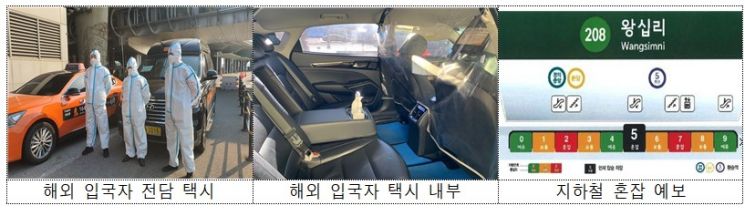
Efforts to alleviate congestion continued by promptly providing transportation information to disperse demand. Bus Information Terminals (BIT) informed passengers of onboard congestion levels, and the subway offered a ‘congestion forecast service’ to help passengers avoid peak congestion times. As a result of the pilot operation of the subway congestion service, the standard deviation of congestion levels by time on Line 2 decreased by more than 30%, demonstrating the effect of congestion information in dispersing passenger loads.
Baek Ho, Director of the Urban Transportation Office, said, “Thanks to the participation and interest of citizens over the past two years, Seoul’s public transportation has been able to operate safely. We also thank the transportation operation agencies for their great efforts, and we will do our best to expand public transportation and support mobility so that citizens’ daily lives can recover more quickly.”
© The Asia Business Daily(www.asiae.co.kr). All rights reserved.



















