Focused Investment in R&D on Battery, Electronic Components, AI, and Data
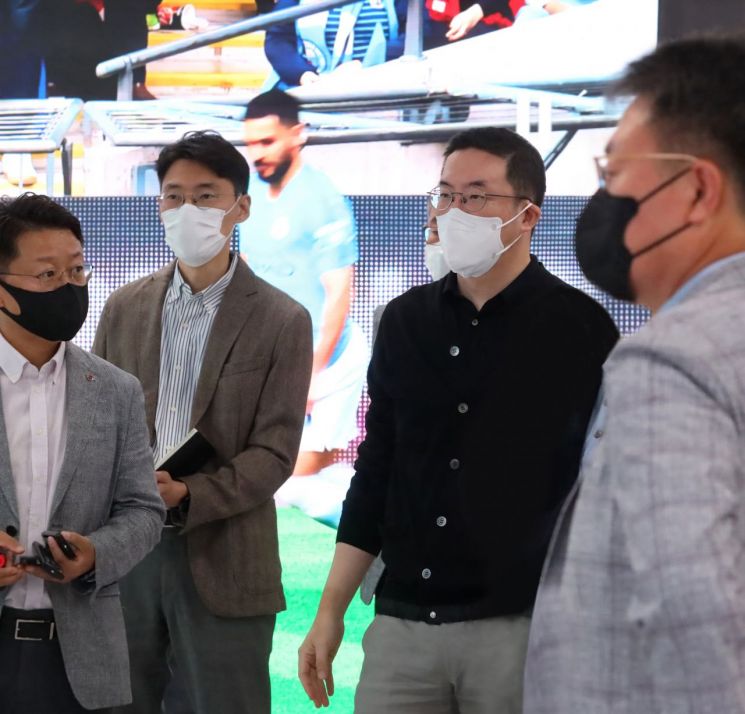 LG Chairman Koo Kwang-mo visiting the LG Electronics HE Research Center within LG Digital Park in Pyeongtaek-si, Gyeonggi-do.
[Asia Economy Reporter Park Sun-mi] LG has decided to invest a total of 106 trillion KRW domestically by 2026 for a sustainable future and to directly hire 10,000 people annually, totaling 50,000 employees. Koo Kwang-mo, Chairman of LG, finalized this mid-to-long-term plan and will begin a series of 'strategy briefing sessions' starting from the 30th with LG Electronics HE Business Division, continuing for about a month.
◆LG to invest 106 trillion KRW domestically by 2026= On the 26th, LG announced plans to invest 106 trillion KRW domestically over the next five years until 2026, focusing on future growth sectors. Domestic investments will be allocated to research and development (R&D), expansion of cutting-edge high value-added production facilities, and infrastructure construction, with 48 trillion KRW specifically earmarked for R&D.
LG plans to allocate about 40% of its domestic investment over the next five years, approximately 43 trillion KRW, to future growth sectors. Nearly half of this, 21 trillion KRW, will be concentrated on R&D in battery and battery materials, automotive electronics, next-generation displays, AI and data, bio, and eco-friendly cleantech fields.
Priority will be given to investing over 10 trillion KRW in the battery and battery materials sector over five years. LG Energy Solution plans to strengthen its leadership in the global electric vehicle battery market by making additional investments in its Ochang plant in Chungbuk to produce cylindrical batteries and others. Alongside this, it will focus on developing next-generation batteries such as solid-state batteries and lithium-sulfur batteries, establish resource circulation systems like battery recycling, and pursue new businesses such as BaaS (Battery as a Service) platforms that utilize battery data for diagnostics and lifespan prediction.
LG Chem aims to become the world's number one comprehensive battery materials company by investing 1.7 trillion KRW by 2026 in battery materials such as cathode materials, separators, and carbon nanotubes. Currently, it is constructing a cathode material plant in Gumi, Gyeongbuk, and is reviewing M&A (mergers and acquisitions) and JV (joint ventures) with companies that have technological capabilities and market potential to foster battery materials.
LG will invest 3.6 trillion KRW in the AI and data sector to secure top-level artificial intelligence and big data technologies and to conduct large-scale, challenging R&D. Centered on the 'LG AI Research Institute,' established in 2020 as a group-wide AI research hub, LG plans to focus on the development of the super-large AI 'EXAONE' and AI-related R&D.
Additionally, LG will invest more than 1.5 trillion KRW in the bio sector for innovative new drug development. LG Chem is developing innovative new drugs such as cell therapies and plans to expand its new drug pipeline that has entered clinical development stages. To this end, it is actively considering various strategies including M&A and JV establishment. It will also invest 1.8 trillion KRW over five years in eco-friendly cleantech sectors such as biodegradable plastics and renewable energy industrial materials.
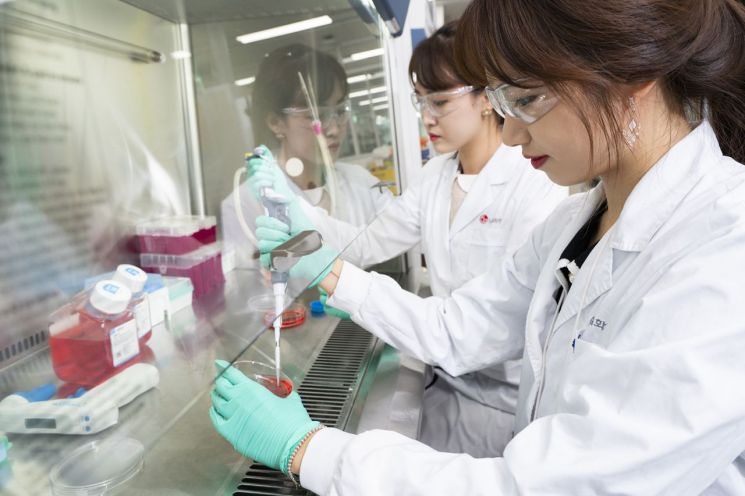
◆Direct hiring of about 10,000 people annually until 2026= LG announced plans to directly hire about 10,000 people annually until 2026 to advance its core businesses in electronics, chemicals, and telecommunications and to focus on nurturing future growth businesses such as AI, bio, and eco-friendly cleantech. In particular, over the next three years, more than 3,000 hires, accounting for over 10% of total recruitment, will be made in R&D fields such as AI, software, big data, eco-friendly materials, and batteries, focusing on new advanced businesses.
LG will actively support industry-academia linked talent development programs such as recruitment contract departments, industry-academia scholarship students, and internships in collaboration with universities and related institutions to build an ecosystem that nurtures talent needed in the industrial field. Furthermore, it plans to provide recruitment opportunities and support for high school graduates with excellent abilities through industry-academia cooperation and other means, enabling them to demonstrate their capabilities.
Meanwhile, Chairman Koo will conduct a 'strategy briefing session' starting on the 30th with LG Electronics HE Business Division, continuing for about a month. This is a forum to discuss mid-to-long-term business strategies including business, technology, and customer portfolios and to deeply review the group's future preparedness. The strategy briefing sessions include strategic realignment and future readiness checks for major affiliates or businesses at least once every three years.
In particular, LG plans to thoroughly review strategic directions at this year's strategy briefing sessions and deeply discuss ways to enhance execution capabilities for future readiness based on customer value. Even if overseas investments increase in response to global supply chain challenges, LG aims to invest a significant portion of the total investment domestically to maintain Korea's status as LG Group's cutting-edge high value-added product production base and core R&D hub, building consensus within the group.
An LG official explained, "Future growth sectors such as battery and battery materials, automotive electronics, next-generation displays, AI and data, bio, and eco-friendly cleantech will see strengthened preemptive investments from a long-term perspective looking over 10 years to secure global leadership. Additionally, in existing core businesses such as smart home appliances, TVs, chemicals, and IT and telecommunications, continuous and bold investments will be made to nurture each business as a champion not only domestically but also in the global market."
© The Asia Business Daily(www.asiae.co.kr). All rights reserved.


















