[Seoul District News] Seongdong-gu Highly Praised for Establishing Anti-Corruption Integrity Management System in Corruption-Prone Areas Such as Personnel, Taxation, Construction, and Permits; Certification Renewed for 3 Years Until 2025... Jungnang-gu Operates 4th Industrial One-Day Career Program... Nowon-gu's 6 Youth Hangouts Popular... Gangbuk-gu Honors 56 Model Youth... Songpa-gu Expands Local Tax Credit and Mileage Accumulation from June, Up to 1,100 KRW Benefit per Bill
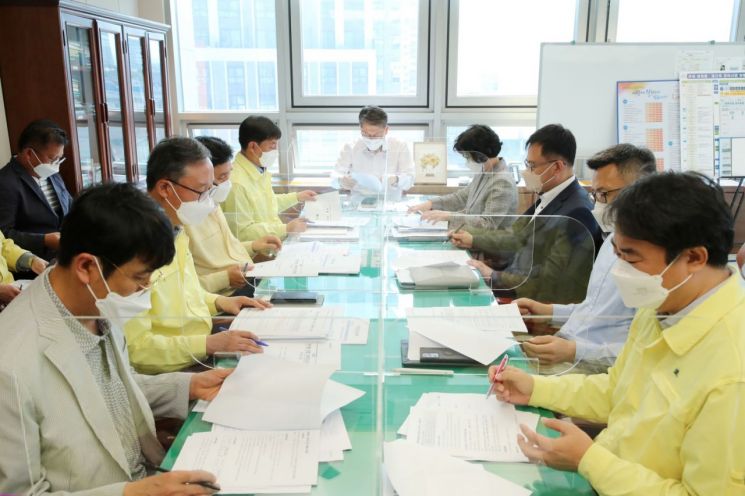 The active scene of the 'Anti-Corruption Integrity Policy Promotion Team.' Seongdong-gu operates the 'Anti-Corruption Integrity Policy Promotion Team,' chaired by Deputy Mayor Yubo-hwa and composed of various department heads, to strengthen integrity leadership and improve integrity levels.
[Asia Economy Reporter Park Jong-il] Seongdong-gu has renewed its certification for the Anti-Corruption Management System (ISO 37001), which it first obtained nationwide in 2019.
The 'Anti-Corruption Management System (ISO 37001)' is an international standard established by the International Organization for Standardization (ISO) in 2016 to prevent the possibility of corruption within organizations through a systematic approach. In South Korea, the certification system was introduced and implemented starting April 2017.
Although regulations against improper solicitation and acceptance of money or valuables by public officials have been established through laws such as the Improper Solicitation and Graft Act and the Public Officials Conflict of Interest Prevention Act, Seongdong-gu voluntarily took steps to systematically manage and prevent corruption risks that could arise within the organization.
Accordingly, the district obtained the 'Anti-Corruption Management System (ISO 37001)' certification for the first time nationwide in 2019 and has maintained the certification by passing annual follow-up audits on the operation of the anti-corruption management system through voluntary control and corruption prevention.
As the certification period expired in June this year, Seongdong-gu analyzed the organizational status across all departments to renew the certification, identifying corruption risk factors reflecting recent social issues and preparing risk assessments and improvement plans.
In April, during the on-site audit by the certification body, the Korea Standards Association (KSA), interviews were conducted with 19 officials responsible for corruption-prone areas such as permits, construction, subsidies, and supervision, with a strict inspection of on-site operations.
The audit results showed that Seongdong-gu complies with the requirements of the anti-corruption management system across corruption-prone areas including personnel, finance and taxation, construction, and permits, effectively operating the system.
Furthermore, Seongdong-gu was recognized for its continuous efforts to realize a 'Clean Seongdong' trusted by residents by establishing and implementing the '2022 Anti-Corruption Integrity Seongdong Promotion Plan,' which includes operating the 'Anti-Corruption Integrity Policy Promotion Team' and 33 other projects.
It was evaluated that the anti-corruption management system has been firmly established, and the certification will be maintained for the next three years until 2025.
A Seongdong-gu official said, "While professionalism, sincerity, and morality are necessary virtues for public officials, the most fundamental virtue is integrity," adding, "We will continue to systematically and sustainably manage and operate the anti-corruption management system to institutionally block corruption risks that may arise from public officials themselves, not only improving the district's integrity but also making integrity a way of life."
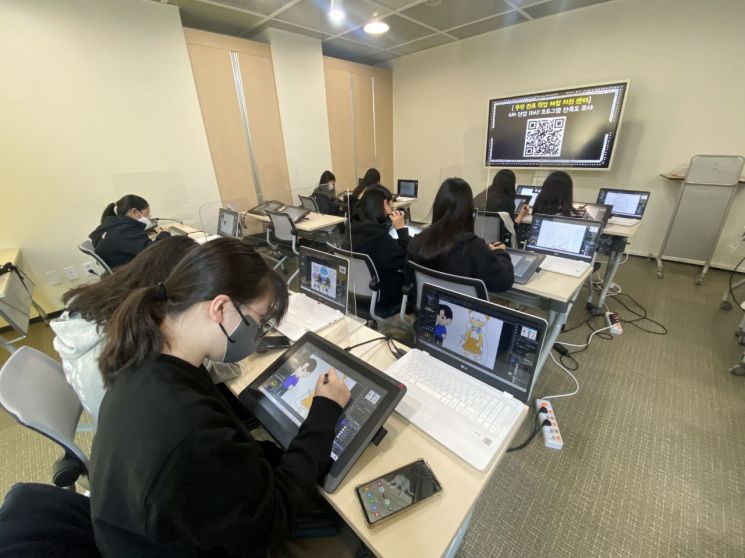 Students are taking a digital drawing experience class at the Bang Jeong-hwan Education Support Center.
Jungnang-gu is operating a one-day career program where local elementary and middle school students can experience technologies of the 4th Industrial Revolution.
The district stated that reflecting the increased interest and importance in fields related to the 4th Industrial Revolution, the program was designed to allow students to encounter future technologies near their schools, gain new experiences, and explore promising future careers.
The education takes place at the Bang Jeong-hwan Education Support Center, which is equipped with dedicated 4th Industrial Revolution experience spaces such as a robotics education center, maker space room, multi-room, and VR experience hall.
The one-day career program consists of experiences in 4th Industrial Revolution job groups and general job groups, followed by a career concert. In the 4th Industrial Revolution job group, students experience VR, drones, 3D printers, and robots, while in the general job group, they learn about food stylists, candle artists, and special effects makeup artists.
Especially, the career talk concert held after the experience, hosted by a professional MC, includes Q&A sessions and performances, receiving high praise from students.
A district official said, "We hope the one-day career program will be a good opportunity for participating students to explore their future careers," adding, "We will continue to prepare various career education programs to nurture talents equipped with core competencies and creative problem-solving skills required by future society."
Meanwhile, last year the district also operated the one-day career program with a total of 45 sessions and 4,467 students participating. This year, due to increased popularity, it is planned to be conducted for about 6,800 students, more than last year.
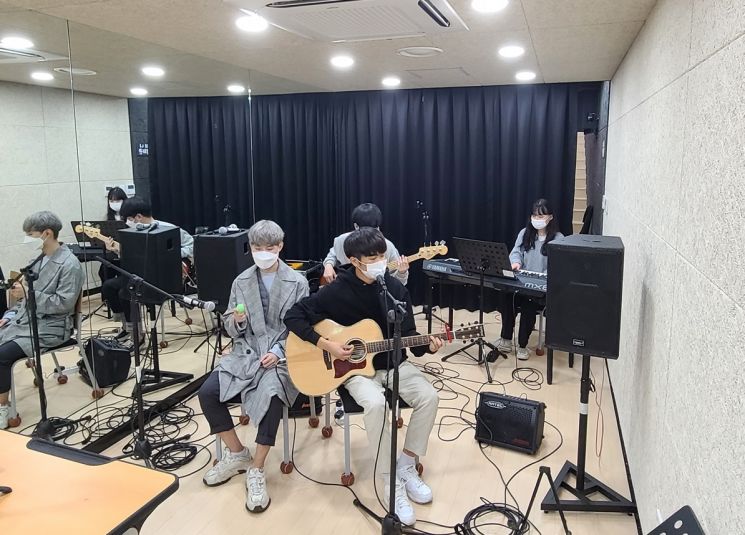
Nowon-gu is focusing on creating youth-only spaces by expanding cultural and leisure spaces called 'Youth Agit' for teenagers.
Currently, more than 90,000 youths reside in Nowon-gu. However, despite being designated as an educational special zone with excellent educational infrastructure, there was a lack of customized spaces where youths could relax healthily and enjoyably.
Accordingly, since 2020, the district has been creating and operating Youth Agits to provide spaces where youths can rest sufficiently, socialize, and nurture various dreams.
Nowon-gu operates six Youth Agits: ▲Kkumkkuneun (Wolgye 3-dong) ▲Kkeullim (Sanggye 6,7-dong) ▲Meet-up Center (Wolgye 2-dong) ▲Arcade (Junggye 2,3-dong) ▲Hakuna Matata (Sanggye 3,4-dong) ▲Chaoreum (Junggye 4-dong). These six Agits range from cozy spaces of 74㎡ to large spaces of 612㎡, each with various facilities and unique themes.
The 612㎡ 'Meet-up Center' is equipped with a one-person media room, band practice room, dance room, and mini theater where youths can freely express their talents. The one-person media room is designed for aspiring creators to edit videos and shoot YouTube content, while the band and dance practice rooms provide affordable spaces compared to private facilities. The mini theater has a seating capacity of 20.
There are also play spaces for comfortable rest. The 'Arcade,' located on the second floor of the Nowon Child Welfare Center, offers a pocket room where youths can relax, read books, or lie down, along with various game spaces. The 'Kkumkkuneun' Agit near Hannae Neighborhood Park is decorated with a playroom where youths can enjoy karaoke and board games.
Additionally, a powder room (dressing table) is provided for female students interested in their appearance, allowing youths to express their individuality, making it popular.
'Kkeullim,' located within the Sangsang Irum Center, operates a stage for singing and dance performances as well as a book caf? where various genres of books and beverages can be enjoyed. The Sangsang Irum Center, where the Agit is located, serves as a youth career and job experience support center, offering various linked programs such as career connection, independence support, and community cooperation to help youths design a healthy future.
Especially, 'Hakuna Matata,' located on the third floor of the Sanggye 3·4-dong Community Center, has created a terrace space with a camping atmosphere, allowing youths to freely relax and heal in a cozy environment. The 'Chaoreum' Agit, opened in March this year, features a tablet zone, PC zone, community room, and band and dance practice rooms, providing a space for youths to communicate and enjoy with peers.
In July this year, an additional Agit will open in the Wolgye-dong area, equipped with a VR experience zone, dance room, play and dining spaces, which are among the most popular interests of youths.
Despite restrictions on facility use due to COVID-19 last year, more than 68,000 youths visited five Agits excluding the one opened earlier this year. A picture book exhibition jointly operated by four Agits attracted about 1,770 visitors both online and offline, receiving great responses from youths.
These Youth Agits are meaningful in that each facility has a committee where youths themselves plan and operate rest, play, and cultural spaces. Each facility continues various youth activity projects, such as conducting school violence prevention campaigns in cooperation with local schools.
A district official said, "It is the duty of adults to guarantee the right of children and youths to play healthily," adding, "We will continue to expand spaces operated from the youths' perspective to support facilities and activities needed and desired by youths."
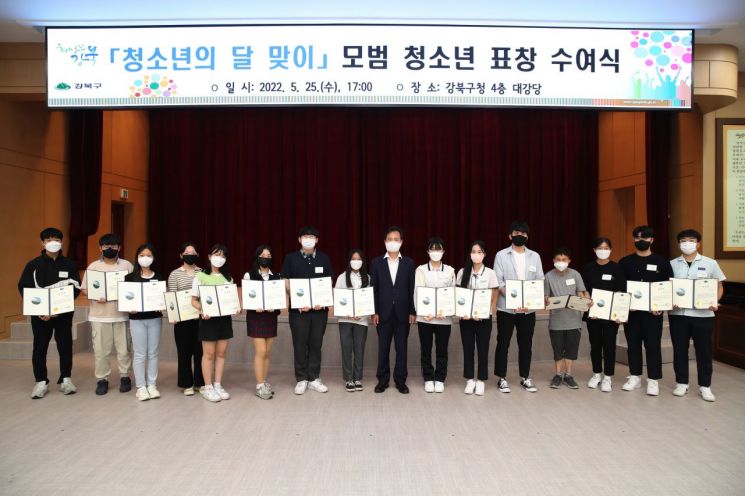
Gangbuk-gu (Mayor Park Gyeom-su) awarded certificates of commendation to exemplary youths in May, the Month of Youth.
The certificate awarding ceremony has been held annually to encourage exemplary students to grow into healthy members of society.
Due to COVID-19, the ceremony was conducted non-face-to-face in the past two years, but this year, the ceremony was held on the 25th at the large auditorium on the 4th floor of Gangbuk-gu Office.
The district selected a total of 56 exemplary youths through a public merit review committee after receiving recommendations from local elementary, middle, high, and special schools, community service centers, Gangbuk-gu Council, and youth-related organizations and institutions.
Commendations were awarded in four categories: good deeds, achievements and awards, filial piety, and participation and volunteering.
In the good deeds category, 17 students who demonstrated exemplary behavior or attitudes at home, school, or society were selected. In the achievements and awards category, 9 students who achieved excellent results by setting and reaching their own goals in academics or arts and sports were selected. In the filial piety category, 4 students who respected parents and elders and showed proper manners were selected. In the participation and volunteering category, 26 students who practiced altruistic behavior, community spirit, and volunteerism were selected.
Mayor Park Gyeom-su said at the ceremony, "I hope our students, who have become role models, will continue to grow upright and rightly as they are today," adding, "We will steadily continue Gangbuk-gu's youth development policies such as the Youth Hope Expedition and Dream Tree Scholarship Foundation to help youths grow into core talents of our society."
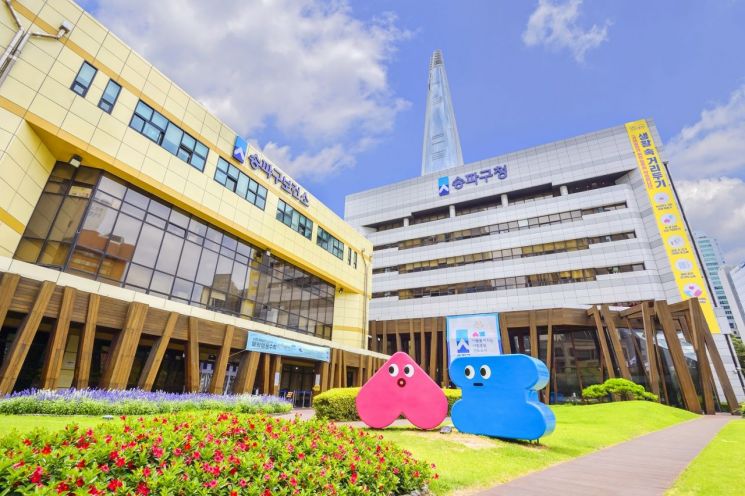
Songpa-gu announced on the 26th that it will expand tax credit benefits for taxpayers who apply for local tax electronic delivery and automatic payment starting from the first installment of automobile tax in June.
If a taxpayer applies for either local tax electronic delivery or automatic payment, the tax credit per bill will increase from the existing 150 won to 250 won. If both are applied for, the credit will increase from 500 won to 600 won.
Mileage that can be used like cash is also provided. Among electronic delivery applicants, if the billed amount per bill is less than 300,000 won, 350 won mileage is accumulated; if 300,000 won or more, 850 won mileage is accumulated, allowing a maximum benefit of 1,100 won. Additionally, if both electronic delivery and automatic payment are applied for, 500 won mileage is accumulated regardless of the billed amount.
Mileage is granted when payment is made via electronic bill within the due date and can be used to reduce future local tax payments, recharge transportation cards, or donate to charity for the underprivileged.
The tax items eligible for tax credit are regularly imposed local taxes such as registration and license tax (license portion in January), automobile tax (June and December), property tax (July and September), and resident tax (individual portion in August).
To receive the credit benefits, electronic delivery and automatic payment must be applied for by the month before the tax imposition for each tax item.
Electronic delivery is a method of receiving tax bills via email or mobile (smartphone) apps instead of paper bills and can be applied for through ▲eTax (etax.seoul.go.kr) ▲mobile banking apps ▲simple payment apps (Shinhan Play, Naver Pay, Kakao Pay, Payco, Toss), or by visiting the district tax office.
Automatic payment includes bank account automatic transfer and credit card automatic payment methods and can be applied for through ▲eTax ▲mobile app (Seoul STAX), or by visiting a nearby bank (for account automatic transfer) or the district tax office (for credit card automatic payment).
A district official said, "Electronic delivery and automatic payment are convenient as there is no risk of losing the bill and payment can be completed at once," adding, "With tax credit and mileage accumulation benefits, as well as reducing paper use to protect the environment, we encourage many to participate."
© The Asia Business Daily(www.asiae.co.kr). All rights reserved.
![Clutching a Stolen Dior Bag, Saying "I Hate Being Poor but Real"... The Grotesque Con of a "Human Knockoff" [Slate]](https://cwcontent.asiae.co.kr/asiaresize/183/2026021902243444107_1771435474.jpg)













