Contributing to the Revitalization of Industrial Ecosystems Including Nuclear Power
Advancing into Semiconductor Back-end Processes and Sword Drones
[Asia Economy Reporter Oh Hyung-gil] Doosan Group announced on the 25th that it will invest 5 trillion KRW over five years in next-generation energy businesses such as Small Modular Reactors (SMR), gas turbines, and hydrogen fuel cells.
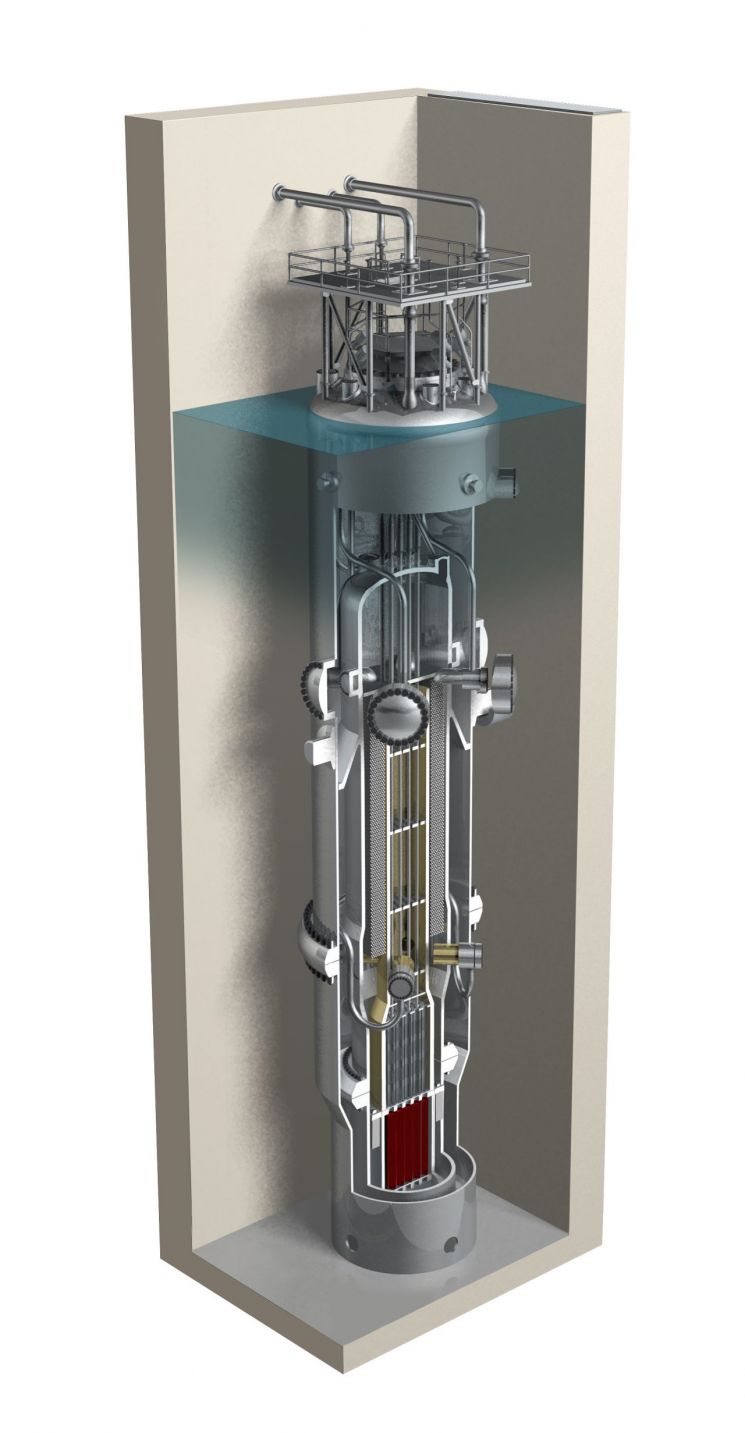
First, Doosan will focus on the development of SMRs, which have emerged as a pillar of the Korea-US economic security alliance alongside semiconductors and batteries, coinciding with U.S. President Joe Biden's visit to Korea.
SMRs are considered future-type nuclear reactors with revolutionary improvements in safety, economic efficiency, and operability. Doosan Enerbility has signed an agreement with U.S.-based NuScale Power for the production of SMR main equipment. NuScale is the only company to have obtained Standard Design Certification from the U.S. Nuclear Regulatory Commission (NRC) in 2020.
A Doosan Enerbility official explained, "NuScale handles development and design, while Doosan Enerbility is responsible for manufacturing the main equipment, representing an alliance between Korean and U.S. companies in the SMR field."
Doosan Enerbility plans to begin manufacturing SMR products in the second half of 2023 and will make related investments to revitalize the nuclear power ecosystem. Doosan Enerbility has invested $104 million in shares with domestic investors and NuScale and has secured supply rights for equipment worth trillions of KRW.
They are also promoting participation in SMR main equipment manufacturing with U.S. companies such as X-energy, with which they signed an SMR design service contract last September.
Gas turbine and hydrogen turbine businesses are also major investment targets. In 2019, Doosan Enerbility succeeded in developing a 270MW-class gas turbine, the fifth in the world, and plans to install it at the Gimpo Combined Heat and Power Plant for pilot operation starting next year.
Investment in the hydrogen business is aimed at building a product lineup for hydrogen fuel cells. Doosan Fuel Cell began construction in April of a 50MW-scale Solid Oxide Fuel Cell (SOFC) factory in the Saemangeum Industrial Complex to mass-produce SOFC products and plans to establish a mass production system by 2023. They plan to enter the power generation SOFC market in 2024 and the marine SOFC market in 2025.
Doosan also plans to gradually increase investment in the semiconductor business by expanding existing factories and building new ones. As Korea's number one semiconductor testing specialist, Doosan Testna will solidify its competitiveness and secure advanced packaging technology in the mid to long term to become a specialized semiconductor post-processing company.
They also plan to expand business and increase investment in future-oriented sectors such as collaborative robots and hydrogen drones, advanced materials for pharmaceutical storage, and 5G antenna materials, all of which are expected to see market growth, thereby contributing to the revitalization of related industrial ecosystems.
A Doosan official said, "While making new investments centered on the energy sector, we expect not only to increase direct employment but also to expand employment at partner companies due to the growth of the industrial ecosystem," adding, "We will contribute to the expansion of stable jobs through active investment."
© The Asia Business Daily(www.asiae.co.kr). All rights reserved.
![Clutching a Stolen Dior Bag, Saying "I Hate Being Poor but Real"... The Grotesque Con of a "Human Knockoff" [Slate]](https://cwcontent.asiae.co.kr/asiaresize/183/2026021902243444107_1771435474.jpg)












