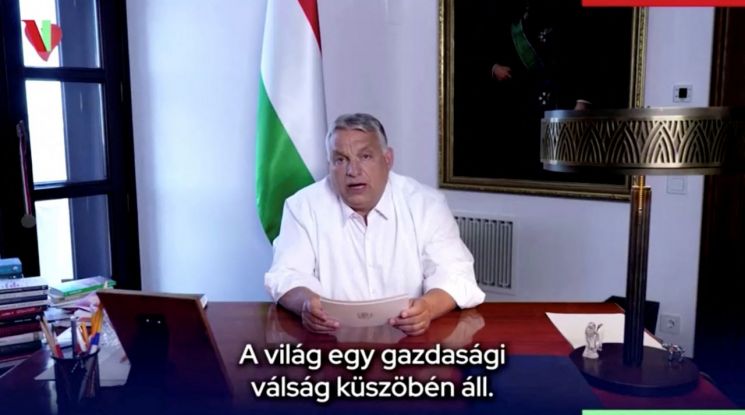
[Asia Economy Reporter Hyunwoo Lee] Hungarian Prime Minister Viktor Orban has declared a state of emergency citing the Ukraine crisis as justification. This move is interpreted as an effort to continue exercising extraordinary powers ahead of the expiration of the previously declared COVID-19 state of emergency. Prime Minister Viktor also expressed continued opposition to the European Union (EU)'s ban on Russian oil imports, drawing criticism both inside and outside Hungary.
According to Bloomberg on the 24th (local time), Viktor Prime Minister stated in a video message posted on Facebook, "From midnight today, the national state of emergency will take effect," adding, "This measure will enable the government to swiftly respond to the repercussions of the war in neighboring Ukraine, and the first measures will be announced on the 25th."
Shortly after the message was released, the Hungarian Parliament also approved the declaration of the state of emergency. Under the national state of emergency, Prime Minister Orban can continue to exercise extraordinary powers, including enacting new laws or nullifying existing laws. Previously, Hungary had declared a health state of emergency to respond to COVID-19, but since that period is set to end this month, it is interpreted that an additional state of emergency was declared.
Having secured re-election with a victory in the general election on the 16th and being granted strong powers, Prime Minister Viktor has not softened his opposition to the EU's pressure regarding the ban on Russian oil imports. It is reported that on the 23rd, he sent a letter to Charles Michel, the President of the European Council, proposing, "Let us not discuss the ban on Russian crude oil imports at the EU summit at the end of this month."
Viktor also emphasized, "If the EU does not present specific details regarding financial support necessary for Hungary to cut off Russian oil, I cannot support the sanctions." The Hungarian government is demanding subsidies exceeding 15 billion to 18 billion euros (approximately 20.32 trillion to 24.38 trillion KRW) in relation to the EU's approval of the ban on Russian oil imports.
© The Asia Business Daily(www.asiae.co.kr). All rights reserved.

















