Achieving Carbon Neutrality by 2050: Upgrading Public Building's Aging HVAC Systems to Geothermal Systems
[Asia Economy Reporter Lim Cheol-young] The Seoul Metropolitan Government is introducing 'eco-friendly geothermal energy' to public buildings such as the main stadium of Mokdong Sports Complex.
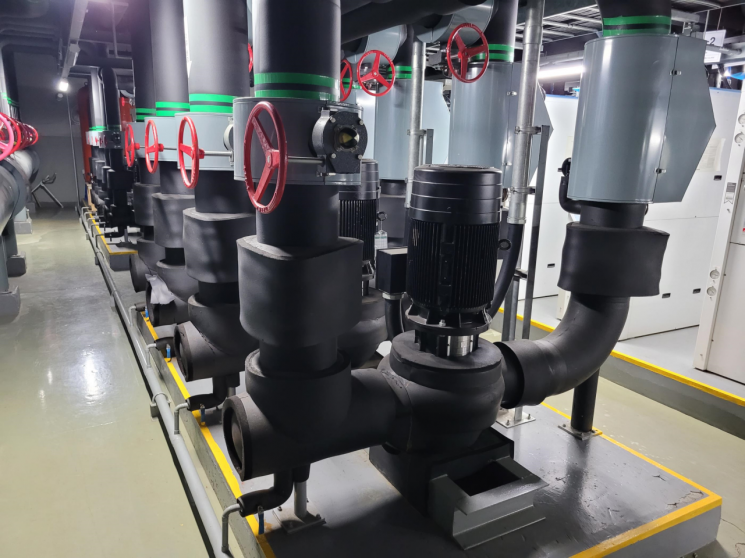
On the 25th, Seoul announced that by the second half of this year, it plans to complete the installation of underground heat exchangers on idle land near the main stadium of Mokdong Sports Complex and replace the old heating and cooling systems with geothermal systems. With the introduction of geothermal energy, an energy saving effect of about 30% compared to the existing heating and cooling systems is expected, and since outdoor units are not required, noise and vibration can be significantly reduced.
Geothermal energy refers to utilizing the thermal energy (average 15℃) contained in the soil, bedrock, and groundwater underground for heating and cooling buildings. It is an eco-friendly renewable energy that uses the temperature difference where underground temperatures are lower than above ground in summer and higher in winter.
The introduction of geothermal energy in public buildings is being promoted as part of the comprehensive climate change response plan (2022?2026) announced by the city in January this year, aiming to achieve carbon neutrality by 2050. The city announced plans to evenly distribute new renewable energies such as geothermal, hydrothermal, small hydropower, fuel cells, and solar power to replace fossil fuels, raising the renewable energy supply rate, which remained at 4.3% (0.8GW as of 2021), to 12.6% (1.6GW) by 2026 and 21% (2.4GW) by 2030.
The city is replacing the old heating and cooling systems of existing public buildings, including Mokdong Sports Complex, with geothermal energy, while also introducing geothermal energy to newly constructed public buildings. This year, geothermal energy will be introduced to five locations (2,227kW), including the Pyeongchang-dong Art and Culture Complex; in 2023, to eight locations (3,856kW), including the Robot Science Museum; and in 2024, to three locations (1,052kW), including the Seo Seoul Museum of Art. In addition, the city plans to actively introduce geothermal energy to large-scale buildings such as public facilities, large-scale maintenance project areas, and energy-intensive buildings.
Meanwhile, Seoul will provide subsidies of up to 1.75 million KRW for houses that newly install geothermal systems by the end of November to promote the spread of geothermal energy use in the private sector.
Yoo Yeon-sik, Head of the Seoul Climate and Environment Headquarters, said, “We will actively respond to the recent high oil prices and strive to increase the renewable energy supply rate by expanding geothermal energy production and use through financial investment, private financing support, subsidies, and mandatory installation in new buildings to achieve carbon neutrality by 2050.”
© The Asia Business Daily(www.asiae.co.kr). All rights reserved.
![User Who Sold Erroneously Deposited Bitcoins to Repay Debt and Fund Entertainment... What Did the Supreme Court Decide in 2021? [Legal Issue Check]](https://cwcontent.asiae.co.kr/asiaresize/183/2026020910431234020_1770601391.png)
















