Focus on Information Disclosure and Quality Care
Enhancing Quality of Life through Life Care
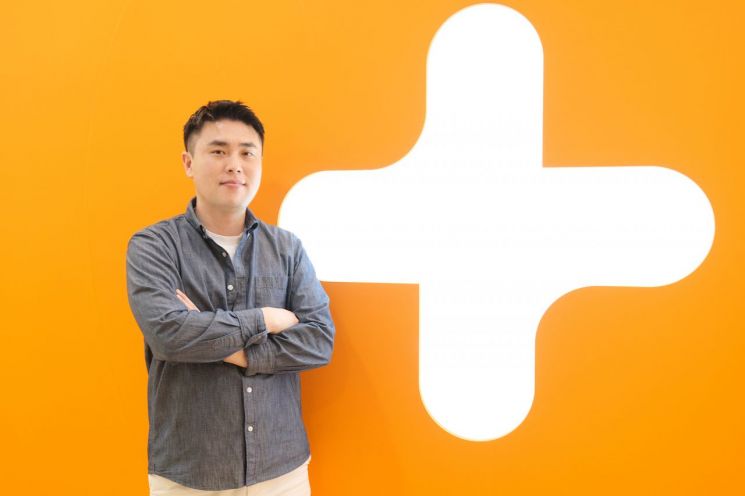
[Asia Economy Reporter Lee Gwan-joo] "We want to create a virtuous care culture where users, caregivers, and related industry workers are all satisfied by providing transparent information disclosure and ‘good care.’"
Park Jae-byeong, CEO (33, photo) who founded the senior care platform ‘Caredoc’ in 2018, has a unique background. How did an ordinary young man majoring in business administration come up with the idea of solving elderly care issues? Park said he recognized the need for care early on by watching his mother care for his grandmother who suffered from dementia in the countryside and his father who had two strokes.
To find answers, he traveled abroad for three years without money, comparing the lives of elderly people in Korea and other countries, and volunteered for a year visiting grandmothers living in small rooms, but nothing changed. He recalled, "No matter how much I tried individually, the lives of the grandmothers remained the same," and "Except for about 10% who receive long-term care, 90% of the elderly were in a blind spot of care, so I thought a government-level solution was also difficult."
What Park focused on was the ‘information imbalance.’ Despite it being a problem concerning beloved family members, there was nowhere to find actual information about nursing facilities and caregivers that elderly people could use. So, the first service he started was a free internet site providing a nursing facility search service. He explained, "I was convinced that care services could be established only if information circulated," and "By sharing information and accumulating reviews, well-performing facilities would receive good reviews, and such facilities would provide better services, creating a virtuous cycle."
The turning point came in 2019, one year after the startup, when they won second place overall in the Public Data Utilization Startup Contest, allowing them to use government nursing-related data. In the early days, nursing facilities strongly opposed it. Park said, "Before us, consumers were not evaluated, so there were many complaints," but "As we continued to explain the purpose of changing the care ecosystem, at some point, empathy for the service was achieved, and now it’s okay."
Caredoc’s service has grown and expanded into a care and nursing intermediary matching service for elderly people not supported by the government. The Caredoc application (app) has been downloaded over 200,000 times, with about 45,000 registered facilities, and cumulative care hours exceeding 2.8 million. Park prioritized providing ‘good care.’ He emphasized, "Caregivers and nursing assistants need to be recognized as professionals and have improved treatment for better services to the elderly."
Park also pointed out that simple care alone cannot change the daily lives of the elderly. Beyond just assisting the elderly, ‘life care’ to improve the quality of senior life must be implemented. For example, if rehabilitation services are found and provided to an elderly person who had a stroke, the duration of illness shortens, reducing the suffering of families and government subsidy expenditures. Good care benefits not only the elderly receiving care but all generations. Park said, "Elderly issues are everyone’s concern. Through Caredoc, we want to fill the gaps in care," and added, "I hope efforts to build a virtuous ecosystem for senior healthcare will be viewed positively."
© The Asia Business Daily(www.asiae.co.kr). All rights reserved.
!["The Woman Who Threw Herself into the Water Clutching a Stolen Dior Bag"...A Grotesque Success Story That Shakes the Korean Psyche [Slate]](https://cwcontent.asiae.co.kr/asiaresize/183/2026021902243444107_1771435474.jpg)
















