Raw Material Procurement Disruptions and Sales Decline
Need for Supply Chain Diversification Highlighted
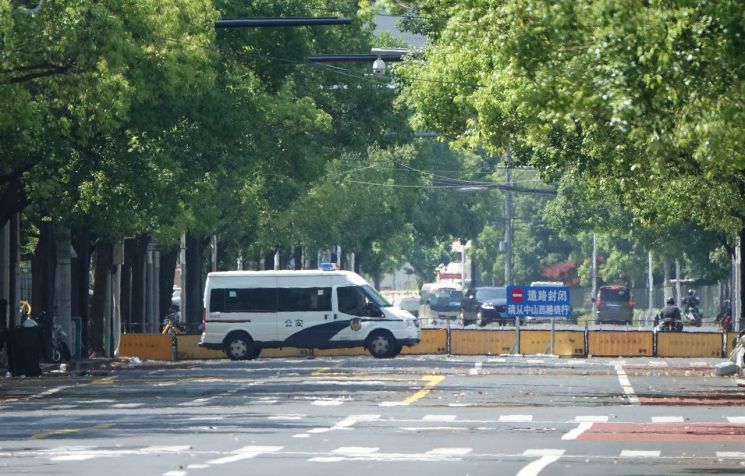
[Asia Economy Reporter Jin-ho Kim] This year, the lockdown measures in major Chinese cities due to the spread of COVID-19 have been analyzed to have a negative impact on Korean companies.
The Federation of Korean Industries conducted a survey on 700 companies investing or trading in China among the top 1,000 companies by sales, investigating the 'Impact of lockdowns in major Chinese cities on domestic companies,' and announced the results on the 25th.
Among the responding companies, 73.8% answered that the city lockdowns in China had a negative impact on the business environment (24.3% very negative + 49.5% somewhat negative). The main reason for the negative impact was 'disruption in procurement of raw materials produced in China' (50.9%), which was the highest. This was followed by 'delays in delivery dates to buyers' (14.9%), 'operational disruptions in other factories due to partial factory lockdowns' (13.6%), 'shutdowns of domestic and overseas factories or business closures' (7.0%), and 'difficulty in workforce management due to non-face-to-face business activities' (6.6%).
Among companies investing or trading in China, 4 out of 10 responded that they are coping with the city lockdowns by 'pre-purchasing raw materials and securing sufficient inventory' (43.0%). They also mentioned exploring 'diversification of supply chains to resolve parts supply issues' (25.4%), 'no special measures' (21.5%), and 'creating and activating non-face-to-face work environments' (7.0%).
Comparing one month before and after the lockdowns in major Chinese cities, the sales of responding companies decreased by an average of -4.0%, and exports decreased by -3.7%. Production costs also increased by 2.4%. Companies with increased production costs (69 companies) stated plans to raise product prices by an average of 2.8%. The average disruption in production days due to the lockdown was 19.2 days.
30.4% of responding companies prepare an average of '1 to 2 months' worth of raw materials in preparation for city lockdowns. However, 30.4% of companies do not secure raw materials at all.
As the lockdowns in major Chinese cities continue, when asked about the direction of response to changes in the business environment in China, the majority of companies (87.3%) said they would 'maintain their business in China' in the long term. On the other hand, 1 out of 10 companies (11.7%) answered that they would 'downsize their business sites.'
The most needed support policy to respond to the Chinese city lockdowns was 'strengthening support for smooth logistics within China' (39.2%). This was followed by 'rapid acquisition and sharing of information on Chinese city lockdowns' (35.6%), 'ensuring the safety of Korean businesspeople in China' (9.4%), and 'providing flights for expatriates and their families to return home' (6.8%).
Kim Bong-man, head of the Federation of Korean Industries International Headquarters, said, “Since the beginning of this year, as lockdowns in major Chinese cities have continued, our companies are facing great difficulties,” and suggested, “The government should actively work to resolve the difficulties of businesspeople by consulting with Chinese authorities to support smooth logistics within China and to rapidly acquire and share information on Chinese city lockdowns.”
© The Asia Business Daily(www.asiae.co.kr). All rights reserved.
![User Who Sold Erroneously Deposited Bitcoins to Repay Debt and Fund Entertainment... What Did the Supreme Court Decide in 2021? [Legal Issue Check]](https://cwcontent.asiae.co.kr/asiaresize/183/2026020910431234020_1770601391.png)















