Commercial Banks Introduce Fixed-Rate 10-Year Loan Product Following 40-Year Mortgage and 10-Year Credit Loan Offerings
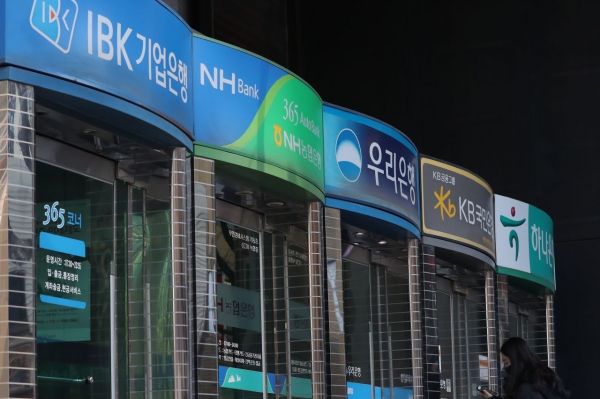
[Asia Economy Reporter Yu Je-hoon] Amid the freezing of household loan demand due to the base interest rate hike and the total debt service ratio (DSR) regulations, commercial banks are responding by extending not only the loan periods but also the fixed interest rate periods.
According to the financial sector on the 24th, IBK Industrial Bank of Korea began selling the ‘IBK Long-term Fixed Mortgage Loan’ product with a limit of 500 billion KRW starting today. The feature of this product is that the fixed interest rate period can be set from the current 5 years up to a maximum of 10 years.
The loan period for this product is up to 40 years, and borrowers can choose a fixed interest rate period of either 5 or 10 years. The loan target is customers who provide their homes as first-priority collateral to IBK Industrial Bank, and the repayment structure is either principal-only or principal and interest in installments.
With expectations that the base interest rate will reach 2.25% to 2.5% per annum by the end of this year and the prevailing forecast that the rate hike trend will continue for the time being, borrowers have the advantage of reducing interest burdens through long-term fixed interest rates.
Other commercial banks are also responding to the decline in loan demand by extending the maturity of loan products. Since Hana Bank launched a 40-year maturity mortgage loan, KB Kookmin, Shinhan, Woori, and NH Nonghyup Banks have also introduced related products. Additionally, KB Kookmin and NH Nonghyup Banks have extended the maturity of unsecured loans from the existing 5 years to a maximum of 10 years, and other banks are reportedly reviewing similar measures.
The reason commercial banks are successively extending maturities and fixed interest rate periods is that household loan demand is rapidly slowing down due to the interest rate hikes, the resulting sluggish real estate market, and loan regulations such as DSR. According to the Financial Services Commission, the decrease in household loans by banks amounted to 700 billion KRW in January, 300 billion KRW in February, and 3.6 trillion KRW in March. Last month, it increased by 1.3 trillion KRW, returning to an upward trend after four months, but the year-on-year growth rate was only 3.1%, indicating that the overall demand slowdown continues.
In this situation, extending various maturities can provide borrowers with an incentive to execute loans. Even if the same amount is borrowed, extending the maturity by 5 to 10 years reduces the monthly repayment amount accordingly. If the annual interest amount decreases, the loan limit can also increase. Furthermore, for products with extended fixed interest rate periods, borrowers can be relatively free from the ‘fear’ of interest rate hikes, which are expected to continue for the time being.
However, the banking sector advises careful consideration because longer maturities may cause the total interest to exceed the principal, and for fixed interest rate products, future interest rate trends cannot be predicted. A financial sector official said, "While longer maturities can reduce monthly burdens and offset the effects of interest rate hikes in the short term, the total interest amount increases, and the long-term interest rate direction is unpredictable, so borrowers should carefully examine their repayment plans."
© The Asia Business Daily(www.asiae.co.kr). All rights reserved.
![Clutching a Stolen Dior Bag, Saying "I Hate Being Poor but Real"... The Grotesque Con of a "Human Knockoff" [Slate]](https://cwcontent.asiae.co.kr/asiaresize/183/2026021902243444107_1771435474.jpg)
















