[Seoul District News] Nowon-gu Conducts Preliminary Survey, Selects 16 Staff Members for Intensive One-Month Training in Pairs on Promotion, Disaster, Building Management, and Land Survey... Yangcheon-gu to Host 3rd Health Healing Center Healing Conference on June 2... Yongsan-gu Partners with 4 Cafes near Sookdae for Youth Suicide Prevention... Seocho-gu Recruiting Participants for ‘Seoripul Amateur Male Vocal Competition’... Gangnam-gu Holds ‘Youth Robot AI Hackathon’... Jungnang-gu Offers Cooking Class for Single-Person Household Youth
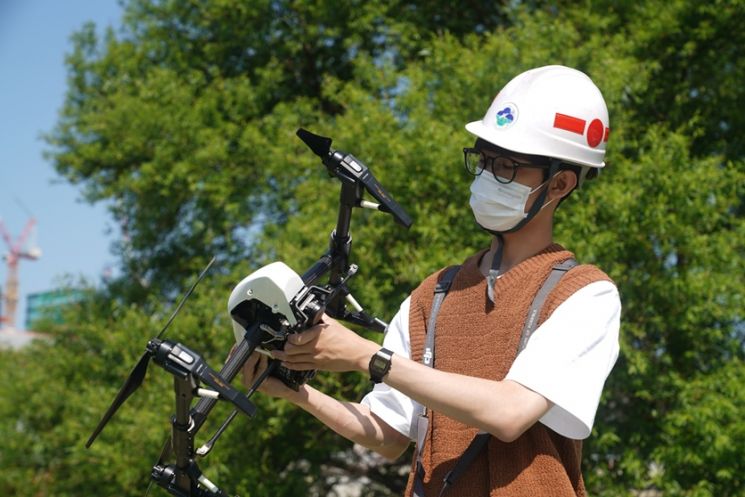
[Asia Economy Reporter Park Jong-il] Nowon-gu is operating an employee 'Drone Academy' to enhance staff work capabilities and improve administrative innovation and efficiency.
Thanks to technological advancements, the traditional drawbacks of drones such as weight, size, and cost are rapidly being addressed, accelerating the popularization of drones. Reflecting this trend, major domestic and international companies have recently introduced various pilot services using drones, and it is expected that drone-related regulations will be relaxed and their operational scope will expand in the future.
To proactively respond to these changes, the district piloted the 'Drone Academy' for employees last year. After completion, graduates from related departments such as Architecture have increased cases of using drones in administrative tasks, so the district decided to continue offering customized drone academy classes for employees this year.
Through a prior demand survey, 16 people were selected from departments applying drones to their work, such as ‘Forest and Park Operation Management’ and ‘Aerial Photography for Public Design Review’.
The training is divided into two groups of 8 people each, with each group receiving one month of education. Using the training simulator ‘RealFlight,’ theoretical and indoor training covers basic flight posture, grip methods, and emergency response. Then, four training drones are paired in teams of two for practical exercises in free flight zones such as Jangam in Uijeongbu City.
The most notable feature of the training is that it is conducted by internal staff who hold a Class 1 pilot license for ultralight flying devices (drones), rather than external instructors.
Currently, an employee who uses drones for district office tasks is in charge of the training, significantly lowering the educational barrier and allowing ongoing feedback on drone operations even after the course ends.
Considering the reality of limited training time due to work responsibilities, the curriculum is designed to be practice-oriented so that trainees can immediately apply what they learn to actual work, increasing satisfaction.
The district plans to support obtaining Class 1 licenses through professional training institutions from next year for departments with specialized and continuous drone-related work plans based on demand surveys.
Meanwhile, the efficiency of work has improved through drone use by last year’s first cohort graduates. The Architecture Department is using drones to build a smart safety management system (for facilities), the Culture and Sports Department actively uses drones for aerial photography of sports facilities, and the Media Public Relations Officer is preparing to use drones in environments difficult for manual operation and disaster situations by establishing an autonomous drone navigation system.
A district official said, “We will strive to integrate drones into various administrative fields to enhance work efficiency and promote advanced innovative administration.”
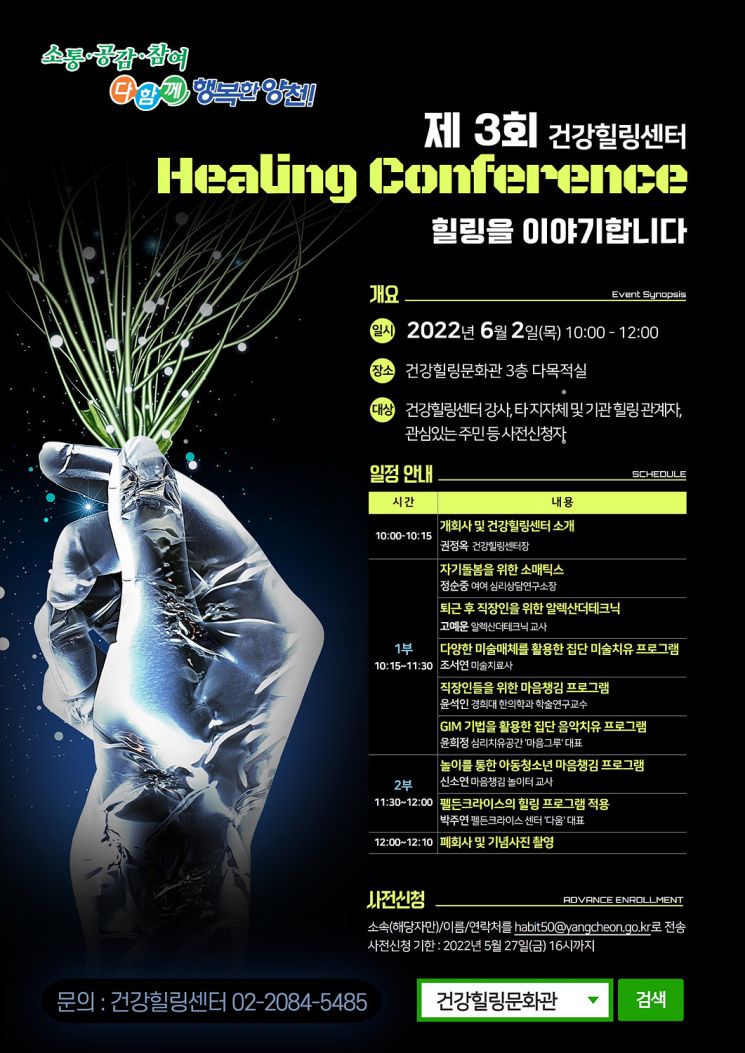
Yangcheon-gu announced that it will hold the 3rd Health Healing Center Healing Conference on June 2 at the Health Healing Culture Center.
The Health Healing Center Healing Conference is designed to share cases of healing program operations for physical and mental recovery and psychological and emotional stability, creating a forum to discuss the healing value and role of culture and arts. Experts in meditation, art, and psychological healing from various fields will attend, promising active exchange of opinions and case sharing.
This conference will proceed in the order of ▲Introduction to the Health Healing Center ▲Somatics for self-care ▲Alexander Technique for office workers after work ▲Group art therapy program cases using various art media ▲Mindfulness for office workers ▲Group music therapy program cases using GIM technique ▲Mindfulness for children and adolescents through play ▲Application of Feldenkrais healing program ▲Discussion on ways to provide quality healing and therapeutic services.
Case presentations will be delivered by experts who conducted the programs, covering theory, structure, application cases, and participant feedback.
Pre-registration for the conference is open until 4 p.m. on the 27th by visiting the Health Healing Center office or submitting an application form (including affiliation, name, and contact information) via the person in charge’s email. Detailed information about the conference can be obtained by contacting the Health Healing Center or checking the announcements on the Health Healing Culture Center website.
Meanwhile, the Health Healing Culture Center is Korea’s first one-stop complex facility for health healing welfare, operating the healing program ‘HAB-it Haebit’ that helps citizens overcome depression, anxiety, and lethargy to care for their physical and mental health. It is a specialized healing space unique to Yangcheon-gu, equipped with various programs and convenience facilities to realize health, cultural welfare, and professional healing in the community.
A Culture and Sports Department official said, “To recover the long-awaited daily life after COVID-19, we will actively utilize Yangcheon-gu’s specialized healing facilities and organize meaningful programs,” adding, “We hope this conference will be an opportunity to improve the quality of healing services and promote the health of residents.”
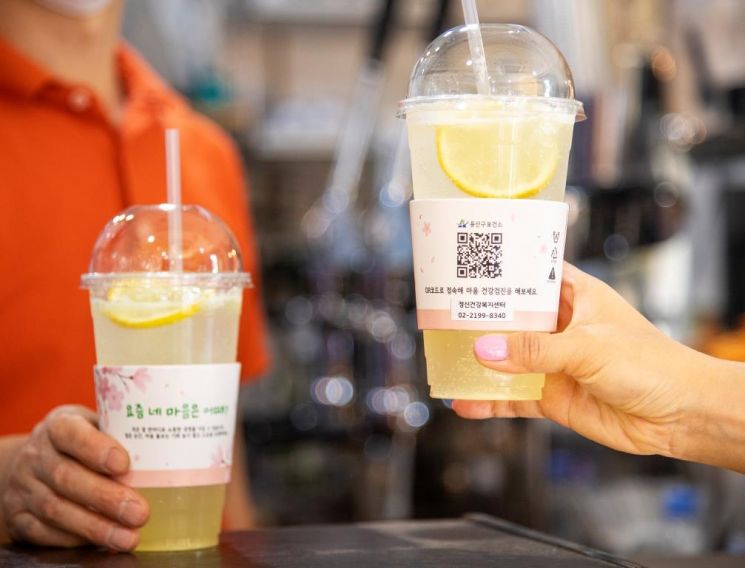
Yongsan-gu (Mayor Seong Jang-hyun) has started a youth suicide prevention campaign in collaboration with four cafes near Sookdae (Sookmyung Women’s University) frequented by young people to spread a culture of respect for life in the community.
Earlier this month, the district recruited mental health cafes to participate in the campaign and produced 10,000 cup holders embedded with QR codes for mental health self-assessment.
The mental health cafes are four locations near Sookmyung Women’s University: ▲A Great Cafe Sookdae Branch ▲Hyoidabang ▲Ilmio Cafe ▲Nerd Coffee Stand. The district provides 300 cup holders monthly to each cafe.
Anyone can scan the QR code printed on the cup holder with a smartphone to take the mental health self-assessment (PHQ-9). The questionnaire consists of 17 items, including personal information and depression screening. If a respondent is identified as at risk, the district connects them to free psychiatric consultations (up to three sessions) as part of the youth mental health screening project.
A district official said, “Residents’ depression levels are high due to COVID-19,” adding, “This project, launched for the first time this year, will help identify youth in crisis.”
Additionally, the district health center continuously conducts suicide prevention education tailored to life stages by training suicide prevention guardians and providing education for elementary, middle, and high school students, workers, and military personnel.
Yongsan-gu Mayor Seong Jang-hyun said, “The district will take the lead in protecting precious lives,” and urged, “When you feel there is no one to ask for help, please remember the mental health diagnosis QR code.”
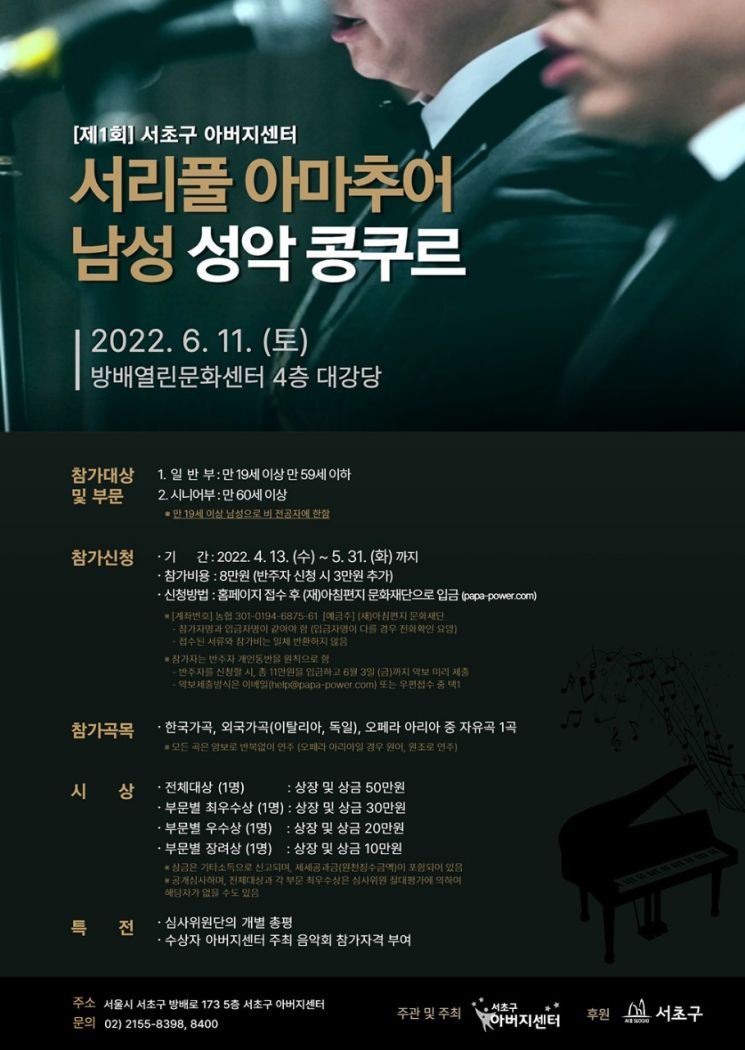
Seocho-gu announced that it is recruiting participants for the ‘1st Seoripul Amateur Male Vocal Competition’ held jointly with the Seocho-gu Father’s Center until the end of this month.
The Seocho-gu Father’s Center, established in 2016 as the first of its kind among local governments nationwide, provides fathers with opportunities for rest and learning, helping relieve daily stress, restore self-esteem, and foster bonds and friendship as a happy healing community space.
This ‘1st Seoripul Amateur Male Vocal Competition’ is designed for ordinary fathers who love music and enjoy singing to challenge themselves in the competition, grow through effort, and feel happy accomplishment and increased self-esteem.
Participants can apply in two categories: general (ages 19 to under 60) and senior (60 and over). Applications are accepted through the Seocho-gu Father’s Center website.
Prizes include one grand prize winner (KRW 500,000), one top prize winner each in the senior and general categories (KRW 300,000), one excellence award each (KRW 200,000), and one encouragement award each (KRW 100,000), totaling seven winners.
Winners will have the opportunity to perform on stage at a year-end concert hosted by the Seocho-gu Father’s Center.
The district especially expects this competition to be a happy challenge for senior fathers opening a joyful second chapter of life after retirement.
The Seocho-gu Father’s Center launched the ‘Happy Fathers Choir’ class in 2019, where about 100 fathers participated in the opening performance of the Seoripul Festival, Korea’s representative music festival, gaining attention.
Last year, the center held a ‘Happy Fathers Photo Contest’ and a ‘5P Essay Contest,’ creating small joys and memories for fathers living diligently despite the difficulties of COVID-19.
Seocho-gu Acting Mayor Cheon Jeong-wook said, “We will continue to offer various programs so that fathers who have worked tirelessly can find happiness in life.”
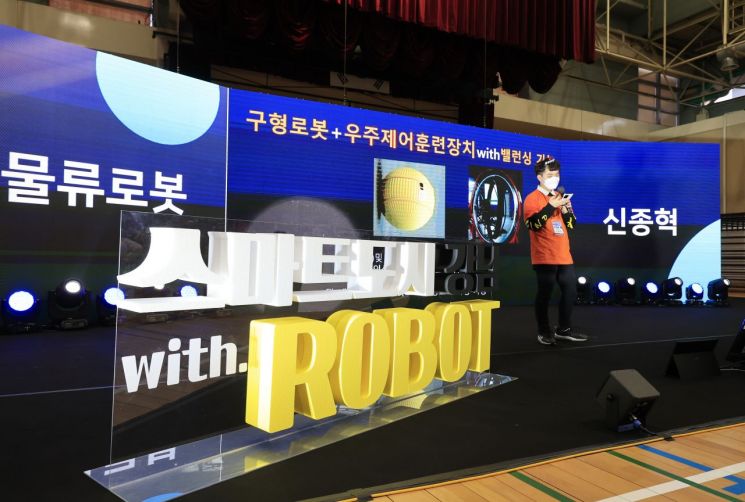
Gangnam-gu held a ‘Robot AI Hackathon’ on the 21st to select trainees for the ‘Gangnam Youth Robot AI Expert Academy,’ which aims to nurture promising talents in the robot and AI industry.
A hackathon is a compound word of hacking and marathon, referring to a competition in software development where participants form teams to produce results within a set time.
The district accepted applications from high school students in the area until the 15th and held the hackathon at the Gangnam Sports Culture Center on the 21st for those who passed document screening. Students formed teams, devised new robot technology convergence ideas on given themes, presented them, and after evaluation, 30 participants were selected for the ‘Robot AI Employment-Linked Training Course.’
Gangnam-gu assigned trainee teams to three fields: smart farms, indoor delivery, and security robots, placing robot industry professionals as mentors. After a three-month training course, each team will demonstrate a final project applying their ideas to Gangnam-gu scenarios, with awards for excellent results and support for corporate recruitment.
Since last year, Gangnam-gu has operated the ‘Youth Robot AI Expert Academy,’ with 80% of last year’s trainees successfully employed by robot specialist companies.
Yoon Jong-min, Director of the Smart City Division, said, “Gangnam-gu has established itself as Korea’s representative ‘smart city’ and a world-class ‘ontact leader.’ We will continue to actively support nurturing talents for the 4th industrial revolution befitting a world-class city.”
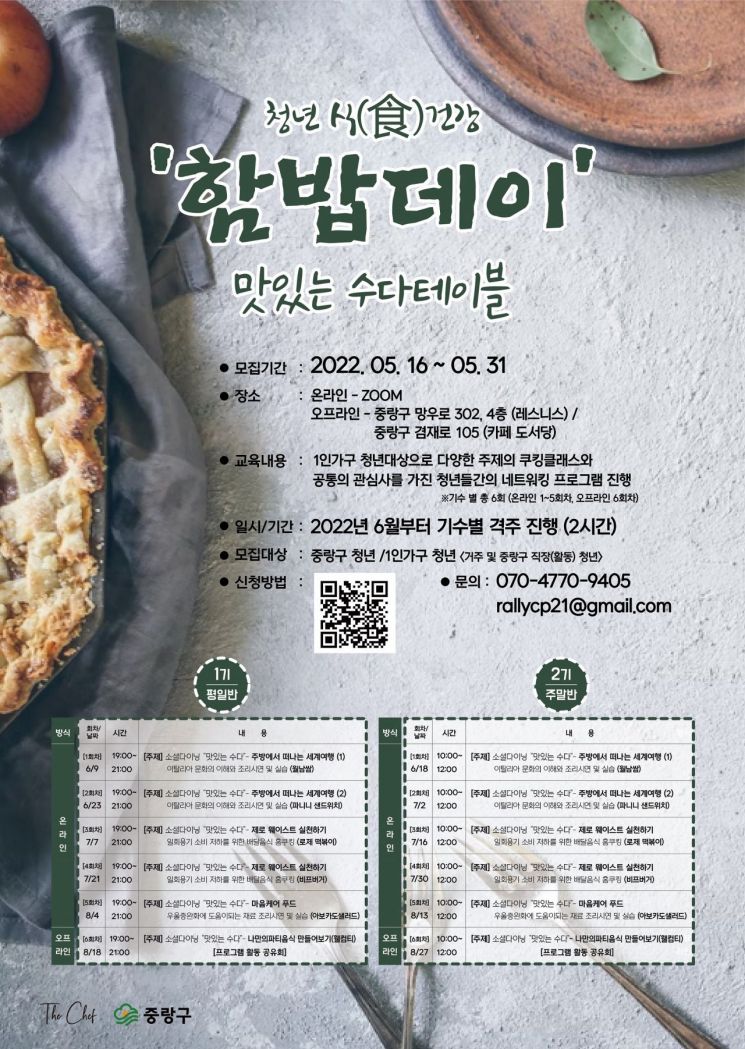
Jungnang-gu is launching the ‘Hambap Day Delicious Talk Table,’ a cooking class and networking program to promote dietary health among single-person household youth.
‘Hambap Day’ aims to help young people accustomed to eating alone learn to cook and eat together while building networks. The district intends to prevent social isolation among single-person household youth through local network formation.
The program will be held six times with themes such as ‘World Travel from the Kitchen,’ learning about Italian culture and food; ‘Practicing Zero Waste,’ making delivery food to reduce disposable container use; and ‘Mind Care Food,’ cooking with ingredients that help alleviate depression. The final session will share activities and include ‘Making My Own Party Food.’
Young people aged 19 to 34 living or working in Jungnang-gu can participate by submitting an application via the QR code on the poster by the 31st of this month. The program is divided into weekday and weekend groups, operating biweekly with 15 participants per group.
A district official said, “We hope that food will serve as a medium for young people living alone to share common interests and concerns, communicate, and form a local community,” adding, “We will continue to implement various policies for youth.”
The district is actively pursuing youth policies in various areas, including hosting the youth policy forum ‘Gungsiryeong Competition,’ supporting youth activities through the ‘1934 Youth Era’ project, and providing mental health vouchers for youth.
© The Asia Business Daily(www.asiae.co.kr). All rights reserved.



















