Among the total restoration area of 1,078 ha, 1,398,000 trees including wild cherry and sawtooth oak were planted on 800 ha
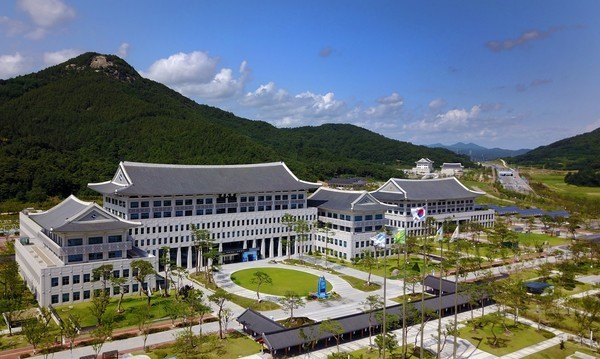
[Asia Economy Yeongnam Reporting Headquarters Reporter Kim Gwi-yeol] Gyeongbuk Province is restoring the large-scale wildfire damage areas in Andong Pungcheon and Namhu over three years (2021?2023) by investing 16.1 billion KRW in a 1,078-hectare area, planting scenic forests, fire-resistant tree belts, economic forests, melliferous trees, and special-purpose trees to create healthy and beautiful forests.
The wildfire that occurred from April 24 to April 26, 2020, spread rapidly due to a combination of dry weather warnings, strong winds, and gusts blowing from the Nakdong River, with instantaneous maximum wind speeds of 9 to 19 m/s, causing forest damage worth 20.9 billion KRW.
The province conducted a basic plan study for the restoration project of the wildfire damage area by collecting opinions from local residents and advisory committee members to ensure detailed and systematic recovery.
To secure species diversity and forest health, a mixed forest of conifers and broadleaf trees was planned, along with the creation of fire-resistant tree belts planted with fire-resistant species to prevent the spread of large wildfires to major facilities. The restoration and afforestation plan was established over three phases (2021?2023).
The main fire-resistant species include Quercus acutissima (sawtooth oak), Quercus variabilis (cork oak), and Ginkgo biloba.
In the first year (2021), 593,000 saplings were planted over 400 hectares, focusing on mountain cherry trees with strong cold and pollution resistance near highways where pollution occurs, and on Korean dogwood trees around residential areas within visibility zones.
In the second year (2022), 805,000 saplings were planted over 400 hectares as mixed forests combining conifers and broadleaf trees to form a multi-layered structure. Fire-resistant species such as Quercus acutissima and Quercus variabilis were planted to prevent wildfires and their spread. Mountain cherry and Korean dogwood trees were planted in visually prominent areas within visibility zones, and larch trees were planted to create economic forests for timber production.
In the third year (2023), 417,000 saplings will be planted over 278 hectares, including Hovenia dulcis (oriental raisin tree), a melliferous and special-purpose tree that can contribute to local residents' income improvement, and Quercus acutissima and Quercus variabilis along ridgelines to establish fire-resistant tree belts.
Choi Young-sook, Director of the Environmental and Forest Resources Bureau of Gyeongbuk Province, said, “We will do our best to restore the precious forests lost due to a moment of carelessness into healthy and beautiful forests so that future generations can enjoy the abundant benefits of the forests.”
© The Asia Business Daily(www.asiae.co.kr). All rights reserved.
![Clutching a Stolen Dior Bag, Saying "I Hate Being Poor but Real"... The Grotesque Con of a "Human Knockoff" [Slate]](https://cwcontent.asiae.co.kr/asiaresize/183/2026021902243444107_1771435474.jpg)











