[Asia Economy Reporter Park Byung-hee] The Egyptian Minister of Finance, from the world's largest wheat-importing country, has warned that the global food crisis caused by the Ukraine war could claim the lives of millions worldwide.
On the 22nd (local time), according to major foreign media, Mohamed Maait, Egypt's Minister of Finance, who is visiting the UK, warned of a global food insecurity crisis. Minister Maait said, "The food crisis is a very important issue that we must be deeply concerned about," adding, "It would be very shameful for us if we witness millions of innocent people dying because of the food crisis."
Earlier, United Nations Secretary-General Antonio Guterres also warned that tens of millions could suffer from hunger due to the Ukraine war. Secretary-General Guterres stated, "The food crisis could persist for several years due to the Ukraine war, climate change, and the COVID-19 pandemic."
The Group of Seven (G7) countries launched an organization called the 'Global Alliance for Food Security' last week in cooperation with the United Nations. This organization aims to support food, fertilizer, and energy supplies and provide financial assistance to help poor countries avoid hunger.
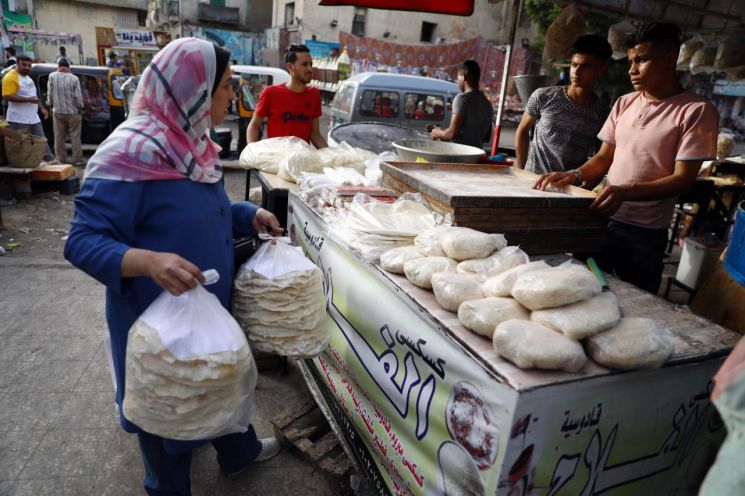
Egypt is the world's largest wheat importer and sourced 80% of its wheat imports from Russia and Ukraine before the outbreak of the Ukraine war.
Egypt's economy is unstable due to soaring prices. As wheat supply becomes uncertain, prices, especially for food products, have surged sharply. Egypt's consumer price inflation rate was around 5% before the war but has now jumped to 14.5%. Last week, the Central Bank of Egypt raised the benchmark interest rate by 2 percentage points at once to curb inflation.
The sharp rise in bread prices due to wheat supply instability is also putting pressure on government finances. The Egyptian government currently pays over $3 billion annually in bread subsidies. The government's plan to rationalize bread subsidies has been postponed due to the Ukraine war. Minister Maait said that although bread prices and production costs are rising, increasing the government's financial burden, it is currently impossible to immediately implement subsidy rationalization. However, he emphasized that the rationalization policy will definitely be pursued gradually.
Minister Maait said that negotiations for a bailout with the International Monetary Fund (IMF) are progressing very well. Egypt requested bailout negotiations with the IMF in March. The Egyptian government has indicated that it may sell some state-owned assets to increase government revenue. Minister Maait explained that neither the Egyptian government nor the IMF has yet specified the exact scale of the bailout.
Minister Maait emphasized his confidence that despite soaring prices and worsening government finances, the Egyptian economy will not fall into recession this year.
The Egyptian government expects the economic growth rate for the new fiscal year starting in July to reach 5.5%.
© The Asia Business Daily(www.asiae.co.kr). All rights reserved.

















