Temporary Reduction in Customs Duties Pre-Reflected in 2nd Supplementary Budget... Expanded Application of Quota Tariffs on Processed and Concentrated Agricultural and Marine Products
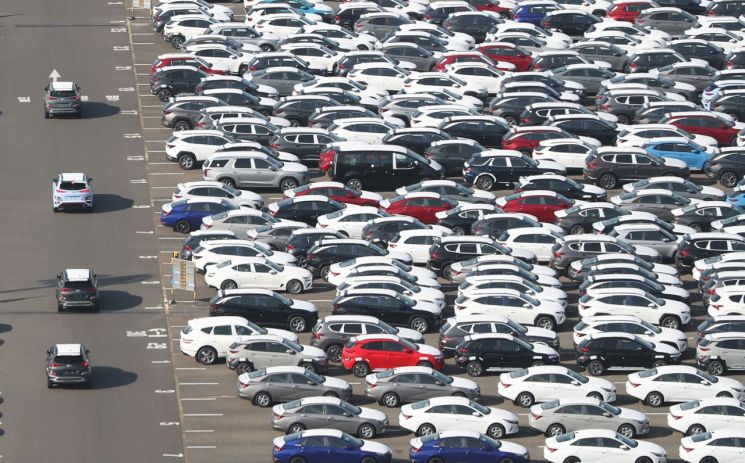
[Asia Economy Sejong=Reporter Kwon Haeyoung] The government is considering extending the reduction of the individual consumption tax (ICT) on passenger cars, which is scheduled to end at the end of next month, until the end of the year.
According to the Ministry of Economy and Finance on the 22nd, the government will announce measures to stabilize prices and support the livelihoods of ordinary citizens, including the reduction of the ICT on passenger cars, by the end of this month. With the inflation rate threatening the 5% mark due to rising oil prices and supply chain disruptions, the government judges that it is urgent to prepare various measures to alleviate the difficulties faced by the public.
Primarily, the government has decided to extend the ICT reduction on passenger cars. From July 2018 to the end of 2019, the government reduced the ICT on passenger cars by 30%, from 5% to 3.5%, for one and a half years. In the first half of 2020, when COVID-19 occurred, the reduction rate was increased to 70%, applying an ICT rate of 1.5%. Although the reduction was reverted to 30% in the second half of 2020, the government has continued to extend the measure every six months and plans to maintain the reduction until the end of June this year.
If the ICT reduction on passenger cars ends as scheduled at the end of June, consumers’ vehicle purchase costs will increase significantly, which is likely to lead to additional inflationary pressure. For this reason, the government considers it desirable to extend the 30% ICT reduction on passenger cars for an additional six months until the end of this year. The situation of considerable delays in vehicle deliveries due to rising raw material prices and logistics disruptions was also taken into account.
Reducing the ICT by 30% for six months could reduce tax revenue by nearly 400 billion KRW, but the government is known to have already reflected the revenue loss from the extension in the revenue estimates of the second supplementary budget bill.
Additionally, regarding other processed goods and agricultural, livestock, and fishery products that directly affect living costs, the government is considering expanding the application of tariff quotas and actively responding by utilizing government stockpiles. Due to concerns over supply disruptions caused by rising international prices, it is highly likely that tariff quotas will be additionally applied to edible oil import items beyond soybeans, which have been subject to tariff quotas since early this year.
Furthermore, to prevent sudden price hikes and distribution disruptions of various daily necessities, processed foods, and cooking ingredients, the government plans to increase communication with related industries and actively monitor ordering situations. The livelihood measures are also expected to include requests to refrain from price-following increases and a firm stance against collusion.
Moreover, the government is reviewing mid- to long-term plans to improve the distribution structure to eliminate unnecessary factors causing price increases.
© The Asia Business Daily(www.asiae.co.kr). All rights reserved.

















