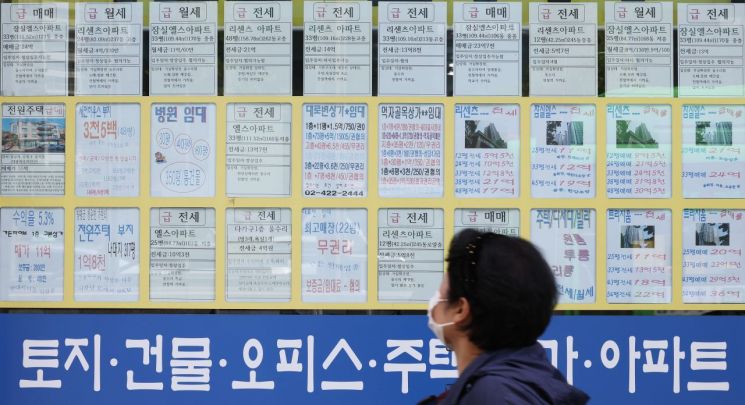
[Asia Economy Reporter Hwang Sumi] Last year, there were about 7,000 cases of Chinese nationals purchasing buildings such as apartments in South Korea.
On the 22nd, Jeong Woo-taek, a member of the National Assembly's Industry, Trade, Energy, Small and Medium Enterprises Committee from the People Power Party, received data titled 'Foreigners' Real Estate Purchase Status' from the Legislative Research Office, which showed that the total number of cases where Chinese nationals purchased housing and other buildings in South Korea last year was 6,640.
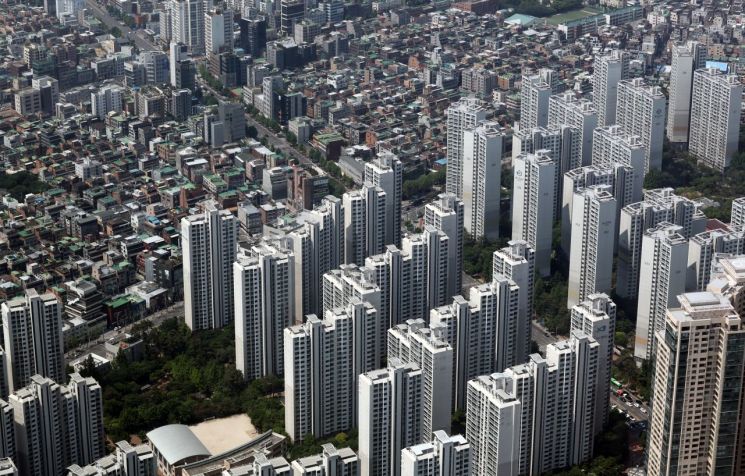
Looking at the 17 provinces and metropolitan cities nationwide, Gyeonggi-do had the highest number with 2,659 cases. This accounts for 78.1% of the cases where foreigners purchased buildings in Gyeonggi-do last year (3,404 cases). Next was Incheon with 1,220 cases, ranking second. This was followed by Seoul (736 cases) and Chungnam (693 cases).
Rep. Jeong stated that the overall trend of real estate purchases by foreigners, including Chinese nationals, is increasing, and that institutional improvement measures should be prepared regarding foreigners' apartment purchases.
Previously, issues regarding foreign real estate transactions have been continuously raised. Hana Financial Management Research Institute pointed out in a report last February that some domestic real estate regulations do not apply to certain foreigners, which could lead to reverse discrimination against domestic residents. It was noted that when foreigners invest in domestic real estate through overseas loans, loan regulations cannot be applied, and it is difficult to determine whether they are subject to heavy taxation.
In particular, heavy taxation related to multiple home ownership is applied based on the 'number of houses per household,' making it easy for foreigners, whose household members' housing ownership status is difficult to ascertain, to be excluded from heavy taxation. Accordingly, the research institute analyzed that speculative demand centered around the metropolitan area is rampant.
Illegal foreign exchange transactions and tax evasion by foreigners are also cited as problems. According to the research institute, the Korea Customs Service analyzed foreign buyers' apartment purchase funds in April last year and uncovered numerous cases of foreigners involved in illegal transactions who illegally acquired 55 apartments in Seoul worth approximately 84 billion KRW.
Overseas, policies regulating real estate purchases by foreign investors are being strengthened. Singapore imposes a 30% transaction tax on foreigners' real estate purchases, applying differential tax rates to citizens, permanent residents, and foreigners.
In the United States and Australia, withholding tax systems and differential taxation for foreigners on capital gains are operated to prevent tax evasion.
Meanwhile, Canada does not have federal regulations on foreign real estate transactions but imposes additional transaction taxes on foreigners or regulates large-scale farmland acquisitions by foreigners at the provincial government level.
On the other hand, the research institute pointed out that effective regulatory enforcement in South Korea is still at a standstill. It emphasized that since foreigners' acquisition of domestic real estate is identified as one of the causes of rising real estate prices, regulatory measures should be devised comprehensively considering constitutional principles such as the prohibition of excess and reciprocity.
Meanwhile, according to the Yoon Seok-yeol administration's foreigner national agenda implementation plan, the government plans to promote legislation for anti-speculation laws targeting foreigners in the second half of this year. It is being discussed to amend the Act on Reporting and Inspection of Real Estate Transactions to require verification procedures when foreigners purchase housing domestically. This would involve establishing legal grounds allowing the Minister of Land, Infrastructure and Transport or local government heads to designate subjects and areas to which the transaction permit system applies.
© The Asia Business Daily(www.asiae.co.kr). All rights reserved.


















