Concurrent recognition with existing PCR... Post-entry testing reduced from 2 times to 1 time
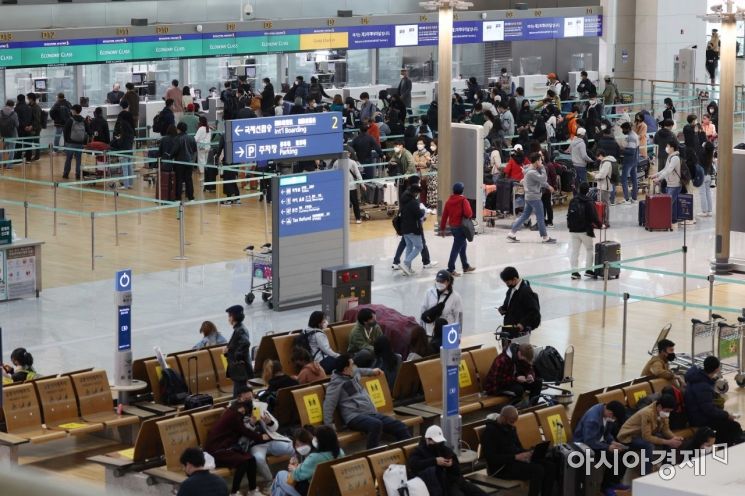
[Asia Economy Reporter Jo In-kyung] Starting tomorrow, both PCR tests and professional rapid antigen tests (RAT) will be accepted when entering Korea from overseas.
According to health authorities on the 22nd, from the 23rd, COVID-19 tests conducted before entry into Korea from overseas can be confirmed negative not only by the existing PCR test but also by RAT. Until now, only PCR negative certificates issued within 48 hours before entry were allowed for overseas arrivals.
Since RAT is considered a substitute for PCR testing, a negative certificate issued by a professional who conducted the test is required, and results from self-administered test kits are not recognized.
Sohn Young-rae, head of the Social Strategy Division at the Central Disaster and Safety Countermeasures Headquarters, explained the background of this regulatory relaxation: "Many measures have been taken overseas to replace PCR tests with RAT, making it difficult to get PCR tests or causing significant cost burdens, which has raised fairness concerns."
The government expects that since RAT infrastructure is much more widely established due to the nature of the testing method, most countries will be able to provide relatively simple and inexpensive RATs.
From the 1st of next month, the number of COVID-19 tests required after entry will be reduced from two to one. Currently, a PCR test must be taken within one day of entry, and an RAT on days 6 to 7 after entry. The PCR test period will be extended to "within 3 days," and the RAT on days 6 to 7 will change from "mandatory" to "recommended."
Also, the "fully vaccinated" criteria for those under 18 will change to "14 days after the second dose," and the age for quarantine exemption for minors accompanying vaccinated individuals will expand from "under 6 years old" to "under 12 years old."
With the simplification of quarantine procedures required when entering Korea from overseas, expectations are rising that travel demand will increase ahead of this summer vacation season, bringing vitality to the travel and aviation industries.
© The Asia Business Daily(www.asiae.co.kr). All rights reserved.

















