Important Organs Protecting Eyelids and Eyeballs
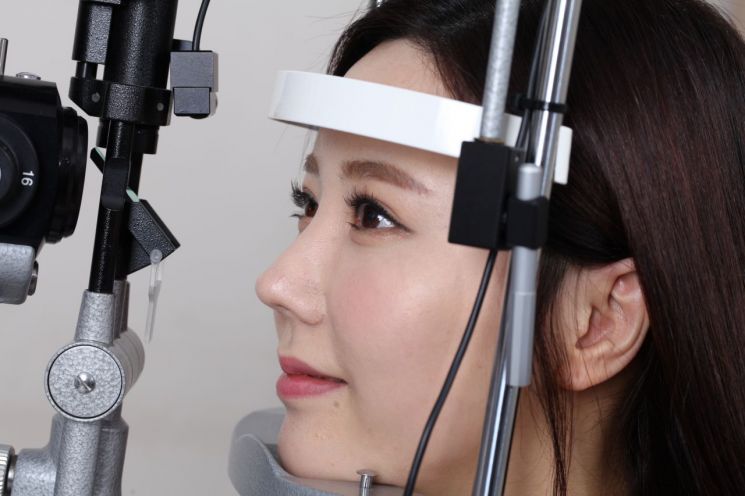 Complications can be prevented through thorough preoperative examinations before double eyelid surgery.
 [Photo by Kim Eye Hospital]
[Asia Economy Reporter Lee Gwanju] As double eyelid surgery has become common, many people consider it a relatively simple procedure. However, since eye cosmetic surgery must take into account not only aesthetic aspects but also eye functions including vision, a thorough preoperative examination is necessary to prevent postoperative complications.
In oculoplastic surgery, a subspecialty of ophthalmology, a comprehensive evaluation is conducted before eyelid surgery, including vision, tear circulation, eye protection functions, strabismus, ocular motility disorders, accompanying ptosis, amount of fat, presence of Mongolian folds, eyebrow position, and degree of skin sagging. Surgery is performed considering not only cosmetic factors but also eye function.
If double eyelid surgery is performed improperly, complications such as difficulty closing the eyes, dry eye syndrome, infections, corneal abrasions, corneal ulcers, and eyelid eversion (ectropion) where eyelashes turn upward may occur. If there is damage to the levator palpebrae superioris muscle, ptosis may develop after surgery. Therefore, to minimize complications, it is important to consult with an experienced specialist and proceed with a surgical method suitable for the individual. Choosing a hospital with specialists who understand the anatomical structure of the eyes and surrounding areas and can appropriately respond to problems is crucial.
There are three main methods of double eyelid surgery: the buried suture method, partial incision method, and full incision method. The buried suture method involves 3 to 4 small holes, leaving no scars and producing a natural look, but it is difficult to choose for thick skin or sagging skin. The full incision method involves making an incision along the double eyelid line, allowing removal of excessive fat or thick subcutaneous tissue, skin tightening, and ptosis correction. It has a wider range of application and is more durable than the buried suture method, but it leaves scars and requires time to look natural. The partial incision method involves an incision less than 10 mm and combines the advantages and disadvantages of the other two methods.
Dr. Kim from the Oculoplastic Surgery Center at Baegwakhwa Kim Eye Hospital said, “There is a tendency to think that ophthalmology only performs surgeries for therapeutic purposes, not cosmetic ones, but oculoplastic surgery specializes in various eyelid surgeries including double eyelid surgery, epicanthoplasty, eye shape correction, and removal of fat around the eyes,” adding, “If surgery is performed focusing only on either aesthetics or function, satisfactory results are difficult to achieve. Therefore, it is important to accurately assess the eye condition through thorough preoperative examinations and sufficient consultation with a specialist before deciding on surgery.”
© The Asia Business Daily(www.asiae.co.kr). All rights reserved.

















