April Producer Prices Hit Record High
Up 9.2% Year-on-Year
Pork and Refined Edible Oil Surge
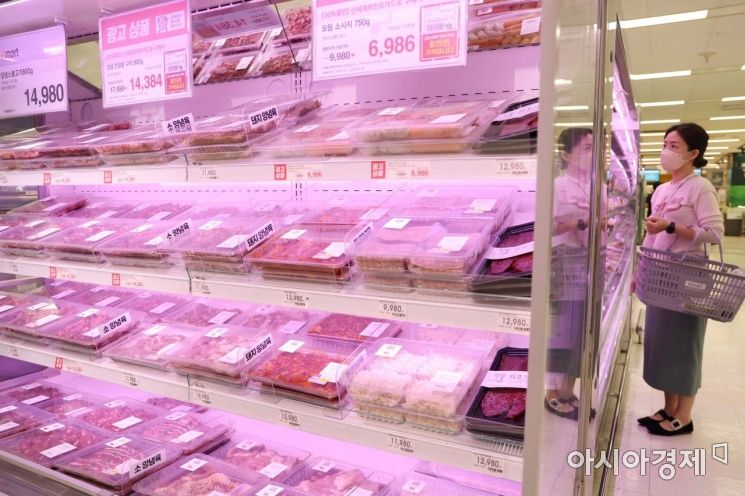
[Asia Economy Reporter Seo So-jeong] Camping enthusiast Lee Su-young, who lives in Sangdo-dong, Seoul, was recently surprised while shopping at a local mart. The prices of livestock products commonly enjoyed during camping, such as pork and chicken, had risen sharply compared to the previous year. Lee said, "The price of samgyeopsal has risen so much that even calling it 'golden samgyeopsal' seems insufficient now," adding, "It used to be a staple camping dish, but it has become as burdensome as beef, so I probably won't eat it often anymore."
According to the Bank of Korea on the 20th, the Producer Price Index (provisional) for April recorded 118.02 (2015=100), up 1.1% from the previous month (116.70), setting a new all-time high. This marks the fourth consecutive month of increase. Although the rate of increase slowed compared to March (1.5%), the year-on-year rise compared to April last year reached 9.2%. The producer price index measures price changes of goods and services supplied by domestic producers to the market, and since it affects consumer prices with a time lag, inflationary pressures are expected to intensify further this year.
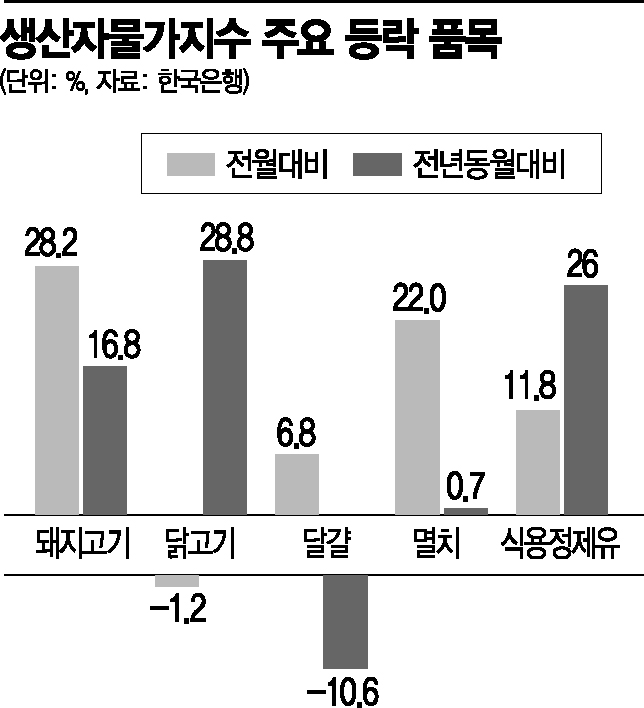
In particular, agricultural, forestry, and fishery products saw a 2.0% increase from the previous month, driven by rises in livestock products (7.4%) and seafood (2.6%), increasing the burden on food prices. Among detailed items, pork prices surged significantly. Due to increased dining-out demand following the easing of social distancing and a decrease in the number of animals shipped, pork prices jumped 28.2% from the previous month and rose 16.8% compared to the same period last year. Although the sharp rise in chicken prices (7.1%) seen in March slowed to -1.2%, prices remain 28.8% higher than a year ago. Eggs also rose noticeably by 6.8%, affected by the increase in compound feed prices.
Seafood prices are similarly burdensome. Anchovy prices surged 22% due to the fishing ban period (April 1 to June 30), and webfoot octopus prices rose 5.5%. Meanwhile, strawberry (-20.4%) and rice (-3.8%) prices fell as shipment volumes from production areas increased.
Electricity, gas, water, and waste services rose 4.5% from the previous month, driven by increases in electricity, gas, and steam prices (5.7%). Son Jin-sik, head of the Price Statistics Team at the Bank of Korea’s Economic Statistics Bureau, explained, "The rise in prices of major power generation fuels such as liquefied natural gas (LNG) and thermal coal has been reflected in electricity rates, along with increases in residential and general-use city gas prices."
Manufactured goods rose 1.2% from the previous month, led by coal and petroleum products (2.9%) and primary metal products (2.6%). The coal and petroleum products index (201.73) and chemical products index (122.65) both reached all-time highs. Refined edible oil, classified as a manufactured good, rose 11.8% from the previous month. The war between Russia and Ukraine caused supply shortages of key grains for vegetable oils such as sunflower seeds and corn, leading to a 26% surge compared to the same month last year. Diesel (7.2%) and jet fuel (13.3%) also showed strong increases due to rising international oil prices. Additionally, the Domestic Supply Price Index, which measures price changes of goods and services supplied domestically, also rose for the fourth consecutive month.
Son said, "Although the producer price increase slowed last month, international oil prices rose until mid-month, and raw material prices also increased again, so whether the slowdown in the rising trend will continue remains to be seen."
© The Asia Business Daily(www.asiae.co.kr). All rights reserved.


















