Prospects for Consecutive Reimbursement of Ultra-High-Cost Treatments
Controversy Over Increased Health Insurance Financial Burden
Pharmaceutical Companies Face Trade-Off with Other Drug Price Cuts
Original Drugs < Generics: Possibility of 'Price Inversion'
Growing Burden on Domestic Generic Drug Industry
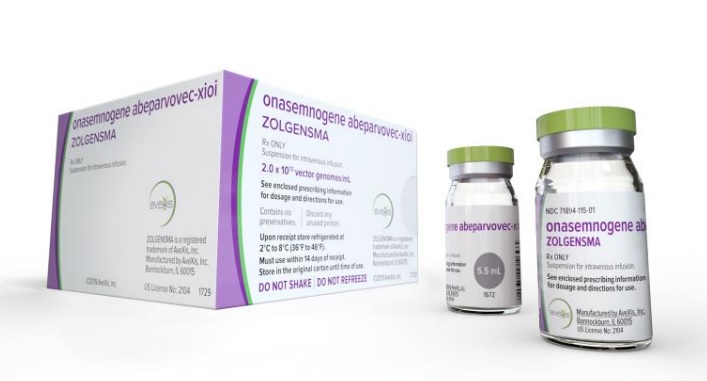
[Asia Economy Reporter Lee Chun-hee] The inclusion of ultra-high-priced advanced pharmaceuticals in the National Health Insurance (NHI) coverage is expected to continue. These drugs boast outstanding efficacy, often called ‘one-shot’ treatments, but their prices range from hundreds of millions to billions of Korean won, raising concerns about increasing the financial burden on the NHI system. Pharmaceutical companies have proposed new measures, such as lowering the prices of other drugs in exchange.
According to industry sources on the 20th, the Drug Benefit Evaluation Committee of the Health Insurance Review and Assessment Service recently announced a review result confirming the appropriateness of coverage for Novartis’s spinal muscular atrophy (SMA) treatment ‘Zolgensma.’ Although conditions such as prior approval for medical benefits, patient-level performance-based risk-sharing, and total budget caps were attached, it is considered to have passed the critical threshold for coverage.
Since similar conditions were applied to the leukemia chimeric antigen receptor (CAR)-T cell therapy ‘Kymriah,’ which has already been covered, and subsequent procedures such as price negotiations with the National Health Insurance Service and discussions at the Health Insurance Policy Deliberation Committee focus on the level of coverage guarantee, the possibility of reversing the coverage decision itself is low.
However, fierce disputes are expected between the government and Novartis over price negotiations. The price of Zolgensma is known to be around 2.5 billion KRW, much higher than Kymriah’s 360 million KRW. Although price negotiations must be completed within 60 days, negotiations for Kymriah were once suspended, causing delays. While coverage registration is expected within the third quarter of this year, if both sides sharply clash over the price, registration may be delayed until the fourth quarter.
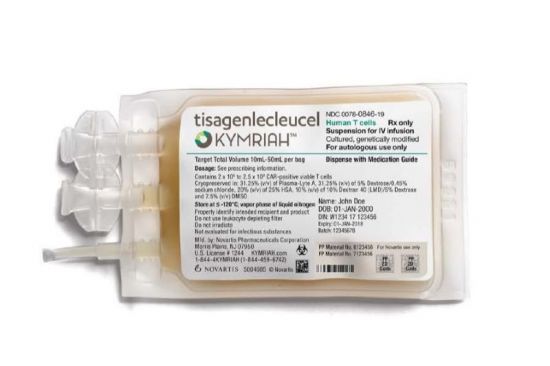
Since President Yoon Seok-yeol promised to apply NHI coverage to rare and severe diseases during the presidential campaign, the inclusion of high-priced treatments is expected to continue. In addition to Kymriah and Zolgensma, amyloid cardiomyopathy treatment ‘Vyndamax’ (approximately 200 million KRW annually), neurofibromatosis treatment ‘Koselugo’ (approximately 200 million KRW annually), and hereditary retinal disease treatment ‘Luxturna’ (1 billion KRW) are also seeking coverage. All are high-priced treatments costing hundreds of millions of KRW. Notably, Vyndamax and Koselugo failed to pass the Drug Benefit Evaluation Committee but are challenging the review again.
If high-priced treatments are covered, the financial burden on the NHI will increase. The government is supporting the NHI with over 10 trillion KRW this year alone. For this reason, some argue that ‘trade-offs’ should be actively utilized. This means including high-priced new drugs in coverage while significantly lowering the prices of existing drugs.
Recently, MSD Korea reduced the prices of drugs such as ‘Januvia’ and ‘Temodal’ by up to 77%. MSD Korea acknowledged that this price reduction was a trade-off to expand the coverage scope of the immuno-oncology drug ‘Keytruda’ and explained that it established a new model securing flexibility in the pricing system.
However, if foreign pharmaceutical companies’ trade-off strategies become full-scale, it is expected to impose a considerable burden on the domestic generic drug industry. If drastic price reductions occur, original drugs might become cheaper than generics, causing a price inversion phenomenon. Moreover, if the drug’s patent has not yet expired, the prices of generics launched afterward could also be set at very low levels.
An industry official said, "Considering the continuous launch of high-priced treatments, the trade-off system may be necessary," but added, "Since it could be a strategy to eliminate competitors, measures such as lowering prices only for off-patent drugs are also needed."
© The Asia Business Daily(www.asiae.co.kr). All rights reserved.


















