Discovered in Various Locations Including Portugal, Spain, and Canada
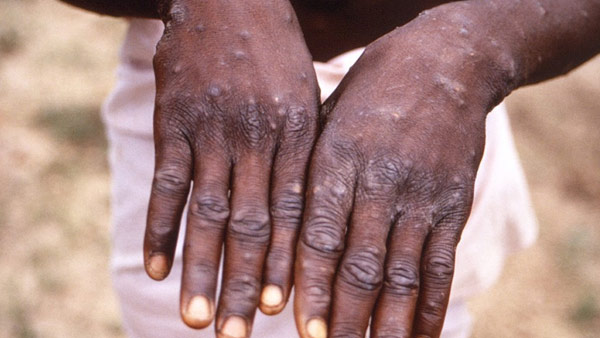
[Asia Economy Reporter Na Ye-eun] The rare infectious disease "monkeypox," primarily found in Africa, is showing signs of community spread as cases have been detected in Europe and the United States.
According to the UK Guardian on the 18th (local time), four additional monkeypox cases were identified in the UK, prompting contact tracing investigations. The UK Health Security Agency (UKHSA) stated that three of the infected individuals reside in London, and one lives in the northeast of England; all are either gay or bisexual men who have had sexual contact with men.
The UK's first confirmed case recently returned from a visit to Nigeria last month. Nigeria is a country where monkeypox is endemic. It is not yet known how this patient contracted the virus locally.
In Portugal, five confirmed monkeypox cases have been reported, along with 15 suspected cases. The Portuguese Ministry of Health noted that there have been cases with "ulcerative lesions" symptoms in the UK as well and stated that they are monitoring the situation nationwide in cooperation with European agencies.
In Spain, 23 suspected cases have been reported solely in the Madrid region. Spanish authorities explained, "Monkeypox is generally transmitted through respiratory routes, but the current 23 suspected cases may have been infected through mucous membranes during sexual contact."
In Massachusetts, USA, a man who recently visited Canada was confirmed to have contracted monkeypox. Canadian health authorities are also monitoring more than 13 suspected cases.

The monkeypox virus was named after being discovered in laboratory monkeys exhibiting symptoms similar to smallpox and is mainly found in Central and West Africa.
It was first identified by monkey researchers in 1958, and after the first human infection case was confirmed in the Democratic Republic of the Congo in 1970, cases have been steadily reported mainly in Central and West Africa, particularly in Congo and Nigeria.
The "West African" strain, which causes relatively mild symptoms, has a fatality rate of about 1%, while the "Congo Basin" strain, which is more likely to cause severe illness, has a fatality rate of 10%. The monkeypox cases recently found in Europe are identified as the West African strain.
The incubation period is usually 1 to 2 weeks, after which symptoms similar to the flu appear, including fever, headache, muscle aches, back pain, chills, and fatigue. Subsequently, blisters and scabs develop on the skin. Lesions often spread across the face, genitals, and other parts of the body.
© The Asia Business Daily(www.asiae.co.kr). All rights reserved.

![Clutching a Stolen Dior Bag, Saying "I Hate Being Poor but Real"... The Grotesque Con of a "Human Knockoff" [Slate]](https://cwcontent.asiae.co.kr/asiaresize/183/2026021902243444107_1771435474.jpg)
















