Infant Homicide Occurs Once Every Two Months
Infant Abandonment Happens Ten Times a Month
"Most Are Unwanted Pregnancies Among Unmarried Mothers"
Many Sentenced to Suspended Prison Terms
"Need for Awareness Improvement and Secret Birth System"
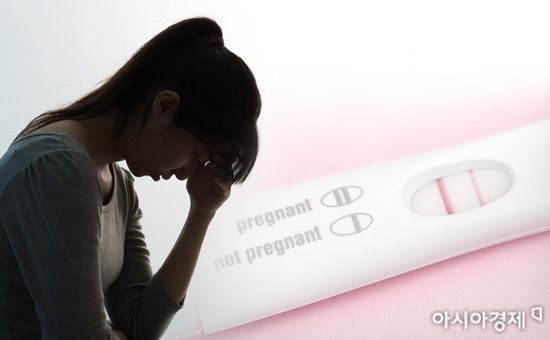
[Asia Economy Reporters Seongpil Cho, Byeongdon Yoo] #1. On the 13th, a newborn baby with the umbilical cord still attached was found dead at a garbage sorting site in an apartment complex in Dongdaemun-gu, Seoul. The infant’s body was discovered when an employee of a cleaning service company was collecting trash bags and loading them onto a vehicle, and one of the bags tore, spilling its contents. The police have identified the teenage unmarried mother who abandoned the newborn and are continuing their investigation.
#2. Earlier, on the 11th, in Pyeongtaek-si, Gyeonggi Province, a woman in her 20s was arrested on suspicion of killing her newborn by placing the baby in a toilet after giving birth alone, and then abandoning the body on a nearby hill. The woman reportedly told the police that she abandoned the baby because she was unable to provide for the child. The police have requested an autopsy from the National Forensic Service to determine the exact cause of the infant’s death.
Infanticide and abandonment cases that take the lives of newborns are a tragic and ongoing aspect of our society. According to the National Police Agency, between 2011 and 2020, there were 97 cases of infanticide and 1,310 cases of infant abandonment nationwide. Looking at the statistics from the past three years, the number of infanticide and abandonment cases has been decreasing: 7 and 183 cases in 2018, 8 and 135 cases in 2019, and 5 and 107 cases in 2020, respectively. However, these numbers are still considered significant. Statistically, this means that an infanticide case occurs approximately once every two months, and infant abandonment happens about ten times per month.
All infanticide and abandonment cases are brought to trial. Courts often sentence the defendants to suspended prison terms. This judicial approach reflects the recognition that most defendants are unmarried mothers who, due to unwanted pregnancies and economic difficulties, commit these acts impulsively, and that society and the state bear considerable responsibility in this process. For example, in 2020, Judge Yoon Jong-gu of the Seoul High Court’s 12th Criminal Division sentenced a woman in her 20s, who was charged with killing and abandoning her 14-day-old baby, to three years in prison with a four-year suspension, stating, “The neglect by the state and society influenced this case. Imposing a prison sentence on the defendant is deemed harsh.”
In the same year, Judge Kim Soo-kyung of the Suwon District Court Seongnam Branch sentenced another unmarried mother charged with infanticide to two years in prison with a three-year suspension. Judge Kim explained the sentencing by saying, “The defendant committed the crime due to feelings of shame immediately after childbirth and fear of reproach and criticism from her family. Ultimately, the person who will suffer the most from this crime is the defendant herself, and it is expected to remain a deep wound going forward.”
As the courts have pointed out, our society currently faces a severe shortage of systems and support measures for mothers experiencing poverty and aftereffects before and after childbirth. Representative examples include family welfare facilities and the adoption reflection period mother-child support system. When admitted to family welfare facilities, low-income single-parent families receive welfare benefits and living allowances totaling only about 250,000 to 350,000 KRW per month. The recently introduced adoption reflection period mother-child support system provides only about 400,000 to 500,000 KRW monthly, which is significantly less than the 1,000,000 KRW monthly support given to foster parents before adoption. Although the government is preparing to introduce a birth notification system to prevent infanticide and abandonment crimes, this system has limitations, as it may increase the likelihood that mothers hide their childbirth by going to illegal places rather than medical institutions.
Experts agree that improving societal perceptions overall should be the priority. They emphasize the need to create an environment where women who give birth to children from unwanted pregnancies do not bear the entire burden of childcare alone. Professor Jeong Ik-jung of Ewha Womans University’s Department of Social Welfare said, “Although it may be difficult given Korean cultural sentiments, introducing a confidential birth system that allows anonymous childbirth could be a viable option. It would open a path to prevent extreme choices by unmarried mothers or teenagers giving birth outside of marriage.”
Oh Young-na, head of the Korea Unmarried Mothers Support Network, also stressed, “The perspective on pregnancy termination, commonly referred to as ‘abortion,’ needs to change. While abandoning or killing a child after birth is a crime, pregnancy termination is not. Therefore, a supportive atmosphere should be created that allows mothers who are not confident in raising a child to have the right to choose during pregnancy.”
© The Asia Business Daily(www.asiae.co.kr). All rights reserved.
![A Woman Who Jumps Holding a Stolen Dior Bag... The Mind-Shaking, Bizarre Con of a "Human Knockoff" [Slate]](https://cwcontent.asiae.co.kr/asiaresize/183/2026021902243444107_1771435474.jpg)















