Doubling Solar Power Facilities by 2025
Concerns Over Subsidy Backlash in Hungary and Eastern Europe
[Asia Economy Reporter Hyunwoo Lee] The European Union (EU) has declared that it will invest 300 billion euros (approximately 400 trillion KRW) by 2030 to transition to renewable energy in order to reduce dependence on Russian energy. This is interpreted as a measure to mediate conflicting interests among member states regarding the ban on Russian oil and natural gas imports. However, difficulties are expected in resolving conflicts as Eastern European countries, led by Hungary, continue to demand substantial subsidies.
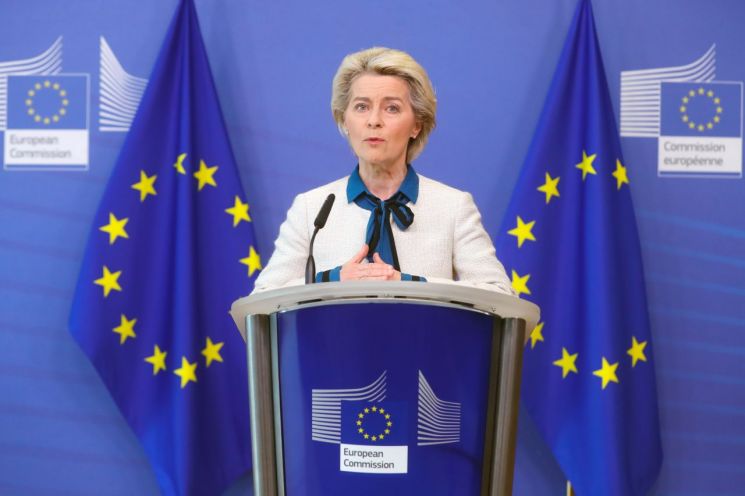
According to the Associated Press on the 18th (local time), Ursula von der Leyen, President of the European Commission, stated in a press release, "To reduce dependence on Russian energy, we have decided to raise the renewable energy target from the previously set 40% by 2030 to 45%," adding, "300 billion euros will be invested in this plan by 2030."
The funds will be used for the transition to renewable energy, including installation costs for solar and wind power plants in member countries. The European Commission plans to cover 72 billion euros of the total 300 billion euros through EU policy subsidies, while the remaining 225 billion euros will be financed by unused loans that were on standby for financial aid.
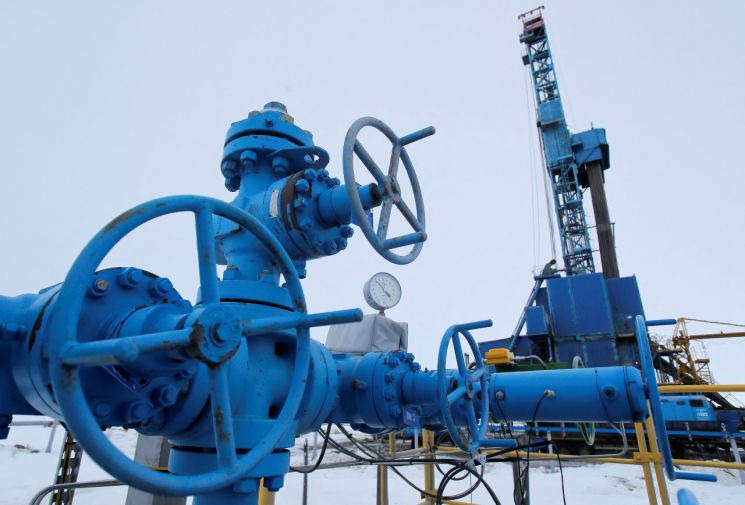
The European Commission plans to focus most of the total investment on increasing solar power capacity. It announced that 210 billion euros will be invested to double the solar power capacity within the EU by 2025. Additionally, legislation mandating the installation of solar panels on the roofs of new buildings is expected to be passed. Measures to reduce energy consumption within the EU by more than 13% compared to 2020 are also being considered.
However, the scale of investment in natural gas and oil infrastructure, which had attracted significant attention, reportedly fell short of expectations. The European Commission announced it will invest 10 billion euros in gas infrastructure and 2 billion euros in oil infrastructure to replace Russian energy.
This amount is far below the infrastructure subsidies demanded by Eastern European countries such as Hungary as a condition for approving the ban on Russian energy. According to CNN, the Hungarian government is demanding subsidies ranging from 15 billion to 18 billion euros as a condition for approving the Russian oil ban, and the Czech Republic, Slovakia, and Bulgaria are also demanding subsidies of similar scale to Hungary in exchange for approval of the ban.
As a result, it is expected to be difficult to find a breakthrough in agreeing on the EU's sixth package of sanctions against Russia, which centers on the ban on Russian oil. Politico quoted a senior EU official saying, "Hungary is demanding an absurdly high subsidy, even though the actual funds needed for refinery infrastructure investment are estimated to be around 750 million euros," adding, "Infrastructure investment to replace Russian energy is basically supposed to be handled by each country's own budget."
© The Asia Business Daily(www.asiae.co.kr). All rights reserved.


















