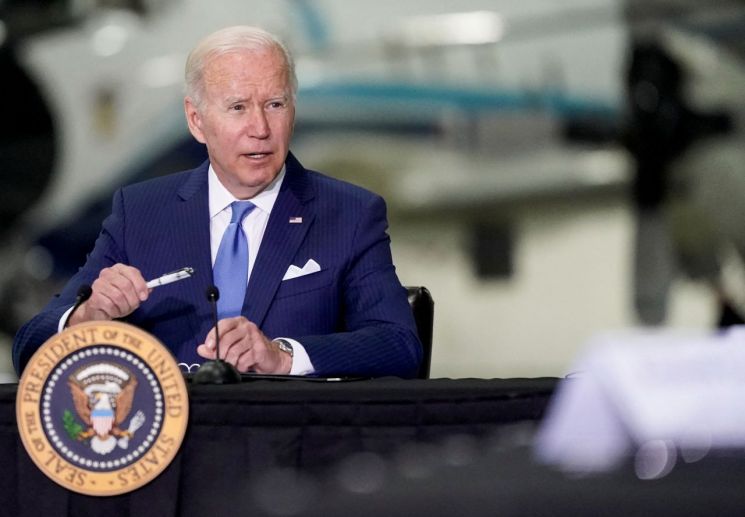
[Asia Economy New York=Special Correspondent Joselgina] The White House has described President Joe Biden's upcoming visits to South Korea and Japan as his first Indo-Pacific trip at a very critical moment. Through this tour, President Biden plans to strengthen the security alliance with South Korea and Japan and discuss pressing issues such as North Korea's nuclear program and economic cooperation measures.
According to the White House, Jake Sullivan, National Security Advisor, stated during a press briefing on the 18th (local time) that during President Biden's visit to South Korea and Japan from the 20th to the 24th, "he will have the opportunity to strengthen the security alliance with South Korea and Japan and deepen economic partnerships."
First, in South Korea, President Biden will hold a summit with President Yoon Seok-yeol, who took office this month, and meet with business leaders investing in the United States. Discussions will also be held regarding North Korea, which continues nuclear and missile provocations. Advisor Sullivan also explained that there are currently no plans for a meeting between President Biden and former President Moon Jae-in. Additionally, during his visit to South Korea, President Biden will visit U.S. military bases to encourage troops but will not visit the Demilitarized Zone (DMZ).
Following that, in Japan, he is scheduled to attend the Quad summit, a consultative body with Japan, Australia, and India aimed at countering China. The White House confirmed that during this period, the Indo-Pacific Economic Framework (IPEF), known as an economic forum to curb China's expanding economic influence, will be launched.
The White House expects that North Korea may conduct missile launches or nuclear tests around the time of President Biden's visits to South Korea and Japan.
Advisor Sullivan said, "We have clear intelligence indicating the possibility that North Korea may conduct additional missile or nuclear tests, including long-range missiles, during or after the visits to South Korea and Japan," adding, "We are preparing for all emergencies, including the possibility of provocations." He also stated, "We are closely coordinating with both allies, South Korea and Japan. We are also in dialogue with China, and today I discussed this issue during a call with my Chinese counterpart, Yang Jiechi, a member of the Political Bureau of the Chinese Communist Party."
© The Asia Business Daily(www.asiae.co.kr). All rights reserved.

















