Dutch Central Bank Governor "If Inflation Spread Continues, 0.5%P Increase in July Should Also Be Considered"
[Asia Economy Reporter Park Byung-hee] The euro surged significantly on the 17th (local time) as the European Central Bank (ECB) mentioned a big step (a 0.5 percentage point increase in the benchmark interest rate) for the first time.
According to major foreign media, the euro rose 1.1% against the dollar that day, recovering the euro-dollar exchange rate to around $1.05 per euro.
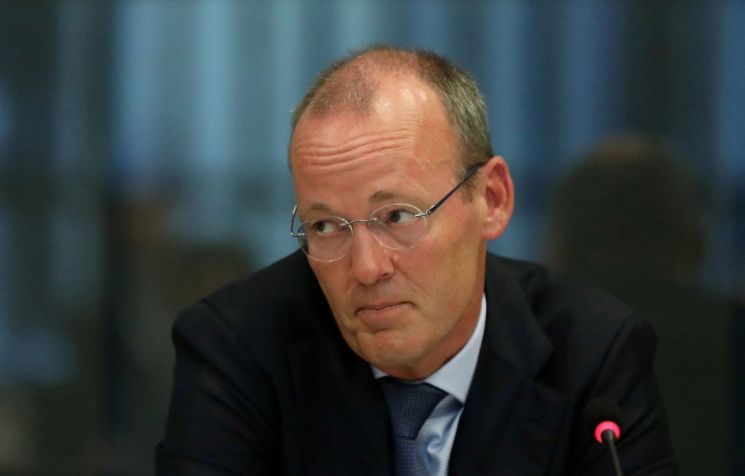
ECB monetary policy committee member and prominent hawk Klaas Knot, President of the Netherlands Central Bank, said that if inflation continues to rise, the ECB should raise the benchmark interest rate by 0.5 percentage points at the July monetary policy meeting.
Recently, even ECB President Christine Lagarde hinted at a possible rate hike in July, increasing the likelihood that the ECB will raise the benchmark interest rate for the first time in 11 years since July 2011. However, most ECB officials who have advocated for rate hikes so far have emphasized gradual increases.
Knot is the first ECB official to mention the so-called big step.
On that day, Knot appeared on a Dutch TV program and said, "Currently, my preferred monetary policy is to raise the benchmark interest rate by 0.25 percentage points," adding, "only if the inflationary trend does not spread further over the next few months." He continued, "If the inflationary trend spreads, a larger rate hike should not be ruled out," emphasizing, "In that case, the logical next step would be 0.5 percentage points."
The consumer price inflation rate in the Eurozone soared to 7.5% in April.
The last time the ECB raised the benchmark interest rate was in 2011. After raising the rate then, the Eurozone debt crisis occurred, and the 2011 rate hike is considered a failed policy. Because of this, there is a prevailing atmosphere within the ECB to approach rate hikes cautiously.
The market expects the ECB to raise the benchmark interest rate by 1 percentage point this year. In the case of the U.S. Federal Reserve (Fed), it has already raised the benchmark interest rate by 0.75 percentage points, and there are forecasts that it could raise it by nearly 2 percentage points more within this year.
Due to this difference in the pace of rate hikes, the euro has shown weakness against the dollar this year.
Klaus Wisten, Chief Economist at Pantheon Macroeconomics, explained that although the euro strengthened that day due to Knot's remarks, the outlook for the euro remains weak because of the Ukraine war. He said, "Any new news about the ban on Russian crude oil or gas imports, or Russia's intensified offensive in Ukraine, will all weigh on the euro."
© The Asia Business Daily(www.asiae.co.kr). All rights reserved.
![Clutching a Stolen Dior Bag, Saying "I Hate Being Poor but Real"... The Grotesque Con of a "Human Knockoff" [Slate]](https://cwcontent.asiae.co.kr/asiaresize/183/2026021902243444107_1771435474.jpg)
















