R&D Investment Efficiency Worsens Day by Day
Also Cited as a Cause of Economic Growth Rate Decline
Criticism of Companies' Efforts to Improve Efficiency
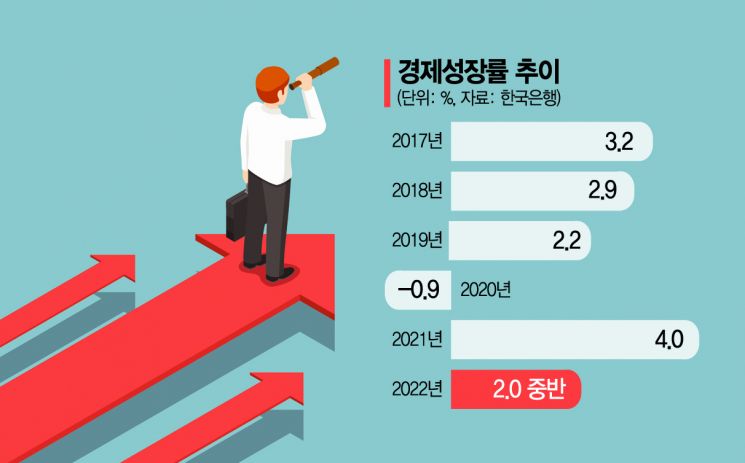
It has been revealed that the efficiency of research and development (R&D) investments by domestic companies is steadily declining. Although companies are boldly investing in innovation to survive, they are caught in the 'innovation paradox,' where these efforts do not translate into results. In particular, this has been pointed out as a cause of the recent sharp decline in South Korea's economic growth rate, emphasizing the importance of not only R&D input but also the 'patent rights' of outcomes.
According to an analysis of the "Determinants of Efficiency in R&D Companies" report released by the Korea Intellectual Property Research Institute on the 17th, the efficiency of top R&D investing companies in South Korea has been on a continuous downward trend from 2005 to 2018. During this period, the average efficiency of large corporations was 0.458, showing a steady decline since 2005 (0.55). Meanwhile, the efficiency of medium-sized and small enterprises was even lower, at 0.421 and 0.423 respectively.
Especially in the electronics and automobile industries, which have driven South Korea's economic growth so far, efficiency was recorded at 0.40 and 0.38 respectively, both below the overall average of 0.43. This was analyzed to be due to a lack of measures such as ▲promotion of R&D investment ▲expansion of policy financing to achieve economies of scale ▲institutional support for rapid patent acquisition to improve corporate efficiency in these industries.
Im So-jin, a research fellow at the Economic and Industrial Research Division of the Korea Intellectual Property Research Institute, pointed out, "Companies have led economic growth through strategies of increasing R&D and workforce input, but these growth strategies are showing limitations amid rapidly changing economic and technological environments."
The report suggested that securing efficiency relative to investment is necessary, recommending that alongside R&D input for innovation, outcomes should be 'patented.' Intellectual property rights such as patents are not only a means to increase market dominance through technology protection but also a core tool of strategic management for securing profits through defensive patent strategies and attracting investment. According to the report, the average efficiency was highest in the pharmaceutical industry (0.54), which was analyzed to be significantly influenced by patents.
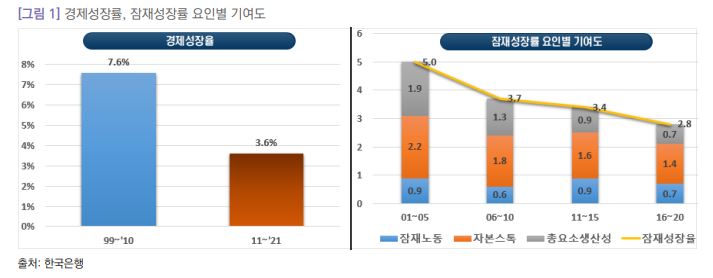
The problem is that the deterioration of corporate efficiency is bringing about the adverse effect of 'entrenched low growth' in the Korean economy. Despite high innovation input, the continued slowdown in growth rates raises concerns that the Korean economy is trapped in the 'innovation paradox.'
In particular, coupled with the recent COVID-19 pandemic, the potential growth rate from 2021 to 2022 has fallen to 2.0%. The Organisation for Economic Co-operation and Development (OECD) forecasted that if productivity decline due to aging is added, South Korea's potential growth rate will drop to 1.9% during 2020?2030 and to 0.8% during 2030?2060. Research fellow Im analyzed, "The fact that the potential growth rate has fallen to around 2% signals that the national economy is effectively entering a stagnation phase."
© The Asia Business Daily(www.asiae.co.kr). All rights reserved.
![Clutching a Stolen Dior Bag, Saying "I Hate Being Poor but Real"... The Grotesque Con of a "Human Knockoff" [Slate]](https://cwcontent.asiae.co.kr/asiaresize/183/2026021902243444107_1771435474.jpg)












