Hesitation to Halt Russian Crude Oil Imports Leads to Consecutive Losses in Local Elections
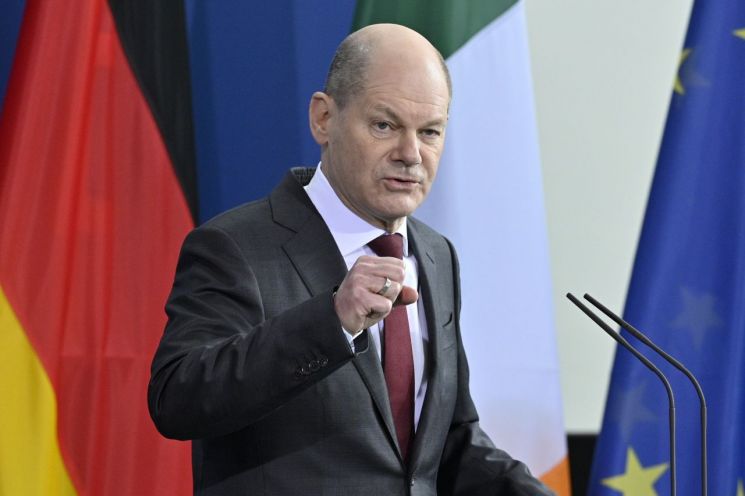
[Asia Economy Reporter Park Byung-hee] Germany plans to stop importing Russian crude oil by the end of this year regardless of whether the European Union (EU) reaches an agreement, Bloomberg News reported on the 15th (local time), citing government officials.
An anonymous official stated that the German government sees progress in securing alternatives to Russian crude oil and expects logistics-related issues to be resolved within the next 6 to 7 months. According to Robert Habeck, Germany's Minister for Economic Affairs, the share of Russian crude oil in Germany's consumption has already dropped to 12%. Before the outbreak of the Ukraine war, the share of Russian crude oil was 35%.
The EU is preparing to halt Russian crude oil imports within this year, but Hungary's opposition has prevented an agreement. EU foreign ministers plan to discuss the ban on Russian crude oil imports again on the 16th in Brussels, Belgium.
The German government's decision to independently stop importing Russian crude oil appears to be influenced by public opinion.
The ruling Social Democratic Party (SPD) of Germany suffered a crushing defeat in the North Rhine-Westphalia state parliament election on the 15th. According to a public opinion poll by the public broadcaster ARD, the SPD's vote share is expected to be only 27.4%. This is a 3.8 percentage point drop compared to the 2017 election and is the lowest vote share the SPD has ever received in a North Rhine-Westphalia election.
On the other hand, the Christian Democratic Union (CDU), which became the largest party in the 2017 election and took power, is expected to continue governing with a vote share of 35.3%, up 2.3 percentage points from the last election.
Bloomberg analyzed that the Olaf Scholz government hesitated over providing heavy weapons to Ukraine and stopping imports of Russian energy, which led to criticism both domestically and internationally and ultimately resulted in election defeat.
The SPD also suffered a crushing defeat in the Schleswig-Holstein state parliament election on the 8th.
© The Asia Business Daily(www.asiae.co.kr). All rights reserved.

















