Social Distancing Lifted... Signs of 'Daily Life Recovery' Everywhere
Increase in Large Weddings and First Birthday Parties
Singles and DINKs Say "It's Money We Won't Get... Burdened by Gift Money Events"
Experts Say "Gift Money Choice Depends on Relationship... Different from Traditional Practices"
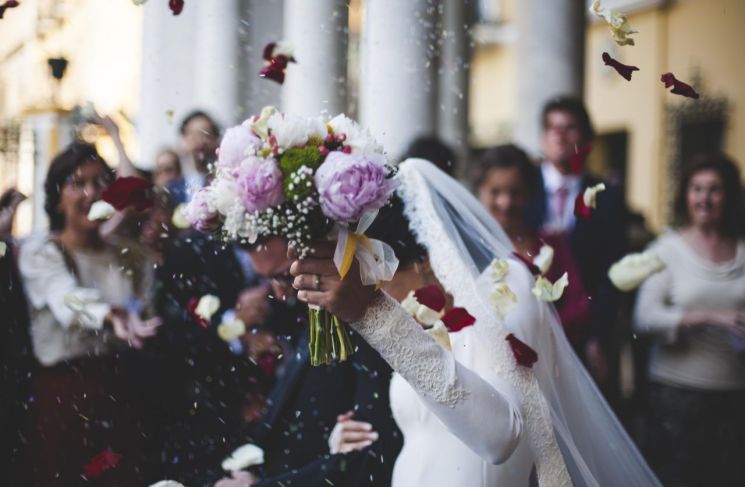 As social distancing measures have recently been lifted, there is an increasing trend of large-scale events such as postponed weddings, but there are voices expressing concerns about the burden of congratulatory money. [Image source=Pixabay]
[Asia Economy Reporter Yoon Seul-gi] As we move from the COVID-19 pandemic to the endemic era, signs of daily life recovery are beginning to emerge throughout society. Family events that were previously canceled or postponed have resumed, revitalizing related industries such as wedding services. However, some guests feel reluctant as they have to spend 'unnecessary money.' Among singles and DINKs (dual income, no kids couples), there is even a growing movement to refuse giving congratulatory money at weddings and first birthday parties.
With the recent lifting of social distancing measures, pre-COVID-19 daily life is returning in many places. Remote work, which was implemented due to concerns about mass infections, is being phased out, and in addition to PCR tests, negative results from professional rapid antigen tests are now accepted upon entry, lowering the barriers to overseas travel. Along with the lifting of social distancing, events requiring congratulatory money, such as weddings and first birthday parties, are also making a comeback.
In fact, hotel wedding hall reservation rates in the first quarter of this year reportedly increased by about 20-30% compared to the previous year. Major hotels in Seoul, including Lotte Hotel, Shilla Hotel, and Westin Chosun Hotel, have mostly booked their wedding venues through the end of the year, and wedding hall reservations have surged through April and May of next year, except for some dates and time slots. The scale of events is also expected to grow. With the removal of limits on private gathering sizes, large-scale gatherings for weddings and first birthday parties, which were previously small family affairs, have become possible.
However, as events requiring congratulatory money cluster, many people express financial burdens. Especially as more people pursue diverse lifestyles such as singlehood and DINK, the number of people reluctant to give congratulatory money that they will not get back is increasing. Kim, a 20-something office worker who identifies as single, said, "Marriage is something to celebrate, but it is also true that it can be a burden for those around. Starting from wedding congratulatory money, then gifts for housewarming parties, and if there is a birth, gifts for the child and first birthday parties, it’s hard to feel pleased about it."
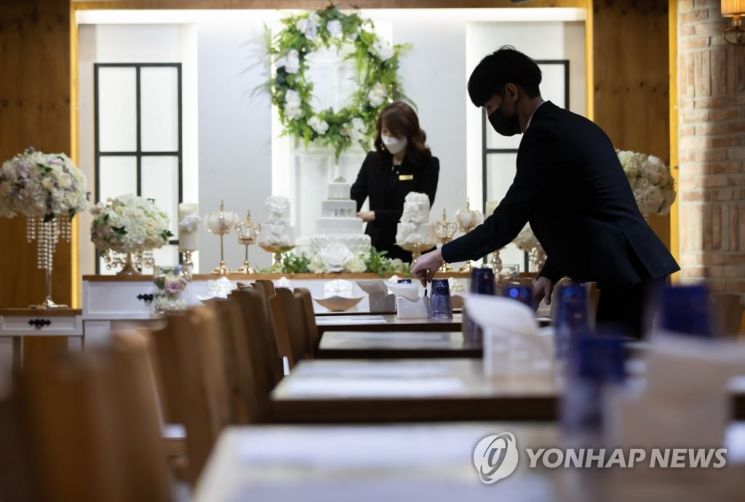 Staff members at a first birthday party specialty venue in Yeongdeungpo-gu, Seoul, are tidying up the hall. The photo is unrelated to specific expressions in the article. [Image source=Yonhap News]
For DINKs, a friend's first birthday party can be a burden. A 31-year-old named A, who identifies as DINK, said, "Sometimes I get invited to a first birthday party for someone’s child, and it’s always a burden. Since I’m not going to have children anyway, I won’t be invited to my own child’s first birthday party. But if I don’t go to others’ parties, I feel like I might drift apart from friends, and just giving money feels like a waste since I won’t get it back. Sometimes I wish there was a DINK-style ceremony like a singlehood ceremony where I could recover the money."
In the past, congratulatory money served as a mutual exchange to celebrate friends’ special occasions while also circulating money among acquaintances. However, recently, as more people have no plans to have children or even get married, the opportunity to recover congratulatory money has disappeared, and invitations or wedding cards are increasingly treated like bills.
In this context, the 'Bridal shower' party, where friends gather to celebrate a bride-to-be, has spread through social networking services (SNS), further increasing the financial burden on acquaintances. B, a 30-year-old office worker, said, "My friends insisted on having a bridal shower for a friend who was getting married. I went along because it was trendy, but I’m not sure if it will be my turn to host one."
He added, "Even though five friends pooled money, we still had to rent a hotel, order a cake, buy props like wine and balloons, and coordinate white outfits, which cost quite a bit. There will be more expenses going forward, so the burden is heavy. I’m thinking of just forgetting what I did for my friend and skipping future bridal shower gatherings."
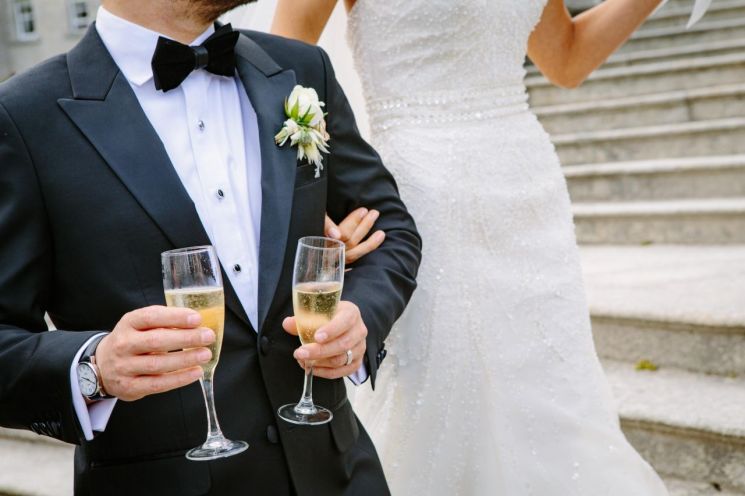 As social distancing measures have recently been lifted, there is an increasing number of large-scale events such as postponed weddings, but there are voices expressing concerns about the burden of congratulatory money. [Image source=Pixabay]
As the burden of attending acquaintances’ celebrations grows, some people have even decided not to give congratulatory money at all. On the 21st of last month, a post titled "A friend who refuses to give congratulatory money because they are single" was posted on an online community, sparking heated debate. The author shared a story about a single friend who attends weddings but refuses to give congratulatory money that cannot be recovered.
One netizen commented, "Even if someone is single now, how can you guarantee life won’t change? It’s a celebration, and you eat there too. Saying you won’t give money just because you are single is too calculating."
On the other hand, another netizen argued, "Unlike singles, married people have a string of family events. Giving congratulatory money is appreciated, and not giving it is understandable. It’s about neither giving nor receiving money, but still taking the time and transportation costs to offer congratulations. What’s the problem with that?"
The post received a total of 364 comments and was widely shared on various SNS platforms, fueling the debate. Opinions were sharply divided between those who believe congratulatory money should be given as a customary practice considering the relationship with the other party, and those who argue that individuals should have the choice as society changes.
Experts analyze that people who disagree with traditional customs are voicing their opinions. Professor Seol Dong-hoon of the Sociology Department at Jeonbuk National University explained, "In Korea, there is a traditional culture of giving congratulatory or condolence money during rites of passage such as weddings and funerals. This money has a kind of savings character, where you are expected to repay or receive it later."
Professor Seol added, "However, recently, more people are disagreeing with this cultural heritage. As a result, depending on the nature of human relationships, some people do not give congratulatory money at all or give gifts instead. This shows a departure from the continuing customs."
© The Asia Business Daily(www.asiae.co.kr). All rights reserved.
![Clutching a Stolen Dior Bag, Saying "I Hate Being Poor but Real"... The Grotesque Con of a "Human Knockoff" [Slate]](https://cwcontent.asiae.co.kr/asiaresize/183/2026021902243444107_1771435474.jpg)













