Price Increase Changed from May and July to May, August, and November
Rising Inflationary Pressure
Domestic Economy Assessed to Withstand Tightening Policy
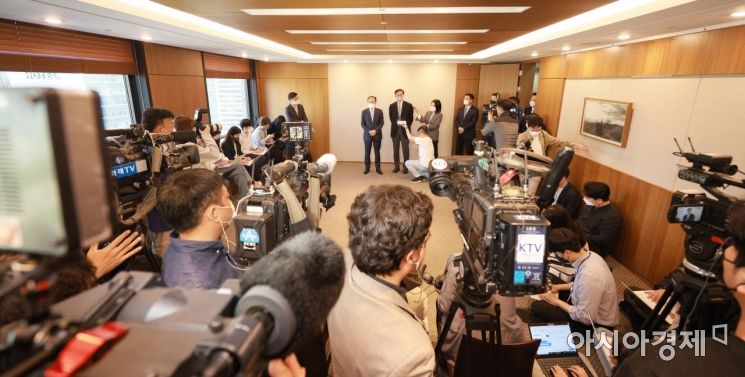 Deputy Prime Minister and Minister of Economy and Finance Choo Kyung-ho and Bank of Korea Governor Lee Chang-yong are answering reporters' questions ahead of their first breakfast meeting held on the 16th at the Press Center in Jung-gu, Seoul. Photo by Kim Hyun-min kimhyun81@
[Asia Economy Reporter Hwang Yoon-joo] "The dove has disappeared."
In the securities industry, there is a forecast that the Bank of Korea will raise the base interest rate three times this year. This is because inflationary upward pressure is greater than expected, and the domestic economic fundamentals are expected to show a solid trend this year. The minutes of the Bank of Korea's Monetary Policy Committee (MPC) released on the 3rd, where all six MPC members unanimously decided to raise the base rate, also reinforce the tightening stance.
◆ Commodity prices driven up by war... Inflationary upward pressure remains = On the 16th, the Investment Strategy Team at Hanwha Investment & Securities stated, "We are revising the forecast for the Bank of Korea's rate hikes from two times in May and July to three times in May, August, and November," adding, "The base rate is expected to converge to 2.25% by the end of the year."
The reason Hanwha Investment & Securities believes the Bank of Korea's tightening stance will become more aggressive is due to real interest rates. Despite four recent base rate hikes, real interest rates have actually declined, meaning the tightening effect has not been fully realized.
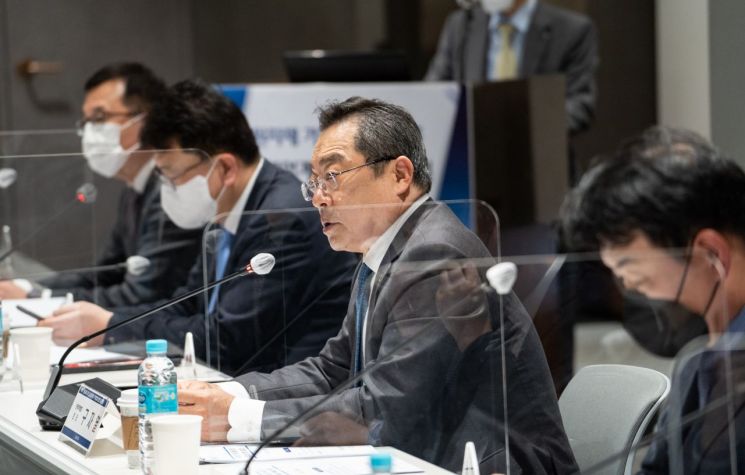
The biggest cause is the sharp rise in commodity prices. In March, the Domestic Supply Price Index rose 2.3% month-on-month to 121.99. This increase was due to rises in raw materials (8%), intermediate goods (2%), and final goods (1.2%). The Domestic Supply Price Index is a measure that adds import prices to the Producer Price Index, and South Korea shows a pattern similar to the global commodity price index. When commodity prices rise, inflation inevitably follows.
Kim Ye-in, a researcher in the Asset Management Strategy Department at Korea Investment & Securities, pointed out, "Global commodity prices more than doubled from the low point in the first half of 2020 until 2021," adding, "Due to the Russia-Ukraine war this year, commodity prices have increased by an additional 40%."
The problem is that even after the war ends, commodity prices are expected to remain at a high level for some time. This is because the supply side, especially Russia, is expected to gain greater price-setting power in the energy market. Although the EU has announced a ban on Russian oil imports, it will realistically take considerable time to reduce dependence on Russian energy.
Researcher Kim said, "The structural rise in commodity prices will increase cost burdens and act as an upward factor for domestic inflation," adding, "Considering the time lag for commodity prices to transmit to domestic inflation, the inflationary upward pressure due to the structural changes in the commodity market will strongly appear in the second to third quarters of 2022 and then ease afterwards."
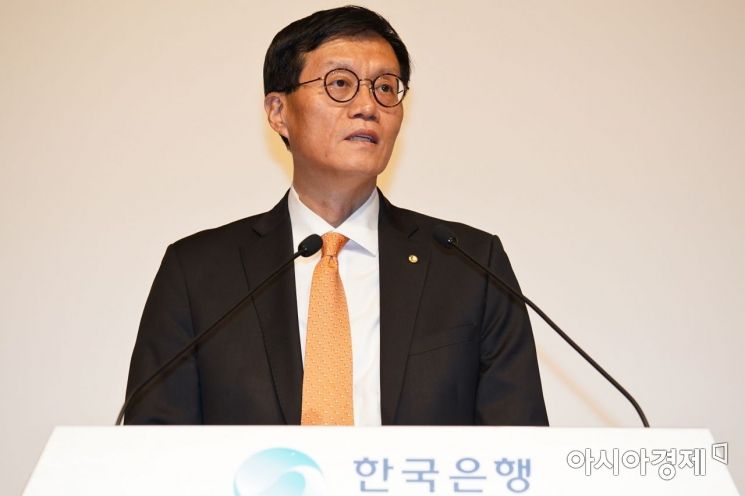 Lee Chang-yong, the new Governor of the Bank of Korea, is delivering his inaugural speech at the inauguration ceremony held on the 21st at the Convention Hall of Booyoung Taepyeong Building in Jung-gu, Seoul. Photo by Joint Press Corps
◆ "Too early to talk about economic downturn"... Rate hikes manageable = The view that the domestic economy can withstand the pace of the Bank of Korea's tightening also supports the acceleration of tightening. The market expects that the Bank of Korea's 2022 economic growth forecast will be revised downward in the May economic outlook update.
The Investment Strategy Team at Hanwha Investment & Securities said, "The economic growth forecast for this year will be lowered from the previous 3.0% to around 2.7?2.8%," adding, "Even if the growth target is lowered, it is still 0.7?0.8 percentage points higher than the potential growth rate." In other words, even if the base rate is raised, the effect of restricting economic recovery momentum will not be significant.
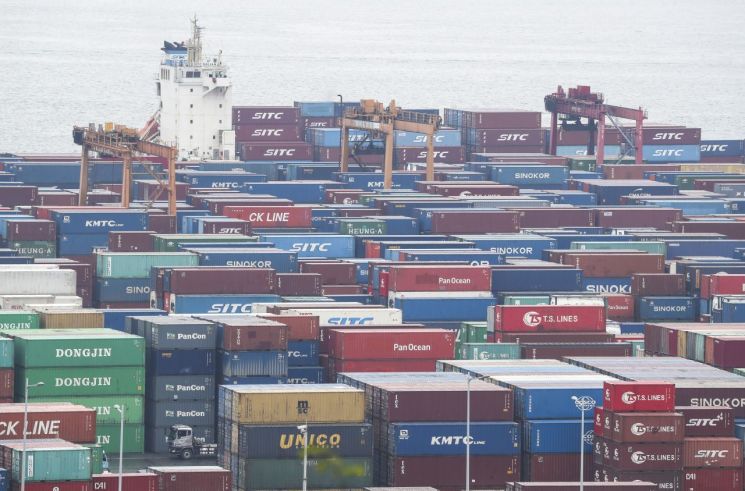
Hanwha Investment & Securities expects exports and consumption to lead a solid trend through this year. Kim Sung-soo, a researcher at Hanwha Investment & Securities, said, "Although the export growth rate has peaked, a favorable environment is expected to continue for some time due to high unit prices," adding, "Key export items such as semiconductors and automobiles still have favorable prospects in terms of unit price, volume, and costs."
Researcher Kim also expects consumption to temporarily improve further. He explained, "With the easing of quarantine measures, outdoor activities will become freer, inevitably increasing spending."
He added, "Like the leading economic index, the coincident index cyclical component also declined for the first time in seven months, indicating the economy is entering a stabilization phase, but it is still too early to talk about an economic downturn."
© The Asia Business Daily(www.asiae.co.kr). All rights reserved.



















