Great Appeal of Float, the Reserve Concept in Non-Life Insurance Companies
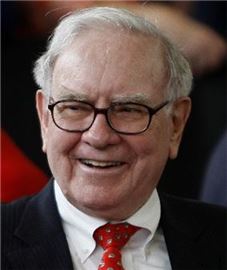 Warren Buffett
[Asia Economy Reporter Changhwan Lee] The insurance industry is drawing attention as legendary American investor Warren Buffett recently moved to acquire an insurance company.
It is analyzed that Buffett is highly attracted to the concept of float (liability reserves), an internal reserve of insurance companies, and has made insurance companies a key pillar of his investment firm Berkshire Hathaway's portfolio.
On the 16th, the Korea Insurance Research Institute released a report titled "The Background and Significance of Warren Buffett's Acquisition of a Property and Casualty Insurance Company."
Berkshire Hathaway, Warren Buffett's investment firm, signed a contract in March to acquire the American insurance company Alleghany for approximately $11.6 billion (14.8 trillion KRW). This acquisition is Berkshire Hathaway's largest deal since purchasing aircraft parts manufacturer Precision Castparts for $37 billion (47.34 trillion KRW) in 2016.
Alleghany primarily focuses on property and casualty insurance and sells various insurance products including reinsurance. It also owns non-insurance business divisions such as steel processing and toys. Berkshire Hathaway already owns other large insurance companies like GEICO, acquired in the 1960s, and General Re, acquired in the 1990s, and this acquisition of Alleghany further expands its insurance business.
The report emphasized that Buffett has repeatedly mentioned in shareholder letters and other communications that investing using the concept of float, or liability reserves, is a core driver of Berkshire's growth, showing a preference for property and casualty insurance companies.
Float refers to the money temporarily held by an insurance company between the time premiums are paid and claims are made. Property and casualty insurers generally do not pay claims unless an insured event occurs, and when it does, they pay based on the actual loss amount. As long as the insurance business remains profitable, float can be secured stably.
Investing using float is similar to an "interest-free loan" because, unlike regular loans, it does not incur financing costs such as interest. The acquisition of Alleghany is believed to have been made on this basis.
The recent period of rising interest rates has also increased the attractiveness of insurance companies, as higher interest rates can lead to an increase in the asset value of insurers.
Yoonji Kang, a researcher at the Korea Insurance Research Institute, analyzed, "Warren Buffett's recent acquisition of Alleghany can be interpreted as a strategic decision to respond to the capital cost burden caused by rising U.S. interest rates through stable float acquisition. This investment approach can have significant cost-saving effects compared to other investment methods during periods of rising interest rates, assuming the insurance business maintains stable profitability."
© The Asia Business Daily(www.asiae.co.kr). All rights reserved.
![Clutching a Stolen Dior Bag, Saying "I Hate Being Poor but Real"... The Grotesque Con of a "Human Knockoff" [Slate]](https://cwcontent.asiae.co.kr/asiaresize/183/2026021902243444107_1771435474.jpg)















