Accelerating the Construction of the National Marine Life Species Restoration Center
Advancing the Homibando National Marine Garden Development Project
[Asia Economy Yeongnam Reporting Headquarters Reporter Kim Gwiyeol] Gyeongbuk Province is making every effort to establish a clean and sustainable marine ecological foundation that future generations can enjoy together.
The province is expanding the designation of marine protected areas in regions rich in marine biodiversity and with conservation value, aligning with the government's carbon neutrality policy.
There are 30 marine protected areas nationwide, but until last year, only the Ulleungdo waters in Gyeongbuk were designated as a marine protected area, leading to many opinions on the need for continuous management of marine protected species in the East Sea.
Accordingly, the province plans to expand the designation of new marine protected areas starting with the waters around Homigot in Pohang, followed by the waters near Nagok-ri in Uljin and the waters around Goraebul in Yeongdeok.
The East Sea of Gyeongbuk is also famous as the main habitat of marine protected species such as Gebadam and Saewoomal.
Gebadam and Saewoomal are types of Zostera species and represent key blue carbon sources. Through photosynthesis, they absorb carbon dioxide and serve as spawning grounds and habitats for many underwater animals, including the Ulleungdo endemic species, the seahorse. Their ecological value is very high, and they offer the prospect of a sustainable sea through carbon neutrality.
On May 12, the first marine protected area visitor center on the East Coast, located in the waters around Ulleungdo (Dokdo), opened.
The visitor center was created by remodeling the Ulleungdo-Dokdo Marine Research Base Marine Ecology Hall building.
With a total project cost of 1.9 billion KRW (70% national funding), the center will convey the value and importance of marine protected areas through promotional halls, exhibition halls, and experience halls, and provide opportunities for experiential education to promote marine ecological conservation education and awareness.
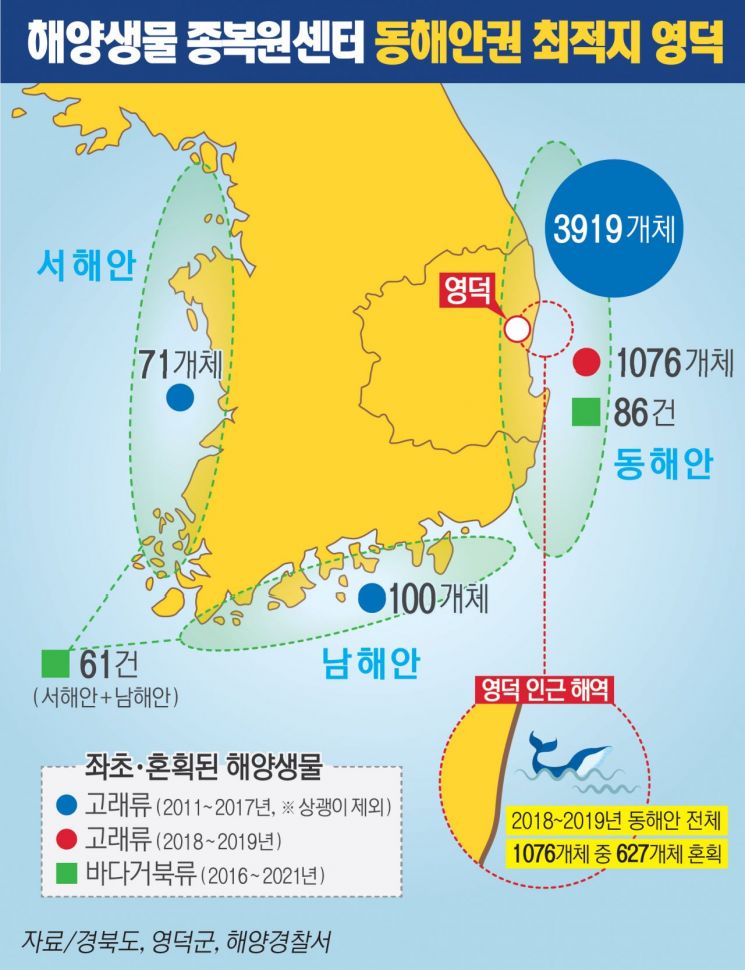
Through the establishment of the National Marine Species Restoration Center, the province plans to respond to the climate crisis and engage in the preservation and management of endangered marine protected species.
Recently, with global climate change and environmental pollution accelerating the destruction of marine ecosystems, biodiversity is facing a crisis of decline, but there was no control tower or dedicated institution to manage marine biodiversity.
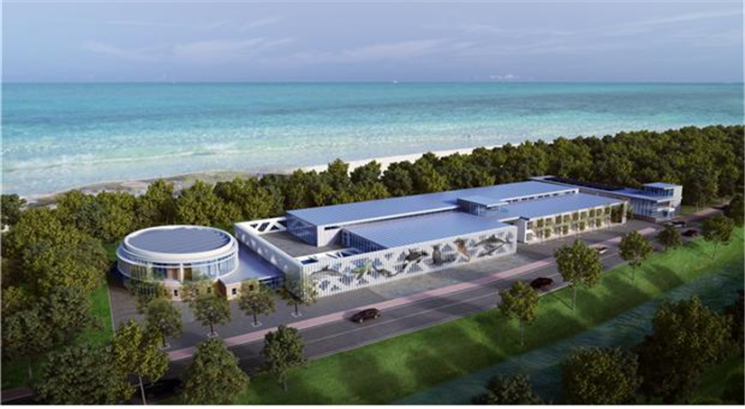
Accordingly, Gyeongbuk Province and Yeongdeok County attracted the National Marine Species Restoration Center to Yeongdeok in December last year. The center, with a total project cost of 37.3 billion KRW, is currently under design and will open in 2025.
Through the center, systematic species restoration and breeding technology development and securing biodiversity will enhance national competitiveness and realize carbon neutrality based on marine resources.
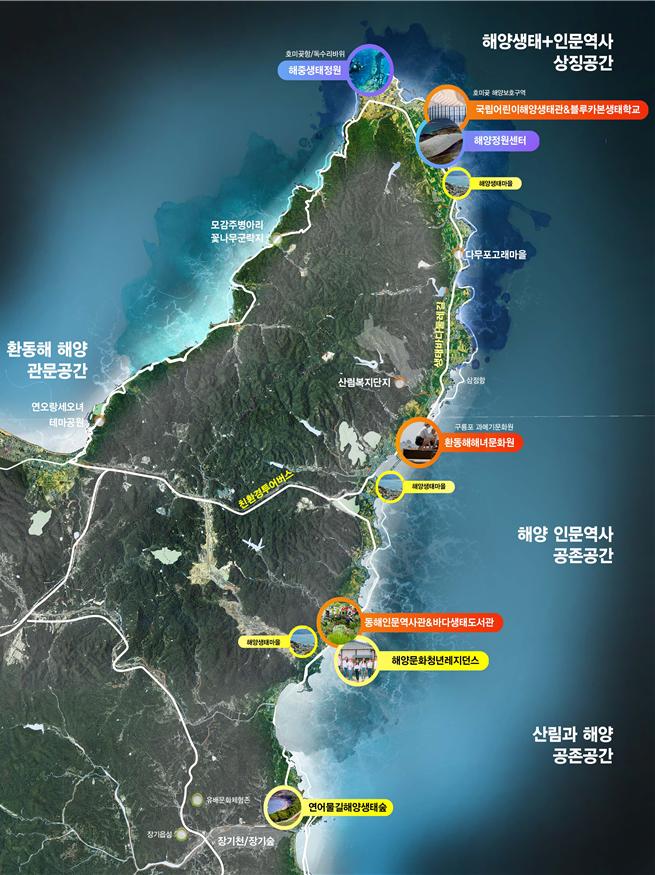
Additionally, the plan is to develop the Homi Peninsula into a national marine garden, linking ecosystem restoration and ecotourism to create a premium ecological and healing space where forests, the sea, humanities, and history harmonize.
This project involves developing the Homigot waters, designated as a marine ecological protection area by the Ministry of Oceans and Fisheries in December last year, into a national marine garden. Since April last year, Gyeongbuk Province and Pohang City have started basic planning services, preparing a draft plan through data collection and multiple meetings with specialized research institutions, the Ministry of Oceans and Fisheries, deep-sea divers, and other related experts.
The province plans to apply for the preliminary feasibility study project of the Ministry of Strategy and Finance within the first half of this year to accelerate project implementation.
Kim Nam-il, Head of the Gyeongbuk East Sea Regional Headquarters, said, “The East Coast of Gyeongbuk has many areas where rich marine ecological resources, beautiful marine landscapes, and unique marine culture are well preserved. It is important to discover national projects to utilize these marine environmental resources.” He added, “The United States plans to designate at least 30% of land and sea as protected areas by 2030. Our province is also striving to conserve marine ecosystems in line with global trends and government policies.”
© The Asia Business Daily(www.asiae.co.kr). All rights reserved.
![User Who Sold Erroneously Deposited Bitcoins to Repay Debt and Fund Entertainment... What Did the Supreme Court Decide in 2021? [Legal Issue Check]](https://cwcontent.asiae.co.kr/asiaresize/183/2026020910431234020_1770601391.png)

















