WHO "China's Zero-COVID Policy Unsustainable" Unprecedented Criticism
China Strengthens Beijing Quarantine Measures and Postpones Asian Games... Suggests Policy Continuation
Concerns Over China's COVID Tsunami Published in Prestigious Journal... Justifies Policy
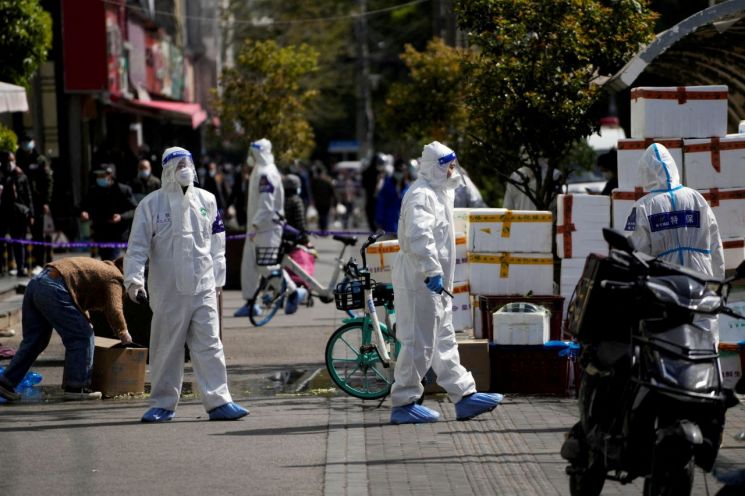
[Asia Economy Reporter Kim Hyunjung] As the impact of China's 'Zero-COVID' policy, including city lockdowns, spreads to the global economy, the World Health Organization (WHO) has called for a policy shift, stating it is "unsustainable." However, the Chinese government shows no signs of changing its policy line, further strengthening quarantine measures in the capital Beijing following Shanghai. With research results predicting that 1.6 million deaths could occur between May and July if China abandons the Zero-COVID policy, international controversy surrounding China's Zero-COVID policy is expected to intensify.
On the 10th (local time), WHO Director-General Tedros Adhanom Ghebreyesus said in a press briefing, "Considering the current state and future outlook of the virus, I believe the (China Zero-COVID) policy is unsustainable," adding, "A transition will be very important."
◆WHO "Social and Economic Impacts Must Also Be Considered"= He continued, "We have discussed this issue with Chinese experts and conveyed that such an approach will not be sustainable." Michael Ryan, WHO Director of the Health Emergencies Programme, also stated, "Measures to combat COVID-19 must consider not only individual human rights but also social and economic impacts." These remarks are a rare case of publicly challenging a member country's COVID-19 policy.
In fact, China's Zero-COVID policy has exacerbated supply chain issues and further fueled inflation, which has already been aggravated by COVID-19 and the Ukraine war. Human rights issues of its own citizens due to lockdowns have also begun to surface.
However, the Chinese government appears to be intensifying the policy. Shanghai has been under lockdown for six weeks, and in the capital Beijing, large-scale testing and expansion of some lockdown areas are underway, with indefinite postponement of in-person classes for elementary, middle, and high schools. On the 6th, the postponement of the Hangzhou Asian Games was officially announced, implying that the Zero-COVID policy will be maintained until the scheduled September (10th) event.
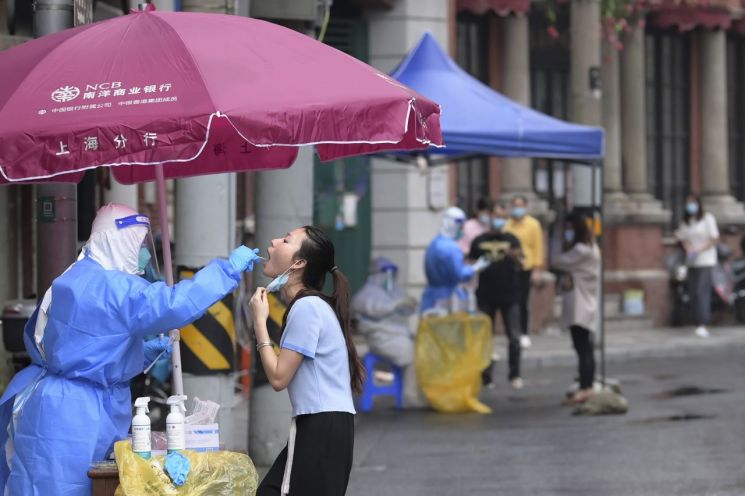
◆"If Zero-COVID Is Abandoned, 1.6 Million Deaths Expected"= The main political reason for China’s adherence to the Zero-COVID policy is the need to control internal unrest until the National Congress (Party Congress) in October, which will confirm President Xi Jinping’s third term. China has promoted its effective response to the initial COVID-19 outbreak as its greatest achievement. However, if large-scale infections occur now, it could jeopardize President Xi’s reappointment.
Research results have shown that considering China’s medical response capacity and elderly vaccination rates, a significant number of deaths would occur. Researchers from Shanghai Fudan University, Indiana University School of Public Health in the U.S., and the U.S. National Institutes of Health published a study in Nature on the 10th, stating that if China withdraws the Zero-COVID policy and does not administer antiviral treatments, approximately 1.6 million people could die from the Omicron variant between May and July this year.
This study is based on simulations using mathematical models applied to recent outbreak data from Shanghai. The researchers warned that COVID-19 cases could spread like a 'tsunami' between May and July, with 112 million infections expected, of which 2.7 million would require intensive care. They projected that three-quarters (74.7%) of the deaths would be elderly individuals.
However, the researchers assumed an optimal scenario where symptomatic patients are treated with the approved oral antiviral Paxlovid, which could reduce severe cases and deaths by about 89%. They stated, "In the long term, improving ventilation, strengthening intensive care capacity, and developing new highly effective vaccines with durable immunity will be priorities."
Severe ICU bed shortages were also a concern. The researchers noted, "China’s healthcare system will suffer from a significant shortage of intensive care units (ICUs)," estimating that the peak ICU demand could reach nearly 1 million beds, about 16 times the existing total of 64,000 beds, resulting in a shortage lasting approximately 44 days.
© The Asia Business Daily(www.asiae.co.kr). All rights reserved.
![Clutching a Stolen Dior Bag, Saying "I Hate Being Poor but Real"... The Grotesque Con of a "Human Knockoff" [Slate]](https://cwcontent.asiae.co.kr/asiaresize/183/2026021902243444107_1771435474.jpg)

















