Korea Electrotechnology Research Institute Analyzes Impact of Charge-Discharge Speed on Lithium-Ion Battery Life and Safety
Develops Program to Identify Stable and Efficient Usage Methods for Fire Prevention and Lifespan Extension
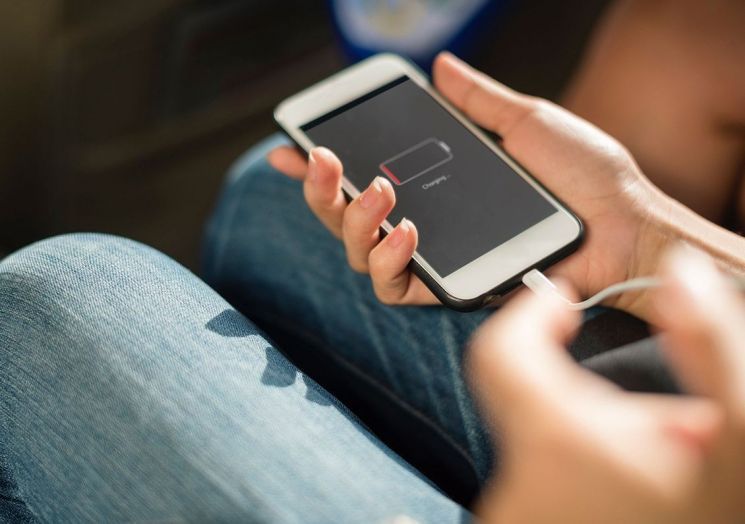
[Asia Economy Reporter Kim Bong-su] Korean researchers have, for the first time in the world, identified the reason why smartphone batteries used for more than two years do not charge well and have shorter usage times. They systematically analyzed the impact of charge-discharge speeds of lithium secondary batteries on heat generation and lifespan, developing technology that enables safer and more efficient use, including fire prevention and lifespan extension.
The Korea Electrotechnology Research Institute (KERI) announced on the 9th that Dr. Ha Yoon-cheol of the Next-Generation Battery Research Center, together with Professor Lee Yong-min of Daegu Gyeongbuk Institute of Science and Technology (DGIST), developed a "technology for analyzing the lifespan and heat generation characteristics of lithium secondary batteries."
Lithium secondary batteries are used in various industries representing the 4th Industrial Revolution, such as smartphones, electric vehicles, and energy storage systems (ESS). However, recently, there have been major issues with electric bicycle and electric kickboard batteries exploding while charging in apartments. Even in the case of ESS, which has recently gained attention, more than 35 large-scale fire accidents have occurred domestically, increasing the risk of fire or explosion proportionally with the increased use of lithium secondary batteries. Many experts both domestically and internationally are making significant efforts to develop technologies to prevent such accidents.
One of the most important technologies for the safe use of lithium secondary batteries is "thermal management." If the temperature becomes excessively high or low, the battery's performance deteriorates more rapidly. However, current "thermal management systems" are designed based on the initial characteristics of the battery and do not reflect the characteristics of batteries whose performance has degraded after long-term use.
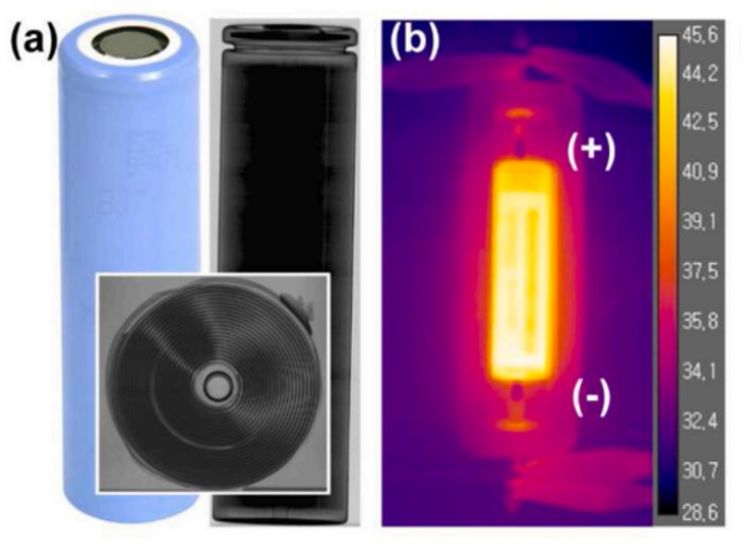
The research team analyzed the impact of long-term charge-discharge processes of lithium secondary batteries on lifespan and heat generation issues and developed technology capable of predicting battery fires. They scientifically demonstrated that even normal batteries without external shocks or manufacturer defects can lead to accidents if used long-term without systematic thermal management.
The study focused on cylindrical lithium secondary batteries (2.85Ah), which are the most widely produced. The results were based on analyzing over 1.7 million time-series data points obtained from more than 1,000 experiments under various charge-discharge conditions. Unlike previous studies that only presented changes in storage capacity according to the number of battery uses as simple figures, this is the world's first statistical analysis accurately assessing the impact of charge-discharge speeds on battery lifespan and heat generation characteristics.
Furthermore, the research team developed their own Python program capable of visualizing and statistically processing this data, successfully analyzing the long-term performance of batteries. They also established a foundation that allows simulation in conjunction with commercial software programs. This can significantly enhance safety not only for smartphones but also for electric vehicles and ESS, which use hundreds to thousands of batteries densely packed in enclosed environments.
Dr. Ha explained, "Until now, it was only an empirical assumption that devices used for more than two years generate more heat than new smartphones," adding, "The significance of this research lies in scientifically identifying the cause of the problem through statistical analysis and computational interpretation techniques."
The research results were published in the May issue of the international journal Journal of Power Sources.
Meanwhile, KERI is a government-funded research institute under the National Research Council of Science & Technology, Ministry of Science and ICT. This research was conducted as part of KERI's basic projects, the Ministry of Science and ICT's Future Materials Discovery Project, and the Ministry of Trade, Industry and Energy's PCS Competitiveness Enhancement Core Technology Development Project.
© The Asia Business Daily(www.asiae.co.kr). All rights reserved.


















